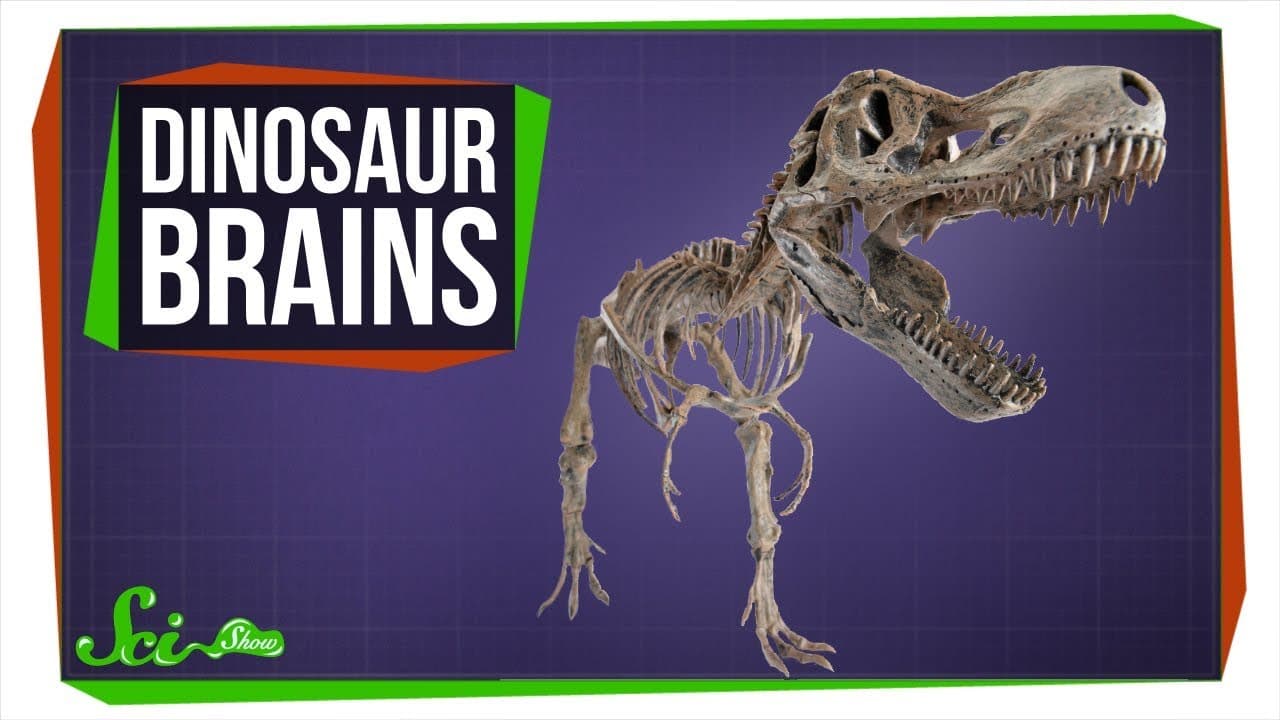
Where Are All the Dinosaur Brains?
TL;DR
Rare fossilized soft tissue from dinosaurs is crucial for studying ancient life, challenging conventional preservation beliefs.
Transcript
[♪ INTRO] When you picture a fossil, the first thing that comes to mind is probably a dinosaur bone. We’ve all seen those terrifyingly enormous skeletons that go all the way up to the museum’s ceiling. But what about their brains? And their blood vessels, and skin, and other organs? Most of the super old fossils we’ve found are just bones because i... Read More
Key Insights
- ☠️ Soft tissue fossilization is rare, with bones being more commonly preserved due to the mineralization process.
- 🍦 Soft tissue fossils provide unique insights into the external morphology and adaptations of ancient species.
- 🍦 Controversies surround the preservation mechanisms of soft tissues in fossils over extended periods.
- 🍦 Fossilized soft tissues challenge conventional beliefs on the decay and preservation of organic matter.
- 🥺 Rapid burial events, such as underwater mudslides, can lead to the preservation of soft tissue fossils.
- 🍦 Soft tissue fossils from the Cambrian Explosion offer crucial information on ancient soft-bodied species.
- 🧠 Researchers have discovered rare soft tissue fossils from dinosaurs, including blood vessels and brain tissue.
Install to Summarize YouTube Videos and Get Transcripts
Explore YouTube Video Summarizer or Get YouTube Transcript Extractor
Questions & Answers
Q: Why are soft tissue fossils from dinosaurs rare?
Soft tissues decay quickly, and the conditions for rapid burial and preservation are scarce, leading to the rarity of such fossils.
Q: How do soft tissue fossils contribute to our understanding of ancient species?
Soft tissue fossils provide insights into the external features, behavior, and evolutionary adaptations of prehistoric animals.
Q: What are some examples of significant soft tissue fossils found besides dinosaur brain tissue?
Fossilized skin, feathers, blood vessels, and even a perfectly preserved dinosaur tail in amber have been discovered, offering valuable information on ancient creatures.
Q: What challenges and controversies surround the preservation of soft tissues in fossils?
Disputes arise over the mechanisms involved in preserving soft tissues over millions of years, particularly the direct preservation of organic matter.
Summary & Key Takeaways
-
Fossilizing soft tissue is rare, as bones are more commonly preserved due to their durability.
-
Soft tissue fossils allow for a deeper understanding of ancient species and their evolutionary traits.
-
Controversies surround the preservation mechanisms of soft tissues over millions of years.
Read in Other Languages (beta)
Share This Summary 📚
Summarize YouTube Videos and Get Video Transcripts with 1-Click
Try YouTube Summary with ChatGPT & Claude or YouTube Transcript Generator
Explore More Summaries from SciShow 📚


Summarize YouTube Videos and Get Video Transcripts with 1-Click
Try YouTube Summary with ChatGPT & Claude or YouTube Transcript Generator