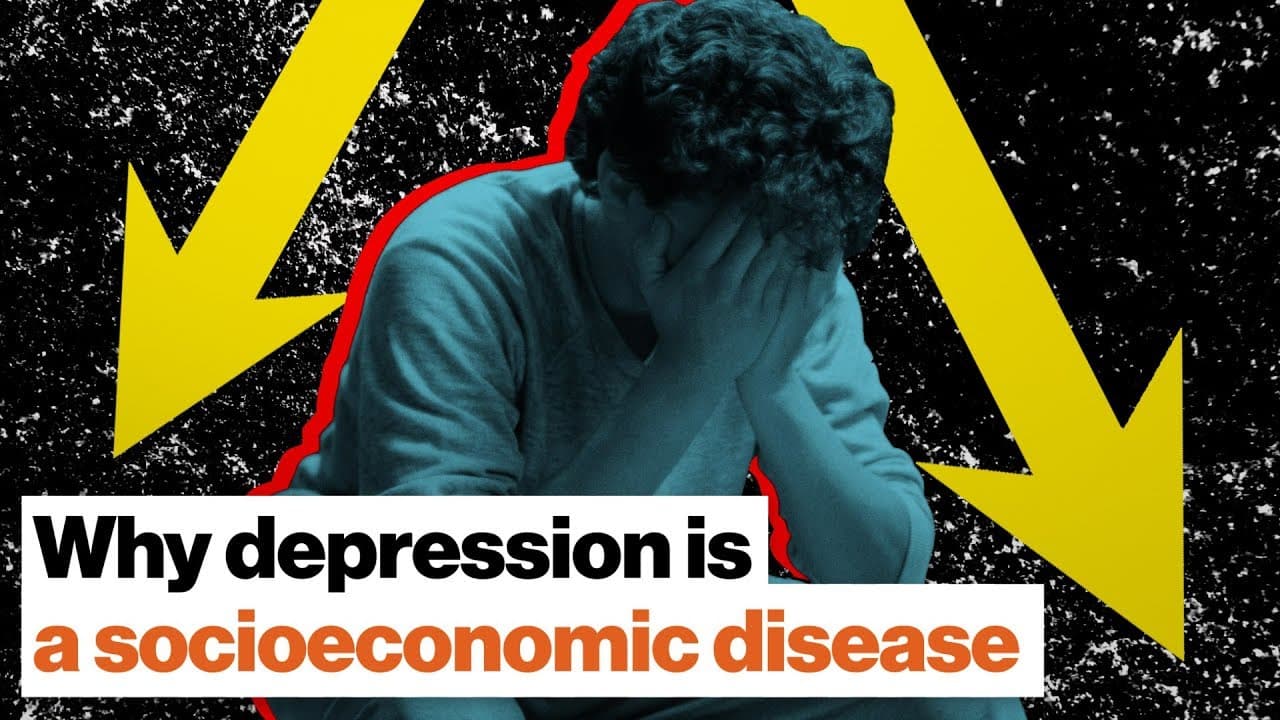
Depression and anxiety: How inequality is driving the mental health crisis | Johann Hari
TL;DR
Inequality increases depression and anxiety, affecting individuals' mental health and well-being.
Transcript
When I feel depressed, like loads of people I say, “I feel down,” right? And as I was learning about the causes of depression and anxiety for my book 'Lost Connections' I started to realize—I don’t think that’s a metaphor. There’s this amazing professor at Stanford called Robert Sapolsky who, in his early twenties, went to live with a troop of babo... Read More
Key Insights
- 🧑⚕️ Inequality contributes to mental health issues by heightening stress and anxiety levels.
- 🤟 Submission gestures are a coping mechanism triggered by feelings of defeat and helplessness in response to stress.
- 🍻 Studies support a link between inequality, depression, and anxiety, underscoring the need to address social disparities.
- 🧑⚕️ The Amish community's equal structure highlights the importance of reducing inequality for positive mental health outcomes.
- 🧑⚕️ Social hierarchies influence individuals' mental health by determining their status and access to resources.
- 🧑⚕️ Addressing inequality can help alleviate mental health issues by creating a more secure and supportive environment.
- 🧑⚕️ Understanding the impact of inequality on mental health is crucial for implementing effective interventions and support systems.
Install to Summarize YouTube Videos and Get Transcripts
Explore YouTube Video Summarizer or Get YouTube Transcript Extractor
Questions & Answers
Q: How does inequality impact mental health?
Inequality creates stress and insecurity, leading to feelings of inadequacy, which can manifest as depression and anxiety. Individuals facing unequal social hierarchies are more likely to experience mental health issues.
Q: What are submission gestures, and how are they related to mental health?
Submission gestures are behaviors displayed when individuals feel overwhelmed or defeated, often seen in animals and humans. In the context of mental health, submission gestures can indicate feelings of helplessness and resignation in response to stress and anxiety.
Q: How does the Amish community provide insights into mental health and inequality?
The Amish community's equal and homogenous structure demonstrates the impact of reduced inequality on mental health. Their low rates of depression suggest that a more equal society can alleviate mental health issues caused by status stress.
Q: What role does social hierarchy play in mental health?
Social hierarchy determines individuals' access to resources and opportunities, impacting their status and well-being. In unequal societies, those at the bottom of the hierarchy are more likely to experience mental health challenges due to increased stress and insecurity.
Summary & Key Takeaways
-
Inequality leads to increased stress, anxiety, and depression due to status insecurity and hierarchy.
-
People exhibit submission gestures as a coping mechanism when feeling pushed to the bottom of social hierarchies.
-
Studies show a strong correlation between inequality, depression, and anxiety, emphasizing the need to address these issues.
Read in Other Languages (beta)
Share This Summary 📚
Summarize YouTube Videos and Get Video Transcripts with 1-Click
Try YouTube Summary with ChatGPT & Claude or YouTube Transcript Generator
Explore More Summaries from Big Think 📚



Summarize YouTube Videos and Get Video Transcripts with 1-Click
Try YouTube Summary with ChatGPT & Claude or YouTube Transcript Generator