Two tips for developing good management skills | London Business School
TL;DR
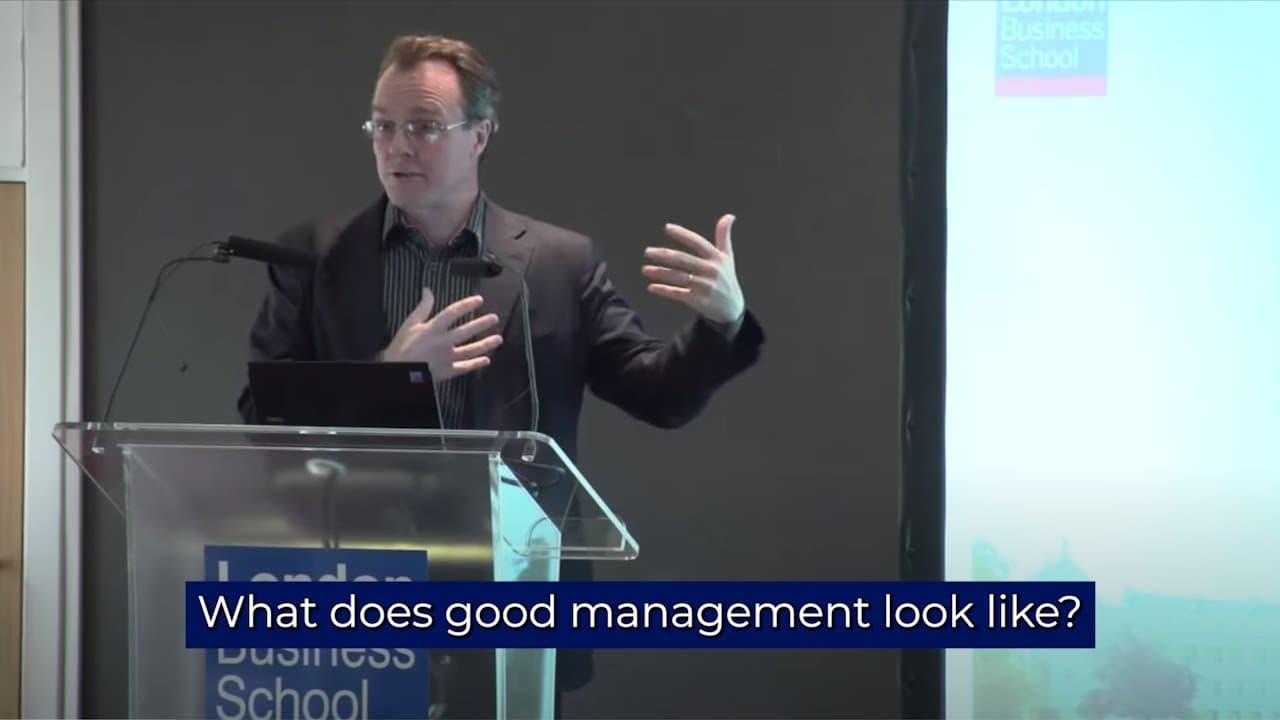
Understanding effective management requires changing perspectives and embracing natural behaviors.
Transcript
yes I'm thanks try in ten minutes to tell you all the answers to these rather important questions and ending questions that we all we all grapple with I mean most of the people in the room have have some sort of management responsibility and I don't necessarily mean that they have lots of people reporting to them I mean that they ha... Read More
Key Insights
- Good management involves understanding employee perspectives and enabling them to perform their best, akin to viewing the world through their eyes.
- Effective managers empower their teams, provide guidance, and offer recognition without micromanaging or taking all the credit.
- Despite knowing effective management practices, many fail to implement them due to ingrained habits and a lack of conscious effort.
- Management skills often require conscious effort as they do not come naturally and differ from the technical skills that initially earned promotions.
- Overconfidence and control tendencies are common managerial pitfalls that can hinder effective management.
- Successful managers often share power and responsibility, fostering a collaborative environment and encouraging team autonomy.
- Creating engaging work projects with clear goals and endpoints can increase team motivation and satisfaction.
- General management training can help develop effective management skills, offering support and inspiration for ambitious executives.
Install to Summarize YouTube Videos and Get Transcripts
Explore YouTube Video Summarizer or Get YouTube Transcript Extractor
Questions & Answers
Q: What is a key aspect of good management according to Julian Birkinshaw?
A key aspect of good management is understanding and seeing the world through the eyes of employees. This perspective enables managers to empower their teams, provide necessary support, and recognize their achievements, leading to improved team performance and satisfaction.
Q: Why do many managers fail to implement effective management practices?
Many managers fail to implement effective practices due to ingrained habits and a lack of conscious effort. Despite knowing what makes a good manager, the transition from technical skills to management skills is challenging, requiring deliberate changes in behavior and mindset.
Q: What common pitfalls do managers face?
Managers often face pitfalls such as overconfidence and a desire for control. These tendencies can lead to micromanagement and hinder effective team collaboration. Successful managers recognize these pitfalls and work towards empowering their teams and sharing responsibilities.
Q: How can managers create a more engaging work environment?
Managers can create a more engaging work environment by structuring work as projects with clear goals, timelines, and endpoints. This approach provides a sense of direction and achievement, increasing motivation and satisfaction among team members.
Q: What role does general management training play in developing effective managers?
General management training plays a crucial role in developing effective managers by offering support, inspiration, and challenges tailored to different career stages. These programs help managers refine their skills, adapt to new roles, and become better leaders.
Q: How do successful managers handle power and responsibility?
Successful managers handle power and responsibility by sharing it with their teams. They foster a collaborative environment, encourage autonomy, and trust their team members to take initiative, which enhances team performance and morale.
Q: What is the significance of project-based work in management?
Project-based work is significant in management as it provides structure, clear objectives, and a sense of accomplishment. It helps teams stay focused, motivated, and engaged, leading to better performance and satisfaction with their work.
Q: What is the main challenge in applying known management principles?
The main challenge in applying known management principles is overcoming ingrained behaviors and habits. Managers must consciously adopt new practices and mindsets, which often require effort and a willingness to change established ways of working.
Summary & Key Takeaways
-
Julian Birkinshaw emphasizes the importance of understanding employee perspectives to improve management effectiveness. Good managers empower and recognize their teams, avoiding micromanagement. Despite knowing these principles, many managers struggle to implement them due to ingrained habits.
-
Management skills often require conscious effort as they are not innate and differ from technical skills that led to promotions. Overconfidence and control tendencies are common pitfalls, and successful managers share power and responsibility, fostering team autonomy.
-
Engaging work projects with clear goals can boost team motivation. General management training programs at London Business School support managers at various career stages, providing the inspiration and challenges needed to become great business leaders.
Read in Other Languages (beta)
Share This Summary 📚
Summarize YouTube Videos and Get Video Transcripts with 1-Click
Try YouTube Summary with ChatGPT & Claude or YouTube Transcript Generator
Explore More Summaries from London Business School 📚

Summarize YouTube Videos and Get Video Transcripts with 1-Click
Try YouTube Summary with ChatGPT & Claude or YouTube Transcript Generator