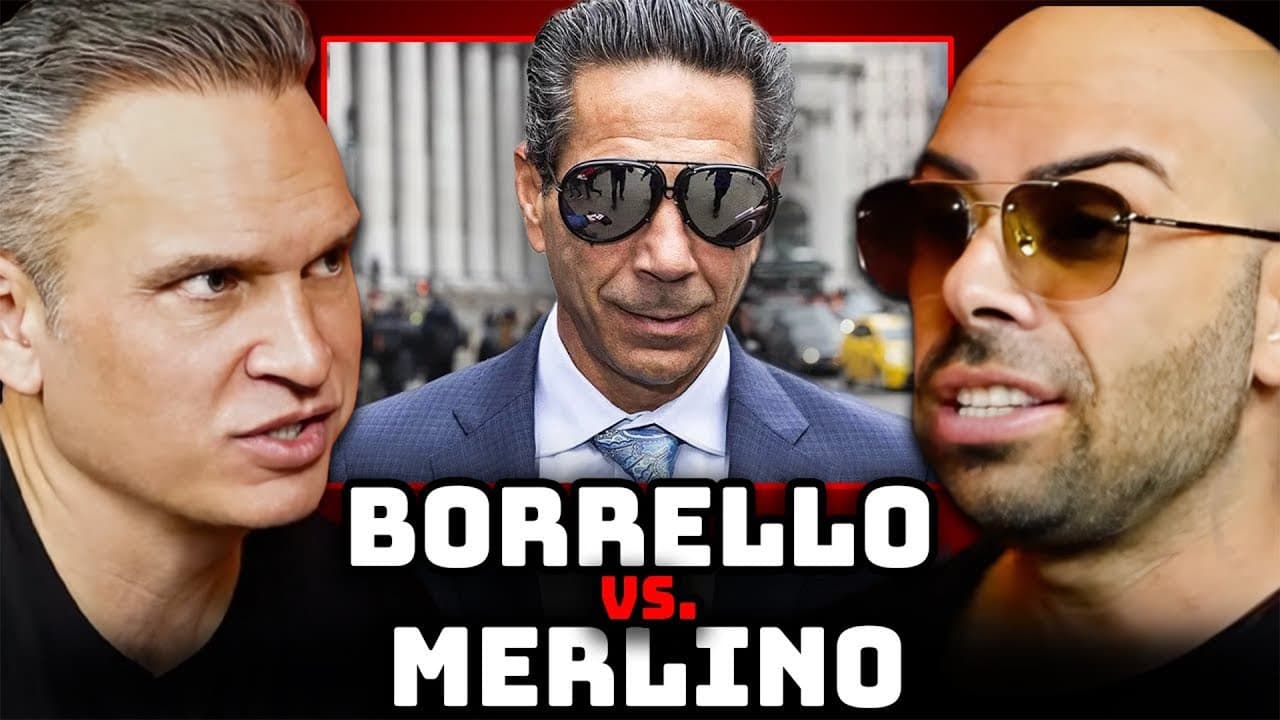
GENE BORRELLO EXPOSES JOEY MERLINO (Why Philly Hates Him)
TL;DR
Gene Borrello discusses his past and Joey Merlino controversy.
Transcript
the whole Joey Molino situation listen he's broke he tried to embarrass Mike Frances you're not a respected boss's banging your wife while you're in jail bottom line all of his Fanboys like they started leaving comments on my know how many messages I get from people in Philadelphia giving me dirt on him a guy from Ph... Read More
Key Insights
- Gene Borrello shares his upbringing in a crime-infested environment, highlighting the influence of family and surroundings on his criminal path.
- He discusses his involvement with the mafia, detailing various illegal activities and his eventual cooperation with authorities.
- Borrello criticizes Joey Merlino, portraying him as disrespected and financially struggling, while questioning his credibility and influence.
- The narrative explores the nature versus nurture debate, with Borrello emphasizing the significant role of genetics in shaping his behavior.
- Borrello recounts his experiences in prison, describing the violence and chaos, particularly in Rikers Island, and the challenges he faced.
- He elaborates on the dynamics within organized crime, focusing on money, power, and the hierarchy within the mafia.
- Borrello reflects on his transformation post-incarceration, embracing his past while leveraging it for storytelling and public engagement.
- He reveals plans for a media project inspired by his life, aiming to depict modern-day organized crime through a television series.
Install to Summarize YouTube Videos and Get Transcripts
Explore YouTube Video Summarizer or Get YouTube Transcript Extractor
Questions & Answers
Q: What is Gene Borrello's perspective on Joey Merlino?
Gene Borrello portrays Joey Merlino as financially unstable and lacking respect within the crime community. He criticizes Merlino's public persona and questions his credibility, suggesting that Merlino's involvement in YouTube drama undermines his standing as a respected figure in organized crime.
Q: How does Borrello describe his upbringing and its influence on his criminal path?
Borrello describes his upbringing in a crime-heavy environment, heavily influenced by his family's involvement in organized crime. He emphasizes the role of both genetics and environment in shaping his behavior, suggesting that his exposure to crime and violence from a young age played a significant role in his criminal path.
Q: What insights does Borrello provide about life in prison?
Borrello shares detailed accounts of his time in prison, particularly in Rikers Island, describing it as a place of constant violence and chaos. He reflects on the harsh realities of prison life, including the challenges of surviving in such an environment and the impact it had on his transformation.
Q: How does Borrello view the nature versus nurture debate in relation to his life?
Borrello leans towards the 'nature' side of the debate, suggesting that genetics played a significant role in shaping his behavior. He believes that his father's violent tendencies were passed down to him, influencing his own actions and decisions, despite the environment he was raised in also contributing to his criminal activities.
Q: What are Borrello's future aspirations after his release from prison?
After his release from prison, Borrello aims to leverage his past experiences for storytelling and public engagement. He is working on a media project that seeks to depict modern-day organized crime through a television series, drawing on his life story and experiences to create an authentic narrative.
Q: What role does money play in the dynamics of organized crime, according to Borrello?
Borrello emphasizes that money is a central element in the dynamics of organized crime. He explains that the mafia is primarily focused on financial gain, with activities centered around making and protecting money. This pursuit of wealth is a driving force behind many of the illegal activities and power struggles within the crime community.
Q: How does Borrello reflect on his transformation post-incarceration?
Borrello reflects on his transformation post-incarceration by embracing his past and using it as a platform for storytelling. He acknowledges the mistakes he made and the consequences he faced, but focuses on how he can use his experiences to engage with the public and potentially deter others from following a similar path.
Q: What is Borrello's approach to public engagement and storytelling?
Borrello's approach to public engagement and storytelling involves candidly sharing his life experiences, including the challenges and consequences of his criminal activities. He aims to provide an authentic narrative that resonates with audiences, using his story as a cautionary tale and exploring the complexities of modern-day organized crime through various media projects.
Summary & Key Takeaways
-
Gene Borrello recounts his life growing up in a crime-heavy environment, influenced by family ties to organized crime. He shares stories of violence and illegal activities, emphasizing the impact of his upbringing.
-
Borrello criticizes Joey Merlino, describing him as financially troubled and lacking respect within the crime community. He challenges Merlino's credibility and discusses the controversy surrounding his public persona.
-
Reflecting on his prison experiences and cooperation with authorities, Borrello discusses his transformation and future aspirations, including a media project depicting modern organized crime.
Read in Other Languages (beta)
Share This Summary 📚
Summarize YouTube Videos and Get Video Transcripts with 1-Click
Try YouTube Summary with ChatGPT & Claude or YouTube Transcript Generator
Explore More Summaries from Matthew Cox | Inside True Crime 📚
Summarize YouTube Videos and Get Video Transcripts with 1-Click
Try YouTube Summary with ChatGPT & Claude or YouTube Transcript Generator