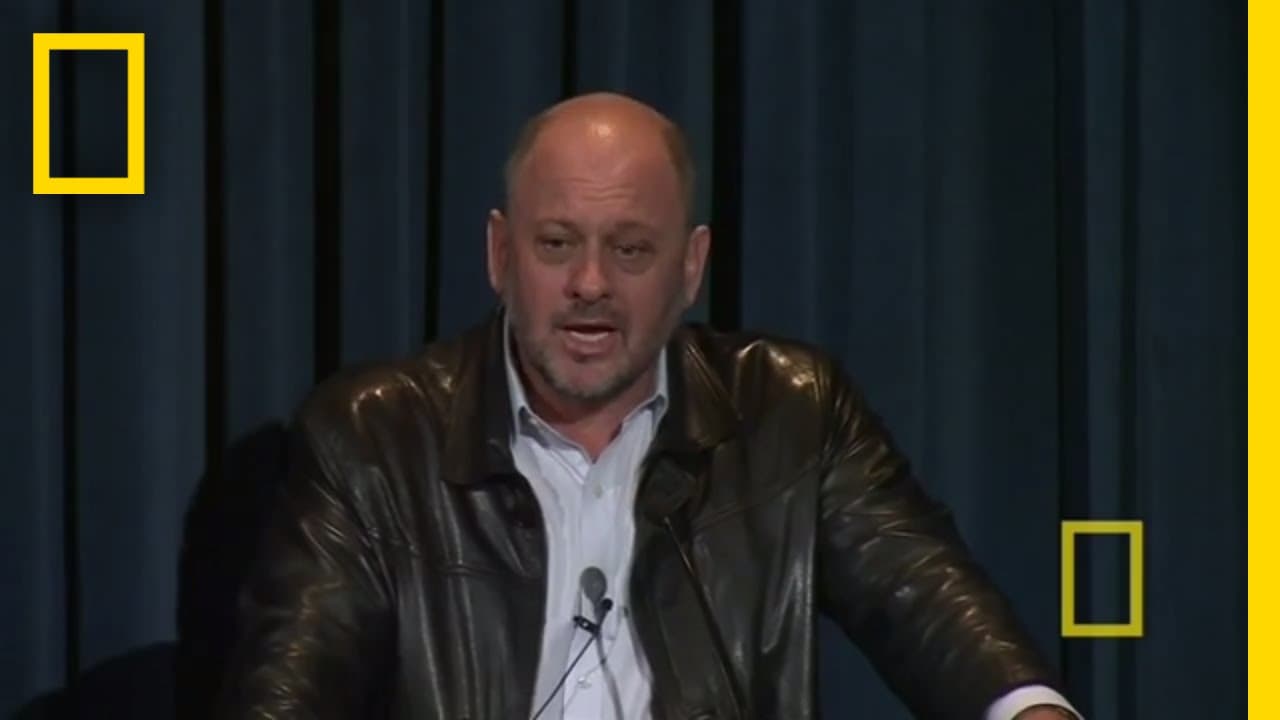
Tim Flannery: Here on Earth | Nat Geo Live
TL;DR
Investigating the intersection of evolution, global sustainability, and the potential for a human-led superorganism.
Transcript
a hundred million years ago the cockroaches discover agriculture become the first super organism 10 000 years ago the first intelligent superorganism forms our own species do intelligent super organisms that exist at the global scale carry within themselves the seeds of their own destruction have we got a hope of surviving what i'm going to do this... Read More
Key Insights
- 💠 Darwin's theory of evolution and Wallace's contributions shaped the understanding of species development.
- 🛟 The Earth's evolution and history underscore the interconnectedness of life and the potential for sustainability.
- 🥺 The emergence of a global superorganism led by humans offers a hopeful vision for the future of the planet.
- 🥶 The role of cooperation, co-evolution, and self-regulation in shaping the planet's future is highlighted.
- 🥺 Understanding the Earth as a living planet informs discussions on the potential for a human-led superorganism.
- 👶 The critical phase of global interconnectedness and empowerment through technology presents new opportunities for cooperation.
- 🥺 The comparison between the Earth's development and the potential for a human-led global superorganism offers insights into the future.
Install to Summarize YouTube Videos and Get Transcripts
Explore YouTube Video Summarizer or Get YouTube Transcript Extractor
Questions & Answers
Q: How did Darwin's theory of evolution lay the groundwork for understanding the origins of intelligent superorganisms?
Darwin's theory emphasized variation between individuals and the survival of the fittest, culminating in the evolution of species over time based on natural selection. This theory forms the basis for understanding the development of intelligent superorganisms.
Q: What role did Alfred Russel Wallace play in shaping our understanding of evolution alongside Darwin?
Wallace, a contemporary of Darwin, independently arrived at similar conclusions regarding evolution through natural selection. His contributions reinforced the idea of evolution and added depth to the understanding of species development.
Q: How does the Earth's history and evolution tie into the concept of sustainability and the potential for a human-led superorganism?
The Earth's history showcases the intricate interrelatedness of life and the vital role of cooperation and evolution. This interplay forms the foundation for considering a future where humans, as a collective superorganism, could influence the planet's sustainability.
Q: What implications does the concept of a global superorganism led by humans have for the future of our species and the planet?
The idea suggests a future where humans collaborate on a global scale, potentially creating a self-regulating system that promotes sustainability and balance with the Earth. It raises hope for a future guided by cooperation and conscious decision-making.
Summary & Key Takeaways
-
The content delves into the origins of intelligent superorganisms, starting from Darwin's theory of evolution based on natural selection.
-
Alfred Russel Wallace, a key figure alongside Darwin, contributed to the understanding of evolution and the evolution of species.
-
The discussion expands to the concept of the Earth as a living planet, highlighting the potential for a global superorganism led by humans.
Read in Other Languages (beta)
Share This Summary 📚
Summarize YouTube Videos and Get Video Transcripts with 1-Click
Try YouTube Summary with ChatGPT & Claude or YouTube Transcript Generator
Explore More Summaries from National Geographic 📚


Summarize YouTube Videos and Get Video Transcripts with 1-Click
Try YouTube Summary with ChatGPT & Claude or YouTube Transcript Generator