The Darkness Surrounds Us
TL;DR
Unseen mysterious mass in galaxies, proven by speeding stars and lensing effects, challenges known physics.
Transcript
why do we know for instance why must we know that there is dark matter in the universe what is it about what brian said before the scene world being being acted upon by something unseen that forces us to conclude that there is dark matter well by now the evidence is really in many many different uh different types of evidence but the really very fi... Read More
Key Insights
- 🤩 Fritz Zwicky's star velocity measurements in galaxy clusters revealed a mass deficit, suggesting unseen dark matter as early evidence.
- 🕶️ Vera Rubin's observation of consistent galaxy rotation velocities regardless of distance supported the dark matter theory.
- 🙂 Gravitational lensing, observed in rich galaxy clusters, provides visual evidence of dark matter's effect on light.
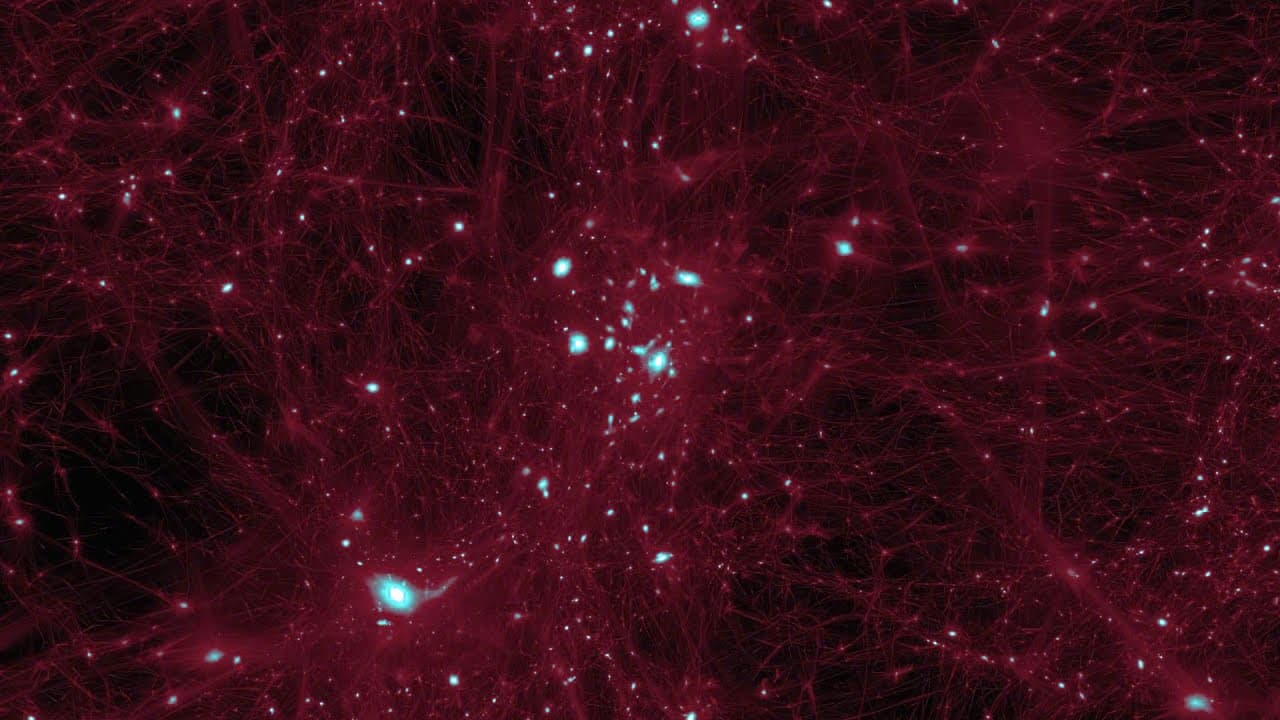
- 💆 Computer reconstructions of galaxy clusters show mass distributions beyond observable galaxies, indicating the presence of dark matter.
- 👮 Dark matter's existence challenges traditional physics theories, inspiring researchers to explore alternative explanations like modifications to gravity laws.
Install to Summarize YouTube Videos and Get Transcripts
Explore YouTube Video Summarizer or Get YouTube Transcript Extractor
Questions & Answers
Q: How did Fritz Zwicky's star velocity measurements contribute to the discovery of dark matter?
Fritz Zwicky observed stars in a galaxy cluster moving faster than expected, indicating a mass deficit that led to the hypothesis of dark matter's existence.
Q: What did Vera Rubin's study on galaxy rotations reveal about dark matter?
Vera Rubin found that galaxies' outer stars moved at the same speed as inner stars, indicating unseen mass affecting their velocities, supporting dark matter theory.
Q: How does gravitational lensing help detect dark matter?
Gravitational lensing, a phenomenon predicted by Einstein's theory, distorts light around mass, allowing astronomers to observe the effects of unseen dark matter on background objects like quasars.
Q: What do computer reconstructions of rich galaxy clusters reveal about dark matter?
Reconstructions show that the mass needed to bend light in a rich galaxy cluster goes beyond observable galaxies, indicating the presence of dark matter throughout the cluster.
Summary & Key Takeaways
-
Fritz Zwicky's 1930s velocity measurement of stars revealed a mass deficit, suggesting unseen dark matter.
-
Vera Rubin's galaxy rotation study confirmed dark matter's existence through consistent velocities regardless of distance.
-
Lensing effects in rich galaxy clusters demonstrate mass distributions, supporting the presence of dark matter.
Read in Other Languages (beta)
Share This Summary 📚
Summarize YouTube Videos and Get Video Transcripts with 1-Click
Try YouTube Summary with ChatGPT & Claude or YouTube Transcript Generator
Explore More Summaries from World Science Festival 📚


Summarize YouTube Videos and Get Video Transcripts with 1-Click
Try YouTube Summary with ChatGPT & Claude or YouTube Transcript Generator