How we’ll colonize the Moon and Mars | Robert Curbeam
TL;DR
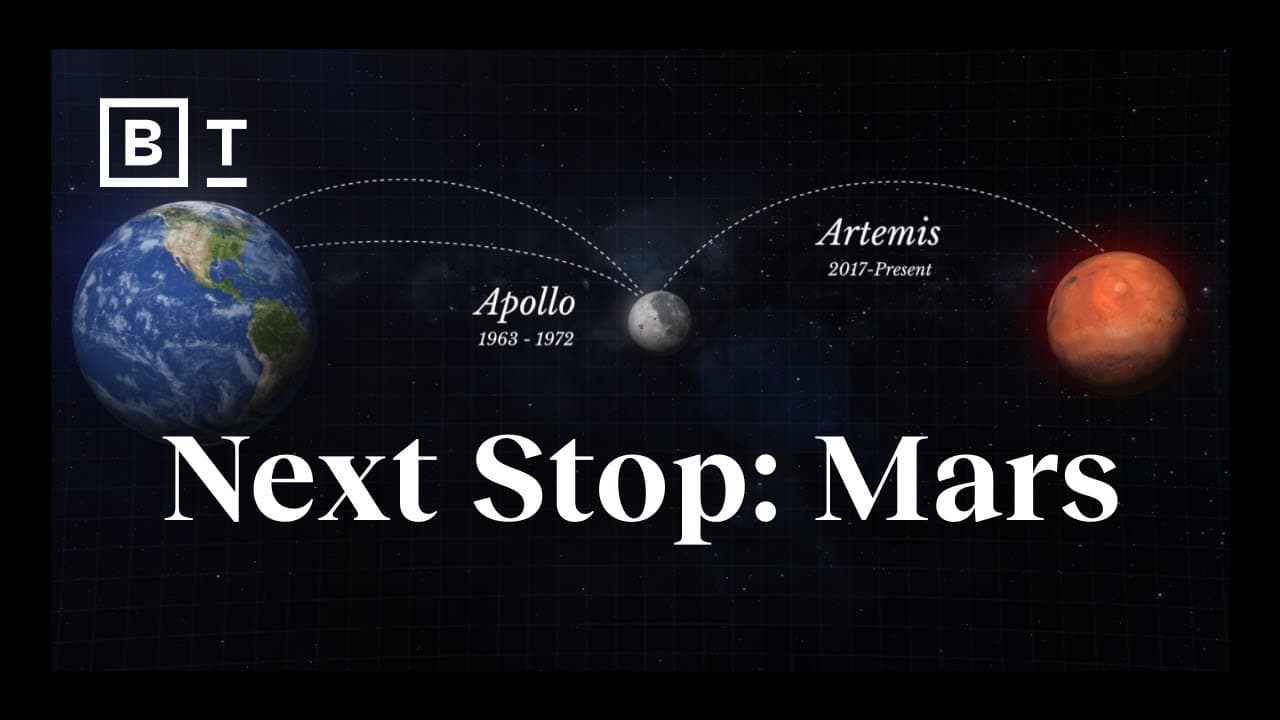
Humans are preparing to return to the Moon with plans for Mars, emphasizing sustainability and resource utilization.
Transcript
- People want to know: 'When are we going back to the moon?' 'When are we gonna go to Mars?' And I always tell 'em, 'When we're ready.' Humans have been thinking about space travel in one form or another for a long time. I mean, you can look back at Jules Verne way back in the 1800s. You know, we've always been thinking about traveling off this pla... Read More
Key Insights
- 👾 The Artemis Era heralds a return to space exploration with a focus on establishing a permanent presence on the Moon.
- 👾 Solar electric propulsion technology is crucial for sustainable deep space exploration by reducing the need for propellant.
- 👨🚀 In-situ resource utilization is vital for long-term space habitation, requiring astronauts to live off the land and be resourceful.
- 👾 Parallels can be drawn between historical explorations and current space endeavors, stressing adaptability and resource utilization for success.
- 👾 The desire to explore space is rooted in human nature, driving the need for interplanetary exploration and colonization.
- 👾 The will to take risks and make sacrifices for space exploration will determine humanity's success in becoming an interplanetary species.
- 🤩 Sustainability and resource conservation are key elements in enabling future space missions and colonization efforts.
Install to Summarize YouTube Videos and Get Transcripts
Explore YouTube Video Summarizer or Get YouTube Transcript Extractor
Questions & Answers
Q: What is the significance of the Artemis Era in space exploration?
The Artemis Era signifies humanity's return to the Moon and eventual plans for Mars, focusing on long-term presence and sustainable exploration efforts.
Q: How is solar electric propulsion important for space exploration?
Solar electric propulsion reduces the need for propellant, making missions more efficient and allowing for deeper space exploration with less mass.
Q: Why is in-situ resource utilization crucial for long-term space habitation?
In-situ resource utilization involves living off the land in space, reducing the need to carry everything from Earth and enabling sustainability for extended missions.
Q: What parallels can be drawn between current space exploration and historical explorations?
Similar to historical explorations like finding the Northwest Passage, space exploration requires adaptability, resourcefulness, and the ability to live off the land for long-term success.
Summary & Key Takeaways
-
People have long dreamed of space travel, dating back to Jules Verne.
-
Former astronaut Robert Curbeam highlights the importance of returning to space and establishing permanent presence.
-
Sustainability through solar electric propulsion and in-situ resource utilization is crucial for long-term space exploration.
Read in Other Languages (beta)
Share This Summary 📚
Summarize YouTube Videos and Get Video Transcripts with 1-Click
Try YouTube Summary with ChatGPT & Claude or YouTube Transcript Generator
Explore More Summaries from Big Think 📚




Summarize YouTube Videos and Get Video Transcripts with 1-Click
Try YouTube Summary with ChatGPT & Claude or YouTube Transcript Generator