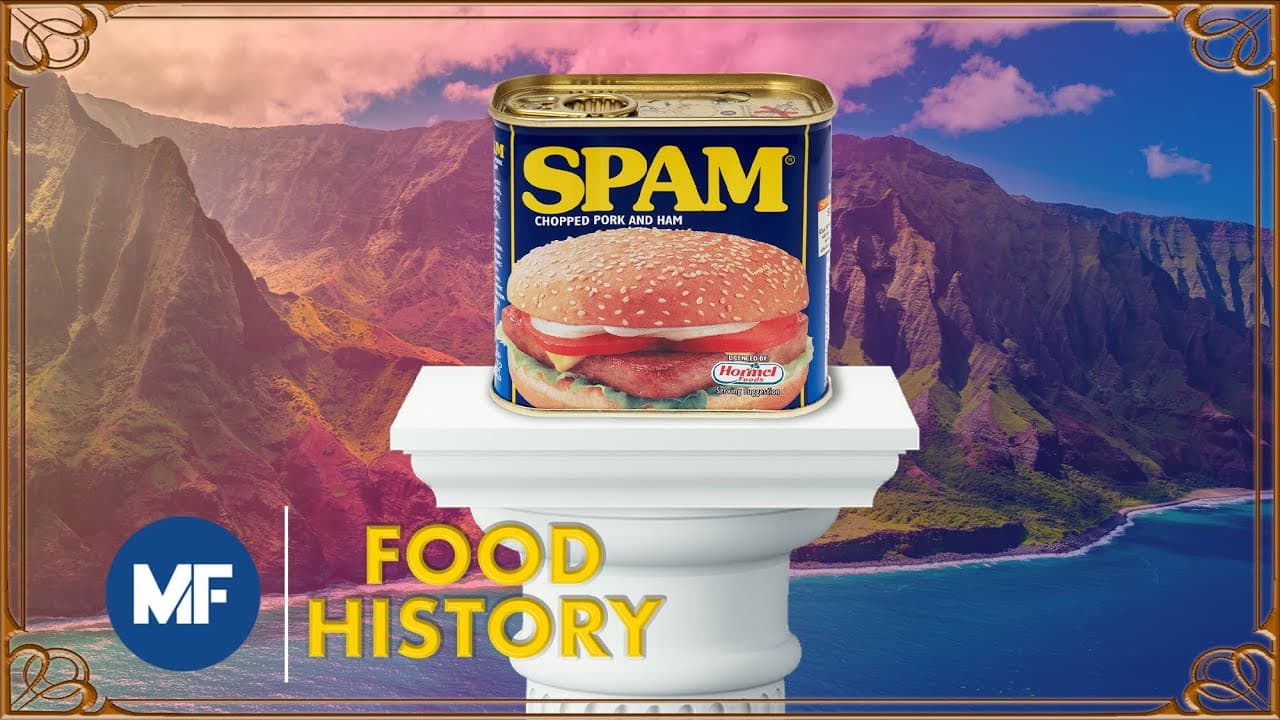
Food History: SPAM
TL;DR
Koreans turned US army base spam into Bude gigay, a popular dish, showcasing creativity in culinary adaptation.
Transcript
in hard times people have been known to turn debatably undesirable ingredients into great Cuisine I mean that's practically the thesis of this entire series and it's exactly what Koreans did with Spam in the 1950s hi I'm Justin Dodd welcome to food history today we're diving into everyone's favorite canned meat from army-based stew to spam Sushi le... Read More
Key Insights
- 🍲 Korea's Bude gigay stew transformed US army base leftovers like spam into a distinctly Korean dish with added flavors like kimchi and gochujang.
- 🍖 Hormel's spam revolutionized canned meats with its convenience, long shelf life, and affordability during wartime.
- 🌐 Spam became a global culinary icon, influencing dishes like Spam Musubi in Hawaii and Spam Sinigang in the Philippines.
- 🥳 Hormel's marketing strategy for spam involved a drunk party where a guest named Ken coined the name, leading to its mysterious origins.
- 🤬 Hawaii's Spam Jam festival and dishes like Spam Musubi showcase how spam has become a cultural symbol and culinary delight in the region.
- 🥺 Korea's post-war scarcity led to spam's transformation into a luxury ingredient, coveted by the elite and available through the black market.
- 😀 Despite criticisms of spam's origins, dishes like Bude gigay in Korea represent a blend of creativity and adaptation in the face of adversity.
Install to Summarize YouTube Videos and Get Transcripts
Explore YouTube Video Summarizer or Get YouTube Transcript Extractor
Questions & Answers
Q: How did Koreans create Bude gigay from US army base leftovers like spam?
Koreans in post-war Korea used ingredients like spam, kimchi, and gochujang to create Bude gigay, a stew that combined American processed meats with Korean flavors like spicy chili paste and noodles.
Q: What led to the rise of spam as a global culinary icon?
Spam gained popularity during wartime for its convenience, long shelf life, and affordability, becoming a staple in American households and influencing cuisines in Hawaii, Asia, and beyond.
Q: Why did spam become a luxury ingredient in Korea post-war despite its humble origins?
High meat tariffs in South Korea restricted access to spam, making it a sought-after ingredient available only to the wealthy or through the black market, leading to its luxurious reputation in Korean culture.
Q: How did spam transform from a survival food to a symbol of cultural pride?
In Hawaii and other regions, spam was incorporated into local cuisines out of necessity, eventually becoming a celebrated ingredient in dishes like Spam Musubi and Spam Sisig, showcasing cultural adaptation and creativity.
Summary & Key Takeaways
-
Food shortages in Korea post WWII led to Koreans using US army base leftovers like spam to create Bude gigay, a stew with Korean twists.
-
Hormel's spam, created from pork scraps, became popular for its convenience during wartime and transformed into a global culinary icon.
-
Hawaii and other countries embraced spam, turning it into cultural dishes like Spam Musubi and influencing local cuisines.
Read in Other Languages (beta)
Share This Summary 📚
Summarize YouTube Videos and Get Video Transcripts with 1-Click
Try YouTube Summary with ChatGPT & Claude or YouTube Transcript Generator
Explore More Summaries from Mental Floss 📚






Summarize YouTube Videos and Get Video Transcripts with 1-Click
Try YouTube Summary with ChatGPT & Claude or YouTube Transcript Generator