Death and rebirth of life around a star | Clara Sousa-Silva and Lex Fridman
TL;DR
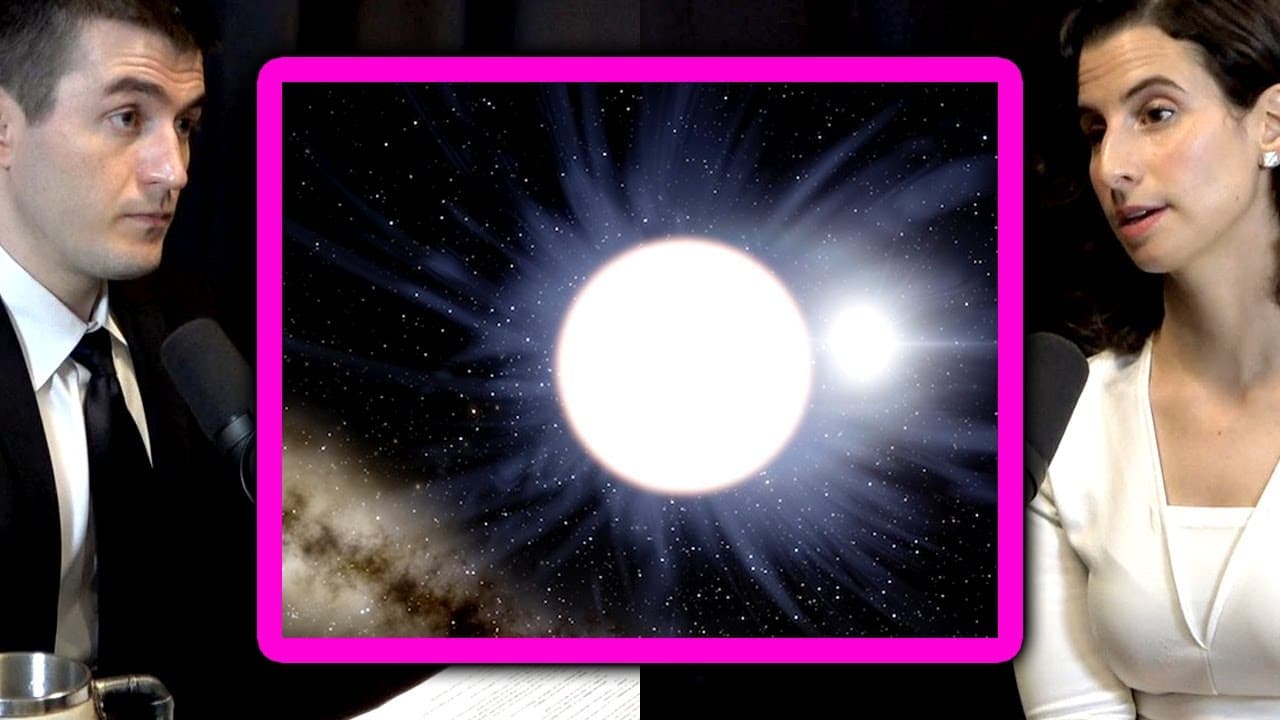
The speaker discusses the interplay between a star's evolution and the planets around it, exploring the possibility of life on planets around white dwarf stars.
Transcript
just as a small tangent your master's thesis is also fascinating um maybe we could talk about it for just a little bit it's uh titled the influence of a star's evolution on this planetary system so this interplay between a star and a planet is there something interesting you could say about what you've learned about this this journey that star take... Read More
Key Insights
- 🤩 The interplay between a star's evolution and its planetary systems can have significant implications for the potential for life.
- ❔ The concept of white dwarf cemeteries raises questions about the possibility of life re-emerging on planets around these dead stars.
- 🛰️ Observing simulations of planetary orbits during a star's evolution can reveal chaotic behavior and the potential for new stable orbits to form.
- 🛟 Accepting the universe's indifference to life can provide a broader perspective on the cycle of death and rebirth, offering hope for life's persistence.
- 💦 The speaker's work highlights the importance of considering long-term stability and the potential for life on different types of planetary systems.
- 🤩 Life's emergence and re-emergence on planets around stars can challenge the notion of humans being at the center of the universe.
- 🤞 The inevitability of life suggests that it can originate multiple times throughout the universe's existence, providing hope for its continued existence.
Install to Summarize YouTube Videos and Get Transcripts
Explore YouTube Video Summarizer or Get YouTube Transcript Extractor
Questions & Answers
Q: What was the focus of the speaker's master's thesis?
The speaker's master's thesis explored the influence of a star's evolution on planetary systems, specifically looking at the concept of white dwarf cemeteries and the possibility of life returning to planets around white dwarfs.
Q: How did the speaker study this topic?
The speaker conducted thousands of end-body simulations to observe the behavior of planetary orbits as the star loses mass. These simulations revealed chaotic interactions and the potential for some systems to find new stable orbits.
Q: What was the speaker's perspective on the universe's indifference towards life?
The speaker felt that the universe's indifference, as demonstrated by the violent and neglectful nature of stars, made them realize the preciousness of life. They found it useful to accept the cycle of death and rebirth, allowing for hope and the possibility of life persisting.
Q: What was the speaker's conclusion regarding life on planets around white dwarfs?
The speaker's thesis proposed that life could re-emerge on planets around white dwarfs after the star's death. Some systems could find stable orbits for billions of years, providing enough time for life to originate again.
Summary & Key Takeaways
-
The speaker's master's thesis focused on the influence of a star's evolution on planetary systems, particularly looking at the concept of white dwarf cemeteries and the possibility of life re-emerging on planets around white dwarfs.
-
Through simulations, the speaker observed the chaotic behavior of planetary orbits as the star loses mass, resulting in some systems finding new balance and potentially allowing for life to originate again.
-
The speaker reflects on the idea that the universe doesn't care about life's existence, but accepting the cycle of death and rebirth provides hope for life to persist.
Read in Other Languages (beta)
Share This Summary 📚
Summarize YouTube Videos and Get Video Transcripts with 1-Click
Try YouTube Summary with ChatGPT & Claude or YouTube Transcript Generator
Explore More Summaries from Lex Clips 📚




Summarize YouTube Videos and Get Video Transcripts with 1-Click
Try YouTube Summary with ChatGPT & Claude or YouTube Transcript Generator