Why Aren't There Giant Insects?
TL;DR
300 million years ago, giant insects roamed the earth due to higher oxygen levels, challenging size limitation theories.
Transcript
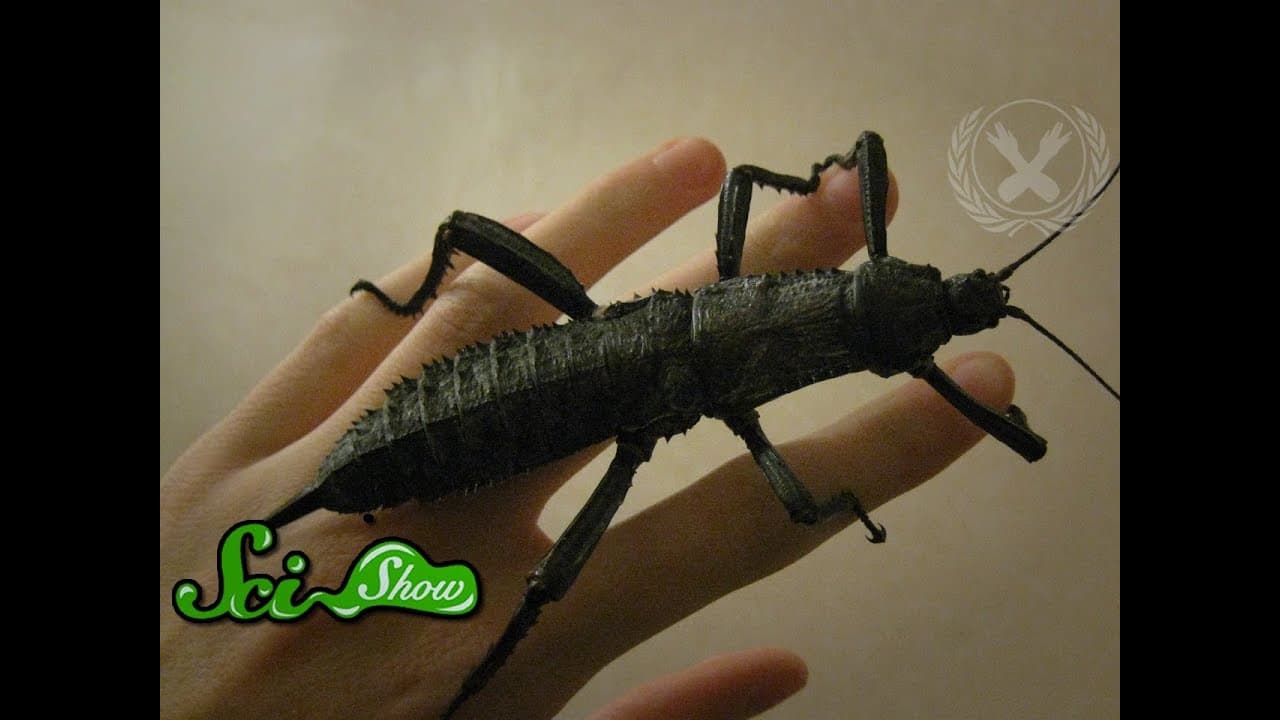
You ever had one of those terrible, terrible dreams and wake up wondering why there aren't puppy-sized spiders? These days the largest insect on record is the Giant Weta of New Zealand which can grow up to 10 cm long and weigh around 70 grams, about the size of a small bird. But there was a time... when bugs... were very different. 300 million year... Read More
Key Insights
- 🫤 Giant insects like the Meganeura Dragonfly existed 300 million years ago with wingspans of 65 cm.
- 🏋️ Theories regarding insect size limitations include exoskeleton weight and oxygen delivery capacity.
- ⛔ Tracheoles in insects facilitate oxygen diffusion into cells, potentially limiting insect growth.
- ✋ Higher oxygen levels in the past supported the growth of giant insects.
- 💗 Dr. Harrison suggests that oxygen levels in the atmosphere could enable insects to grow larger.
- 🏋️ The proportion of exoskeleton weight to body size in insects remains consistent across different sizes.
- 😘 Lower oxygen levels in the present atmosphere may limit insect growth due to oxygen diffusion challenges.
Install to Summarize YouTube Videos and Get Transcripts
Explore YouTube Video Summarizer or Get YouTube Transcript Extractor
Questions & Answers
Q: Why were insects much larger in the past?
Giant insects existed in the past due to higher oxygen levels, supporting theories that oxygen delivery enabled their growth despite their exoskeletons' weight limitations.
Q: What is the significance of the tracheoles in insects' oxygen delivery system?
Tracheoles are tiny tubes in insects that facilitate oxygen diffusion into cells, potentially limiting the size of insects as larger insects would require longer tracheoles for oxygen delivery.
Q: How do current oxygen levels in the atmosphere impact insect size?
Lower oxygen levels in the present atmosphere could limit insect size as large insects would struggle with oxygen diffusion, hinting at the role of oxygen levels in determining insect size.
Q: Why do experts believe insect exoskeleton weight is not a primary factor in limiting size?
Research suggests that the proportion of exoskeleton-to-body-size in insects is consistent across sizes, challenging the belief that exoskeleton weight hinders insect growth significantly.
Summary & Key Takeaways
-
In the past, giant insects like the Meganeura Dragonfly existed with a wingspan of 65 cm.
-
Experts debated theories such as exoskeleton weight and oxygen delivery affecting insect size.
-
Higher oxygen levels in the past may have enabled the growth of giant insects.
Read in Other Languages (beta)
Share This Summary 📚
Summarize YouTube Videos and Get Video Transcripts with 1-Click
Try YouTube Summary with ChatGPT & Claude or YouTube Transcript Generator
Explore More Summaries from SciShow 📚


Summarize YouTube Videos and Get Video Transcripts with 1-Click
Try YouTube Summary with ChatGPT & Claude or YouTube Transcript Generator