Advanced Quantum Mechanics Lecture 7
TL;DR
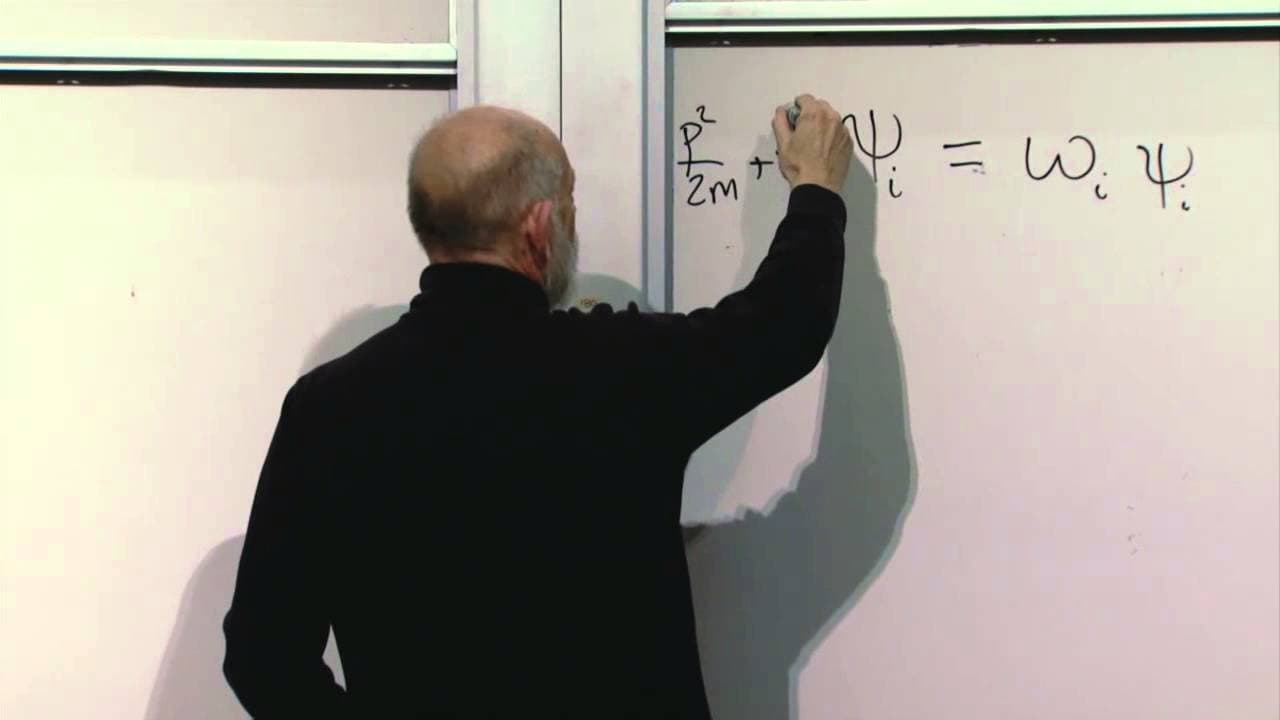
Quantum field theory is introduced, explaining the connection between particles and fields and the concept of quantum fields.
Transcript
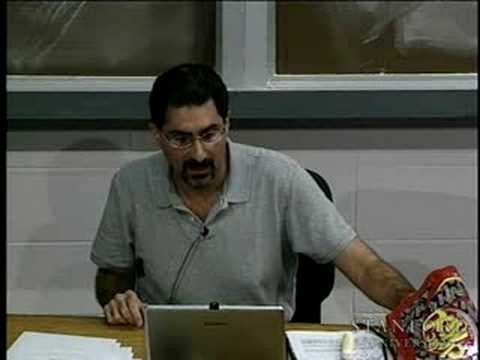
Stanford University well should we go over again the basic construction of a simple quantum field why not it's not exactly what I have written here but we can do it again not again but maybe slightly different yeah we're ready okay so as I said the trick of introducing fields from particles seen go two ways you know two ways you can start with part... Read More
Key Insights
- 🏑 Quantum field theory provides a mathematical framework to describe the behavior of particles and fields in the quantum realm.
- 🏑 Fields can be constructed from particles or particles can be described by fields.
- 👾 The field operator acts as a creation operator for particles at a specific position in space.
- 🍹 The energy of the field can be derived from sums of creation and annihilation operators, representing the energy of the particles.
Install to Summarize YouTube Videos and Get Transcripts
Explore YouTube Video Summarizer or Get YouTube Transcript Extractor
Questions & Answers
Q: What is the purpose of introducing quantum fields in the study of particles?
Quantum fields provide a flexible tool to study the quantum mechanics of particles and their changing numbers, allowing us to study situations where the number of particles is changeable.
Q: How is the density of particles defined in the quantum field theory?
The density of particles is defined by measuring the number of particles in a small volume of space. It is a probability density that represents the number of particles in that region.
Q: What is the field operator and how is it related to the creation and annihilation operators?
The field operator, represented by the wave function, acts as a creation operator for particles at a specific position in space. It is related to the creation and annihilation operators through a sum of these operators.
Q: How does the energy of a field relate to the energy of particles?
The energy of a field is derived from the sum of creation and annihilation operators, representing the energy of the particles. It is a quadratic expression that includes the field and its derivatives.
Summary & Key Takeaways
-
Quantum field theory is a mathematical framework that describes the behavior of particles and fields in the quantum realm.
-
Fields can be constructed from particles, or particles can be described by fields. It is a flexible tool to study the quantum mechanics of particles and their changing numbers.
-
The field operator, represented by the wave function, acts as a creation operator for particles at a specific position in space.
-
The energy of the field can be derived from sums of creation and annihilation operators, representing the energy of the particles.
Read in Other Languages (beta)
Share This Summary 📚
Summarize YouTube Videos and Get Video Transcripts with 1-Click
Try YouTube Summary with ChatGPT & Claude or YouTube Transcript Generator
Explore More Summaries from Stanford 📚

Summarize YouTube Videos and Get Video Transcripts with 1-Click
Try YouTube Summary with ChatGPT & Claude or YouTube Transcript Generator