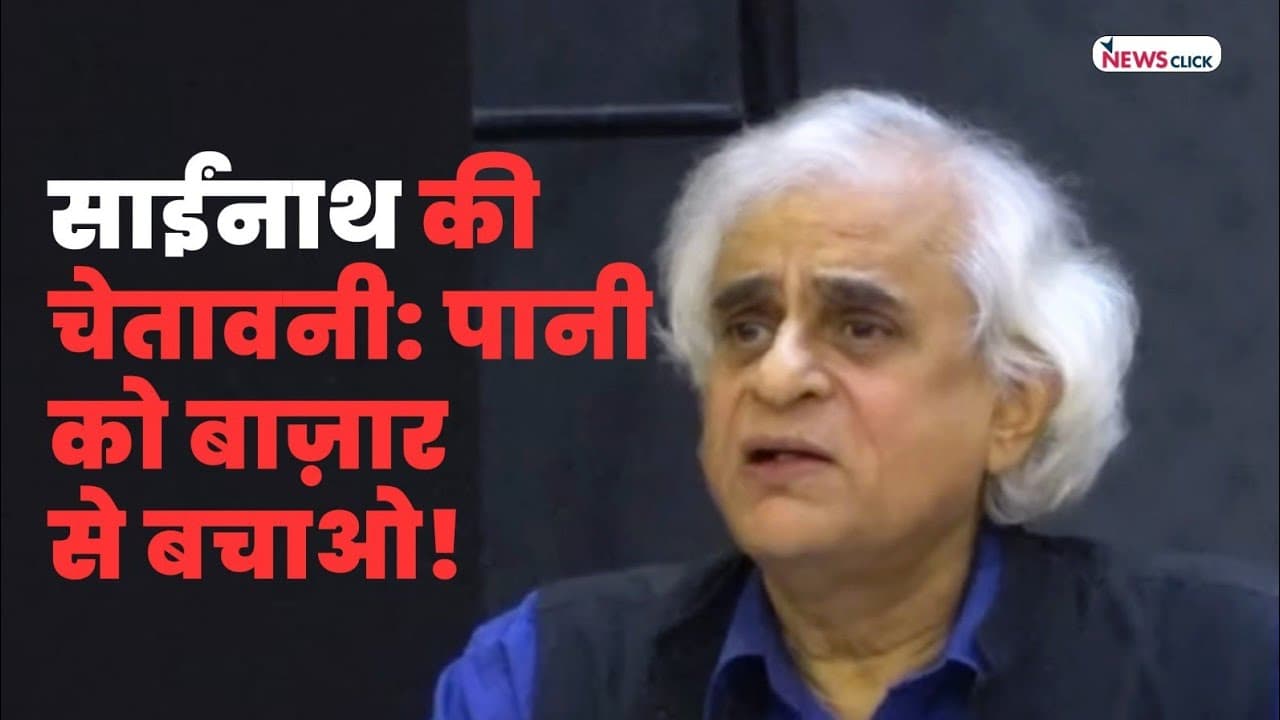
Water Inequality और Privatization पर साईंनाथ का भाषण | Anil Chaudhary Memorial Lecture 2025
TL;DR
Water disputes and privatization threaten global resources.
Transcript
1956 Interstate Water Disputes Act or was internal Indy every neighbor of ours we have a dispute involving water every it's not an issue of who is right and who is wrong the fact is that water is a bloody explosive issue and we have to recognize how bloody explosive it is Nadika kilometer private management inland fishing communities You know gover... Read More
Key Insights
- Water disputes are prevalent both within India and with neighboring countries, highlighting the explosive nature of water as a resource.
- The privatization of water resources is a growing concern, with corporations profiting at the expense of public access.
- Women bear the brunt of water collection, accounting for 80% of the task, yet have the least access to water resources.
- Inequality in water distribution mirrors broader societal inequalities, with urban areas receiving significantly more water than rural areas.
- The privatization of water services leads to higher costs for consumers, with private sector charges averaging 59% more than public services.
- Religious tourism and urban development have led to environmental degradation, impacting water sources and availability.
- The concept of virtual water exports highlights the hidden transfer of water resources through agricultural exports, exacerbating water scarcity.
- Legislative action and public awareness are crucial in addressing water inequality and preventing further privatization of this essential resource.
Install to Summarize YouTube Videos and Get Transcripts
Explore YouTube Video Summarizer or Get YouTube Transcript Extractor
Questions & Answers
Q: What are the main issues discussed in the lecture?
The lecture addresses the growing inequality in water distribution, the threat of privatization, and the numerous water disputes within India and with neighboring countries. It emphasizes the explosive nature of water as a resource and the need for legislative action and public awareness to address these issues.
Q: How does water privatization impact consumers?
Water privatization leads to higher costs for consumers, with private sector charges averaging 59% more than public services. This increase in cost exacerbates existing inequalities and limits access to water for those who cannot afford the higher prices, highlighting the need for public control over water resources.
Q: What role do women play in water collection?
Women are primarily responsible for water collection, accounting for 80% of the task. Despite their significant role, they have the least access to water resources, which underscores the gender inequality in water distribution and the need for policies that address this disparity.
Q: What is the concept of virtual water exports?
Virtual water exports refer to the hidden transfer of water resources through agricultural exports. Countries like India export significant amounts of water-intensive crops, such as rice, which exacerbates water scarcity domestically by using vast amounts of water for production and export.
Q: How does religious tourism impact water sources?
Religious tourism and urban development have led to environmental degradation, particularly through the concretization and marbling of river sources. This prevents natural water flow and soil breathing, leading to water scarcity in areas that were once abundant in water resources.
Q: What legislative actions are suggested to address water inequality?
The lecture suggests enacting legislation to prevent the privatization of water resources, prioritizing essential uses of water, and recognizing water as a finite but exhaustible resource. It also calls for public awareness and mobilization around water justice to ensure equitable distribution and access.
Q: What is the impact of water disputes on India?
Water disputes within India and with neighboring countries are prevalent and highlight the explosive nature of water as a resource. These disputes can lead to conflict and exacerbate existing tensions, emphasizing the need for cooperative and equitable management of water resources.
Q: How does the lecture propose to dismantle the thirst economy?
The lecture proposes dismantling the thirst economy by prioritizing essential uses of water, abandoning grandiose projects like river linking, and focusing on sustainable agricultural practices. It emphasizes the need for public control over water resources and legislative action to prevent further privatization.
Summary & Key Takeaways
-
The lecture discusses the increasing inequality in water distribution and the threat of privatization. It highlights the numerous water disputes within India and with neighboring countries, emphasizing the explosive nature of water as a resource.
-
Women are disproportionately affected by water collection duties, accounting for 80% of the task, yet they have the least access to water. The privatization of water services leads to higher costs for consumers and exacerbates existing inequalities.
-
The lecture calls for legislative action and public awareness to address water inequality and prevent further privatization. It advocates for prioritizing essential uses of water and recognizing it as a finite but exhaustible resource.
Read in Other Languages (beta)
Share This Summary 📚
Summarize YouTube Videos and Get Video Transcripts with 1-Click
Try YouTube Summary with ChatGPT & Claude or YouTube Transcript Generator
Explore More Summaries from NewsClickin 📚
Summarize YouTube Videos and Get Video Transcripts with 1-Click
Try YouTube Summary with ChatGPT & Claude or YouTube Transcript Generator