Why So Many Meteorites Come From The Same Place
TL;DR
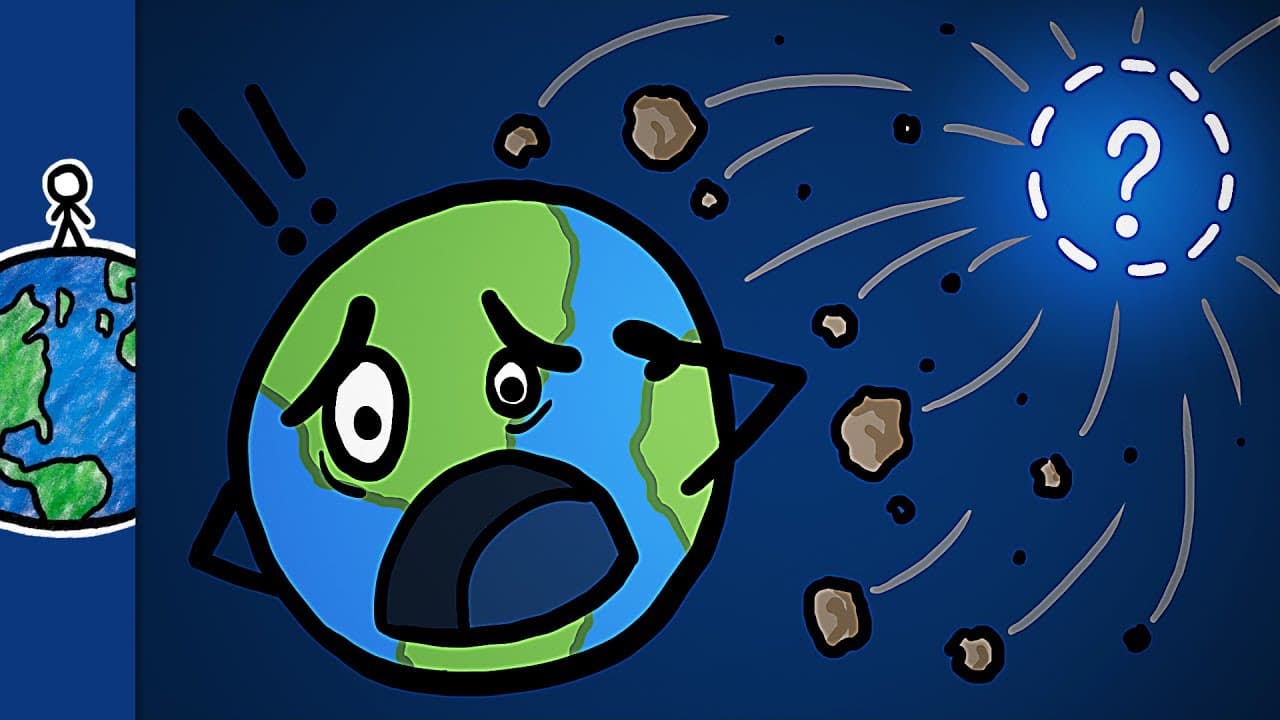
Asteroid Hebe's orbital resonance sends rocks towards Earth, posing collision risks.
Transcript
Hi, this is Emily from MinuteEarth. Over the ages, the million or so rocks that make up the main asteroid belt between Mars and Jupiter have sent chunks of space debris large and small crashing into Earth. And after analyzing a lot of these meteorites, we've discovered something really weird: more than a third of them have the same chemical signatu... Read More
Key Insights
- 😵 The asteroid Hebe's orbital resonance leads to an increased risk of Earth-crossing impacts.
- 🍳 Hebe's unique chemical signature suggests it may have broken off from a single asteroid.
- 😀 Earth faces the threat of potentially destructive asteroid impacts, as seen in past incidents.
- 🧑🔬 Scientists are exploring methods to divert dangerous asteroids, but practical solutions are still in progress.
- 🦻 Collaborations with online learning communities like Skillshare aid in science communication and education.
- 🛰️ Asteroids near Jupiter experience gravitational effects that can destabilize their orbits.
- 💥 Understanding asteroid behavior and trajectories is crucial for predicting potential collisions with Earth.
Install to Summarize YouTube Videos and Get Transcripts
Explore YouTube Video Summarizer or Get YouTube Transcript Extractor
Questions & Answers
Q: What makes Hebe unique compared to other asteroids?
Hebe stands out due to its chemical signature and orbital resonance, which lead to sending more rocks towards Earth than other asteroids in the belt.
Q: How do asteroids orbiting near Jupiter pose a risk to Earth?
Asteroids near Jupiter experience a gravitational pull that can distort their orbits and make them potentially Earth-crossing, increasing the risk of collisions with our planet.
Q: What incidents in the past show the impact of asteroid collisions on Earth?
Historical events like the 1976 boulder crash in China and the 1868 meteorite shower in Poland highlight the potential destructive power of asteroid impacts on Earth.
Q: How are scientists working to mitigate the risks of asteroid collisions?
Scientists are researching ways to divert asteroids on a collision course with Earth, but effective solutions are still under development and may take decades to implement.
Summary & Key Takeaways
-
The asteroid belt between Mars and Jupiter has sent space debris to crash into Earth.
-
Hebe, an asteroid at the edge of the belt, has a unique chemical signature and orbital resonance that sends rocks towards Earth.
-
Scientists are studying ways to divert potential Earth-bound asteroids, but solutions are still in development.
Read in Other Languages (beta)
Share This Summary 📚
Summarize YouTube Videos and Get Video Transcripts with 1-Click
Try YouTube Summary with ChatGPT & Claude or YouTube Transcript Generator
Explore More Summaries from MinuteEarth 📚

Summarize YouTube Videos and Get Video Transcripts with 1-Click
Try YouTube Summary with ChatGPT & Claude or YouTube Transcript Generator