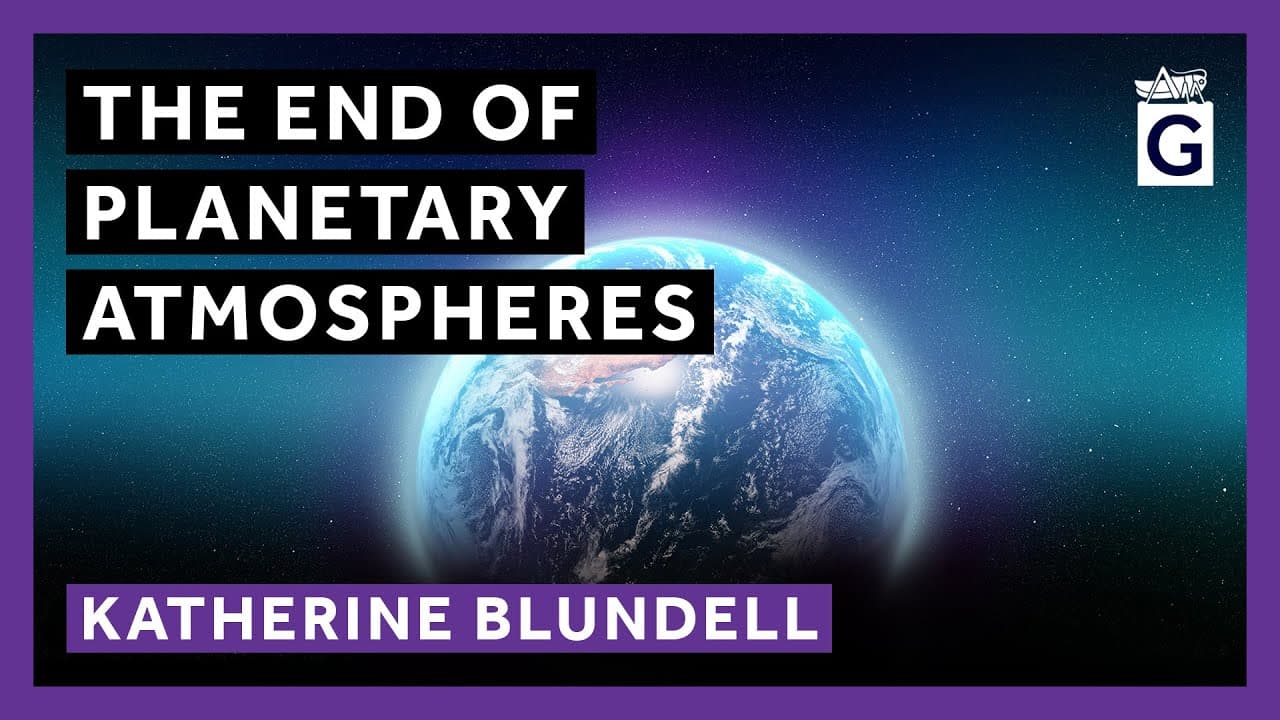
The End of Planetary Atmospheres
TL;DR
Contrasting the habitability and atmospheres of Earth and Venus reveals significant differences and potential for life in extreme conditions.
Transcript
- Today's lecture is very much a continuation of the last two lectures in my previous series. Specifically, I'm thinking of the lecture on Planetary Universe and also the one on Life in the Universe. And in this previous lecture, I talk quite a bit about what it is that makes a planet hospitable and a really good place to live. Well, let's just rem... Read More
Key Insights
- ❓ Venus and Earth possess vastly different atmospheres and surface conditions, impacting their habitability.
- 💖 Phosphine detection on Venus initially sparked interest in potential life forms but has since been attributed to non-biological origins.
- 🌐 Planting more forests can help combat global warming but is not a sole solution for climate change mitigation.
Install to Summarize YouTube Videos and Get Transcripts
Explore YouTube Video Summarizer or Get YouTube Transcript Extractor
Questions & Answers
Q: Is the detection of phosphine on Venus indicative of potential life forms?
While phosphine detection raised initial excitement, further analysis suggests non-biological processes explain its presence, dimming hopes for life on Venus.
Q: Can certain life forms survive on the surface of Venus despite extreme conditions?
Some extremophiles found near thermal vents in the ocean could potentially survive on Venus, showcasing the adaptability of certain organisms to harsh environments.
Q: How effective would planting more forests be in combating global warming?
While planting forests can help mitigate some effects of global warming and contribute to carbon sequestration, it is not a standalone solution, and efforts should be multifaceted.
Q: What would be the implications if nuclear bombs were used globally in terms of climate and environmental impacts?
A global nuclear conflict would have catastrophic consequences, potentially leading to a nuclear winter, which could exacerbate global cooling and environmental devastation.
Summary & Key Takeaways
-
Venus and Earth have starkly different atmospheres and surface conditions, with Venus being inhospitable due to its high pressure and temperature levels.
-
Earth's atmosphere, although facing challenges like global warming, still maintains a balance conducive to life.
-
Phosphine detection on Venus raised speculation about potential life forms, but further analysis suggests non-biological origins.
Read in Other Languages (beta)
Share This Summary 📚
Summarize YouTube Videos and Get Video Transcripts with 1-Click
Try YouTube Summary with ChatGPT & Claude or YouTube Transcript Generator
Explore More Summaries from Gresham College 📚

Summarize YouTube Videos and Get Video Transcripts with 1-Click
Try YouTube Summary with ChatGPT & Claude or YouTube Transcript Generator