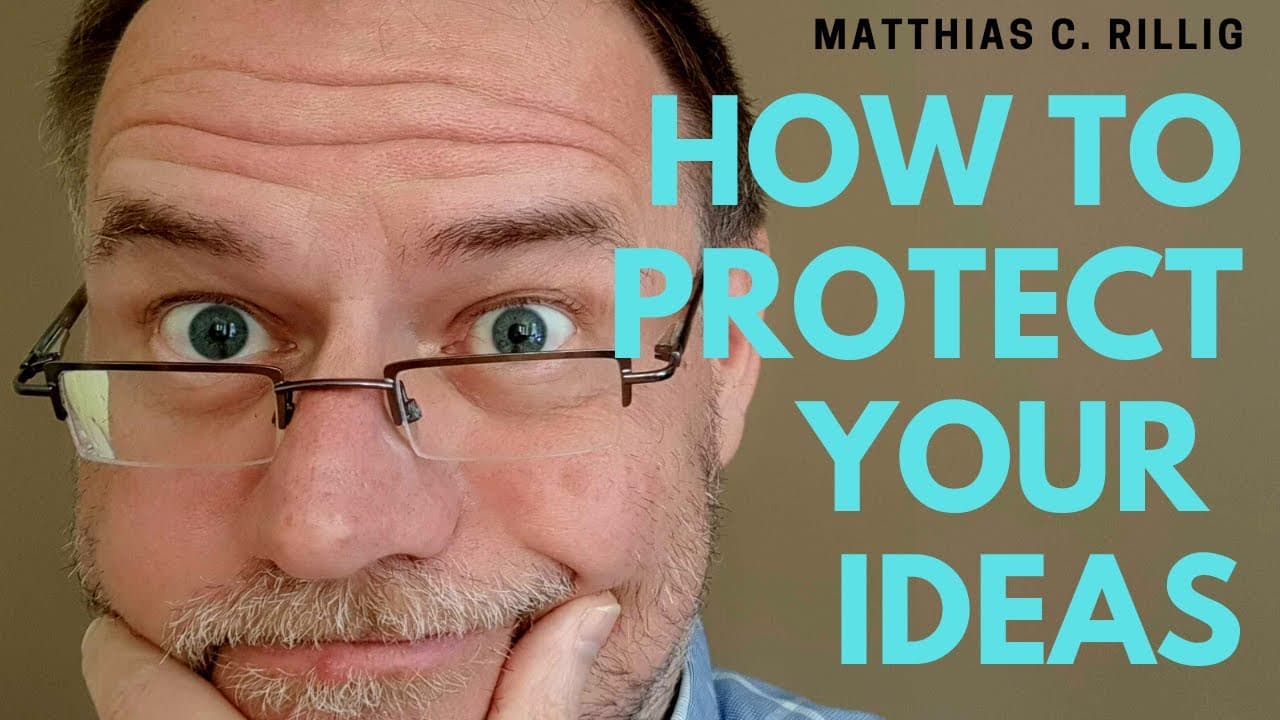
How to protect your ideas #phdlife #phd #academia #research #academia
TL;DR
Protecting research ideas is essential for junior researchers, and sharing with a trusted circle can help prevent theft.
Transcript
how to protect your research ideas from being stolen now I have experienced idea theft basically in various ways it ranges from basically seeing an entire paper of mine copied word by word including all of the figures and then published under somebody else's name that is of course an extreme case of Fraud and academic misconduct and it ranged all t... Read More
Key Insights
- 💡 Idea theft is a significant problem in research and can range from plagiarism to others pitching the same idea.
- 💡 Junior researchers are more vulnerable to idea theft and should be cautious while sharing their ideas.
- 💡 Sharing ideas and receiving feedback is important for progress, but precautions should be taken to protect transformative ideas.
- 💡 Prioritizing output and establishing priority through publications can help safeguard valuable ideas.
- 😫 Setting agreements within research groups or labs can provide clarity on sharing and protecting ideas.
- 💡 Many ideas are born out of discussions in labs, emphasizing the importance of tracking idea origins and crediting contributors.
- 💡 Paranoia should be avoided, but caution and thoughtful consideration of who ideas are shared with are necessary.
Install to Summarize YouTube Videos and Get Transcripts
Explore YouTube Video Summarizer or Get YouTube Transcript Extractor
Questions & Answers
Q: How can research ideas be stolen?
Research ideas can be stolen through plagiarism, where someone copies a paper word for word and publishes it under their name. Ideas can also be stolen when someone pitches the same idea after getting access to an email list.
Q: Why is it more significant for a junior researcher?
Junior researchers have more at stake as their careers depend on publishing original research. If their ideas are stolen, it can hinder their progress and reputation in the scientific community.
Q: Is sharing ideas important?
Yes, sharing ideas and receiving feedback is crucial for scientific progress. It helps refine ideas and discard ones that may not be fruitful. Open dialogue with other scientists is essential for growth.
Q: How can researchers protect their ideas?
Researchers can protect their ideas by sharing them with a trusted circle rather than openly on platforms like Twitter. Prioritizing output, setting agreements, and tracking idea origins can also help protect valuable ideas.
Summary & Key Takeaways
-
Research ideas can be stolen, ranging from plagiarism of papers to others pitching the same idea after receiving an email.
-
Sharing ideas and getting feedback is important for scientific progress, but caution is necessary, especially for transformative ideas.
-
Suggestions for protecting ideas include sharing with a trusted circle, prioritizing output, setting agreements, and tracking the origin of ideas.
Read in Other Languages (beta)
Share This Summary 📚
Summarize YouTube Videos and Get Video Transcripts with 1-Click
Try YouTube Summary with ChatGPT & Claude or YouTube Transcript Generator
Explore More Summaries from Life in academia 📚



Summarize YouTube Videos and Get Video Transcripts with 1-Click
Try YouTube Summary with ChatGPT & Claude or YouTube Transcript Generator