Biology Ecosystem part 18 (Ecological Succession) class 12 XII
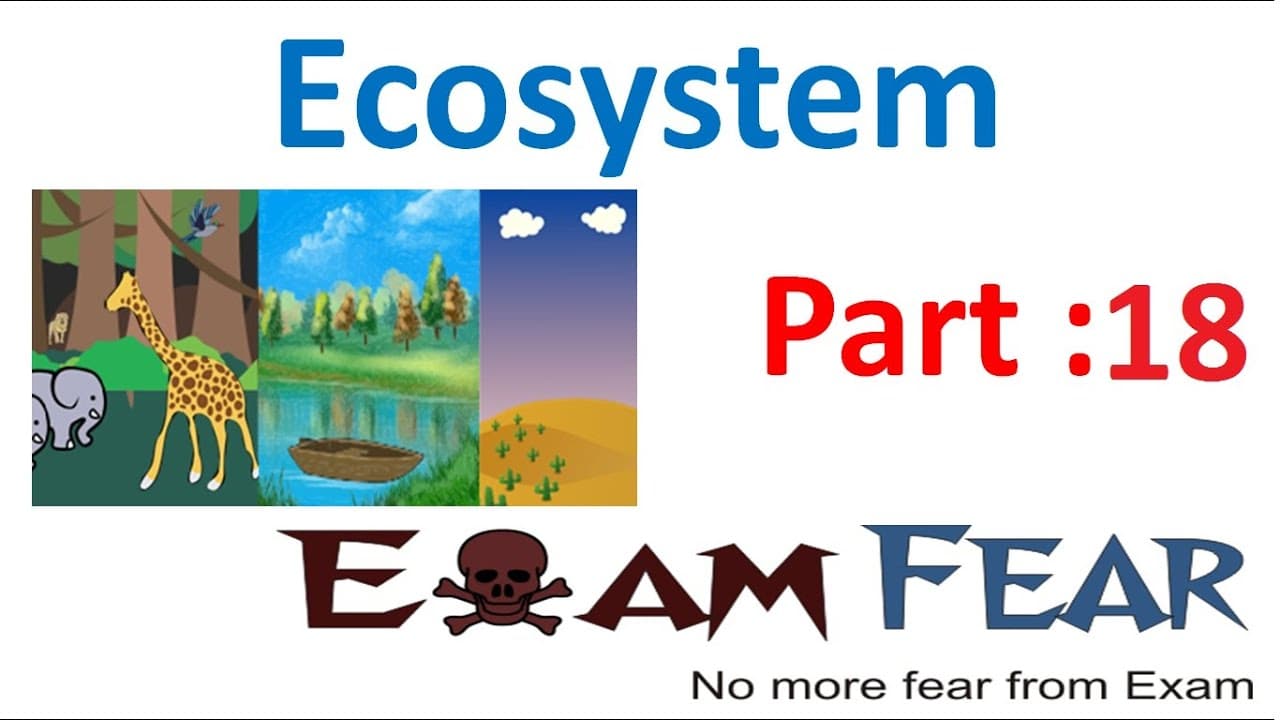
TL;DR
Ecological succession refers to the gradual change in species composition and structure in a given area over time, leading to the development of new ecosystems.
Transcript
hello friends this video on ecosystem part 18 is brought to you by exam feel calm no more fear from exam so now that we have talked about ecological pyramids we will now talk about ecological succession so let us see what does it mean so it means succession means something it is related to the word successors successor means something which comes a... Read More
Key Insights
- ⌛ Ecological succession involves the gradual change in species composition and structure over time in a given area.
- 👶 It can result in the development of new ecosystems and the emergence of new species.
- 😚 Primary succession occurs in areas where no living organisms previously existed, while secondary succession occurs in areas where existing organisms were lost.
- 🌍 Ecological succession and evolution are parallel processes that shape the world as we know it today.
- 💱 Environmental changes caused by natural disasters or human activities can trigger secondary succession.
- 🖐️ Decomposers play a crucial role in ecological succession.
- 🥡 Ecological succession is a gradual and ongoing process that takes millions of years to shape ecosystems.
Install to Summarize YouTube Videos and Get Transcripts
Explore YouTube Video Summarizer or Get YouTube Transcript Extractor
Questions & Answers
Q: What is ecological succession?
Ecological succession refers to the gradual change in species composition and structure in a given area over time, resulting in the development of new ecosystems.
Q: How is ecological succession different from evolution?
Ecological succession is the process of developing an ecosystem with gradual changes, while evolution is the origin or formation of new organisms from existing ones. Both processes occur independently but can happen concurrently.
Q: What are the types of ecological succession?
There are two types of ecological succession: primary succession, which starts in areas where no living organisms existed, and secondary succession, which starts in areas where all existing organisms were lost.
Q: What can cause secondary succession?
Secondary succession can occur due to natural disturbances like fires or floods, as well as human-induced activities such as deforestation. These events can lead to the loss of all living organisms in an area, paving the way for new organisms to establish themselves.
Summary & Key Takeaways
-
Ecological succession is a process that involves the gradual change in the composition and structure of species in a given area over time.
-
It can result in the development of new ecosystems and is characterized by changes in the number and types of organisms, as well as the presence of decomposers.
-
There are two types of ecological succession: primary succession, which occurs in areas where no living organisms existed, and secondary succession, which occurs in areas where all the existing organisms were lost.
Read in Other Languages (beta)
Share This Summary 📚
Summarize YouTube Videos and Get Video Transcripts with 1-Click
Try YouTube Summary with ChatGPT & Claude or YouTube Transcript Generator
Explore More Summaries from LearnoHub - Class 11, 12 📚

Summarize YouTube Videos and Get Video Transcripts with 1-Click
Try YouTube Summary with ChatGPT & Claude or YouTube Transcript Generator