How to Make a Seashell - Just Add Water!
TL;DR
Ocean chemistry affects shell-building by stabilizing calcium carbonate concentrations, but increased CO2 levels pose a threat to shell builders.
Transcript
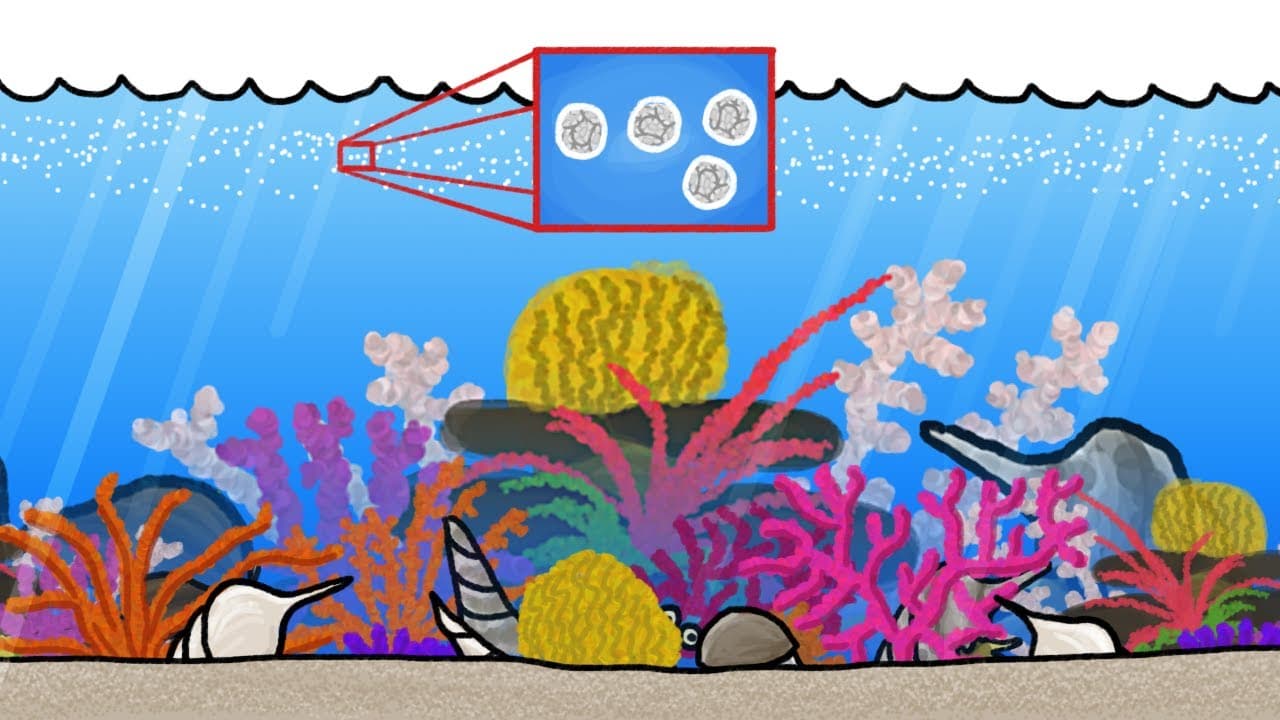
Living creatures are amazing at building their homes from just about anything. But sea-dwelling creatures are particular wizards: microscopic coccolithophores, coral-building algae, and giant snails engineer their own building material, like magic, by pulling two dissolved chemicals -- calcium and carbonate -- out of the water to form solid shells ... Read More
Key Insights
- 🤢 Sea creatures use dissolved calcium and carbonate to create shells for protection.
- 🐚 Ocean chemistry stabilizes calcium carbonate concentrations, crucial for shell-building.
- 🫢 Oceans act as a balancing system for dissolved gases, such as CO2, impacting shell formation.
- 🐚 Increased CO2 levels can disrupt the availability of carbonate for shell-building in marine life.
- 🥺 Unbalanced ocean chemistry could lead to a decline in shell-builder populations and ecosystems.
- ☠️ Deep oceanic depths have different calcium carbonate dissolution rates compared to surface waters.
- ⚾ The dissolution depth of calcium carbonate in seawater varies based on the concentrations of calcium and carbonate.
Install to Summarize YouTube Videos and Get Transcripts
Explore YouTube Video Summarizer or Get YouTube Transcript Extractor
Questions & Answers
Q: How do sea creatures like coccolithophores create their shells?
Sea creatures like coccolithophores use dissolved calcium and carbonate in seawater to form solid shells, which act as protection and support for their bodies. This process allows them to build intricate structures for survival.
Q: What role does ocean chemistry play in stabilizing calcium carbonate concentrations?
Ocean chemistry helps maintain stability in calcium and carbonate concentrations in seawater, creating optimal conditions for shell-building near the ocean's surface. This equilibrium allows sea creatures to thrive and build their shells effectively.
Q: How do changes in CO2 levels impact shell-building in sea creatures?
Changes in atmospheric CO2 levels can alter the amount of carbonate available in seawater for shell-building. Higher levels of CO2 lead to decreased carbonate, making it harder for sea creatures to form shells, which could potentially threaten their survival.
Q: What are the long-term consequences of unbalanced ocean chemistry on shell-builders?
Unbalanced ocean chemistry, caused by factors like increased CO2 levels, can disrupt the equilibrium needed for shell-building. This imbalance could lead to a decline in marine life populations and the deterioration of shell formations in the oceans.
Summary & Key Takeaways
-
Sea-dwelling creatures like coccolithophores and coral-building algae create solid shells by extracting calcium and carbonate from water.
-
The concentration of calcium carbonate in seawater stabilizes shell-building near the surface but can dissolve shells at greater depths.
-
Increased CO2 levels in the atmosphere can affect the amount of carbonate available for shell-building, potentially impacting marine life.
Read in Other Languages (beta)
Share This Summary 📚
Summarize YouTube Videos and Get Video Transcripts with 1-Click
Try YouTube Summary with ChatGPT & Claude or YouTube Transcript Generator
Explore More Summaries from MinuteEarth 📚






Summarize YouTube Videos and Get Video Transcripts with 1-Click
Try YouTube Summary with ChatGPT & Claude or YouTube Transcript Generator