Mercantilism -- Definition for Kids
TL;DR
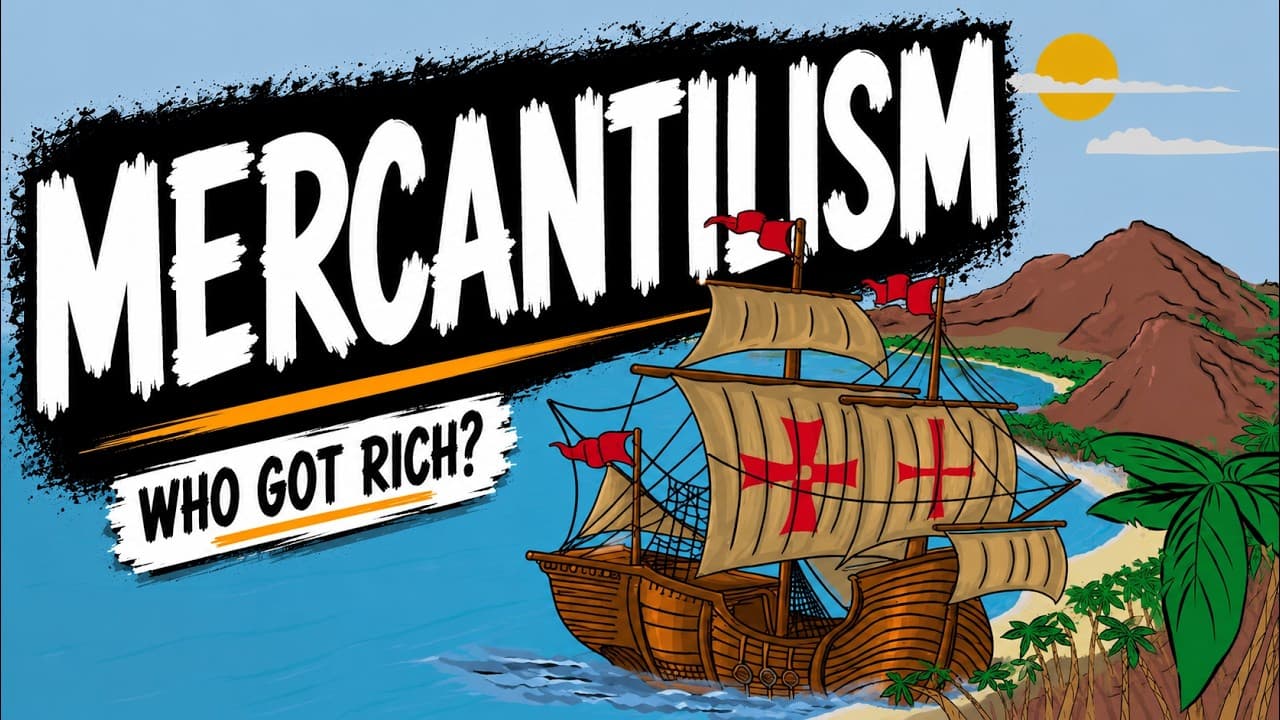
Mercantilism was an economic system led by European powers.
Transcript
in this history illustrated video we will be discussing mercantilism so what is mercantilism basically it's just an economic system when talking about economic things that means you're talking about the economy or simply put money so who is involved in mercantilism it was started by european powers and was primarily led by the big t... Read More
Key Insights
- Mercantilism was an economic system where European powers, primarily Spain, France, and England, sought wealth through colonization and trade.
- European countries raced to explore and claim new lands during the Renaissance, leading to intense competition and rivalry.
- Colonies served as new markets and sources of raw materials, with trade restricted to benefit the mother country.
- The system led to European dominance and the creation of vast empires, impacting global power dynamics and industrialization.
- Social and cultural effects included the spread of Christianity, slavery, and the loss of entire civilizations and cultures.
- Politically, European legal systems influenced global governance, reshaping countries' political landscapes.
- Environmentally, mercantilism facilitated a global exchange of plants, animals, and resources, impacting agriculture and population growth.
- The decline of mercantilism occurred post-World War II as colonies gained independence, ending centuries of European control.
Install to Summarize YouTube Videos and Get Transcripts
Explore YouTube Video Summarizer or Get YouTube Transcript Extractor
Questions & Answers
Q: What is mercantilism?
Mercantilism is an economic system that emerged in Europe during the Renaissance. It involved European powers like Spain, France, and England seeking wealth through the establishment of colonies. These colonies served as new markets and sources of raw materials, with trade restricted to benefit the mother country.
Q: How did European countries compete during the age of mercantilism?
European countries competed fiercely during the age of mercantilism by exploring and claiming new lands. This race for territory led to intense rivalries as countries sought to expand their empires. Colonies were established to exploit resources and serve as markets, concentrating wealth and power with the mother countries.
Q: What were the social and cultural impacts of mercantilism?
Mercantilism had significant social and cultural impacts, including the spread of Christianity, which remains the largest religion today. The system also led to the enslavement of millions and the loss of entire civilizations. Cultures were either assimilated or eradicated, leaving a legacy that still affects many countries.
Q: How did mercantilism affect global power dynamics?
Mercantilism shifted global power dynamics by establishing European dominance. Through colonization and trade, European powers amassed wealth and influence, creating vast empires. This dominance facilitated industrialization and reshaped global political landscapes, as European legal systems and values influenced governance worldwide.
Q: What were the environmental impacts of mercantilism?
The environmental impacts of mercantilism were profound, leading to a global exchange of plants, animals, and resources. This exchange transformed agriculture and contributed to significant population growth. It also altered land use, as European concepts of private property replaced communal views, impacting native populations and ecosystems.
Q: What led to the decline of mercantilism?
The decline of mercantilism occurred after World War II when European powers, weakened by destruction, lost control over their colonies. This led to a wave of independence movements, as colonies declared independence, ending centuries of European dominance and reshaping global political and economic landscapes.
Q: How did mercantilism influence industrialization?
Mercantilism influenced industrialization by providing European powers with the wealth and resources needed to develop industries. Colonies supplied raw materials, which were manufactured into goods in Europe. This process facilitated technological advancements and economic growth, laying the foundation for the Industrial Revolution and transforming societies.
Q: What were the political changes brought about by mercantilism?
Mercantilism brought about political changes by reshaping global governance. European legal systems and values, influenced by ancient Greece and Rome, were imposed on colonies. This led to the adoption or adaptation of these systems worldwide, affecting political structures and creating a more interconnected global political landscape.
Summary & Key Takeaways
-
Mercantilism was an economic system led by European powers like Spain, France, and England, focusing on wealth accumulation through colonization and trade. The system involved establishing colonies as new markets and sources of raw materials, with trade restricted to benefit the mother country.
-
The impact of mercantilism was vast, leading to European dominance and the creation of large empires. It affected global power dynamics, industrialization, and had significant social, cultural, political, and environmental consequences, including the spread of Christianity, slavery, and the exchange of resources.
-
The decline of mercantilism happened after World War II when European powers, weakened by destruction, lost control over their colonies. This led to a wave of independence movements, ending centuries of European dominance and reshaping global political and economic landscapes.
Read in Other Languages (beta)
Share This Summary 📚
Summarize YouTube Videos and Get Video Transcripts with 1-Click
Try YouTube Summary with ChatGPT & Claude or YouTube Transcript Generator