How to Quickly Relieve a Tight Psoas Muscle
TL;DR
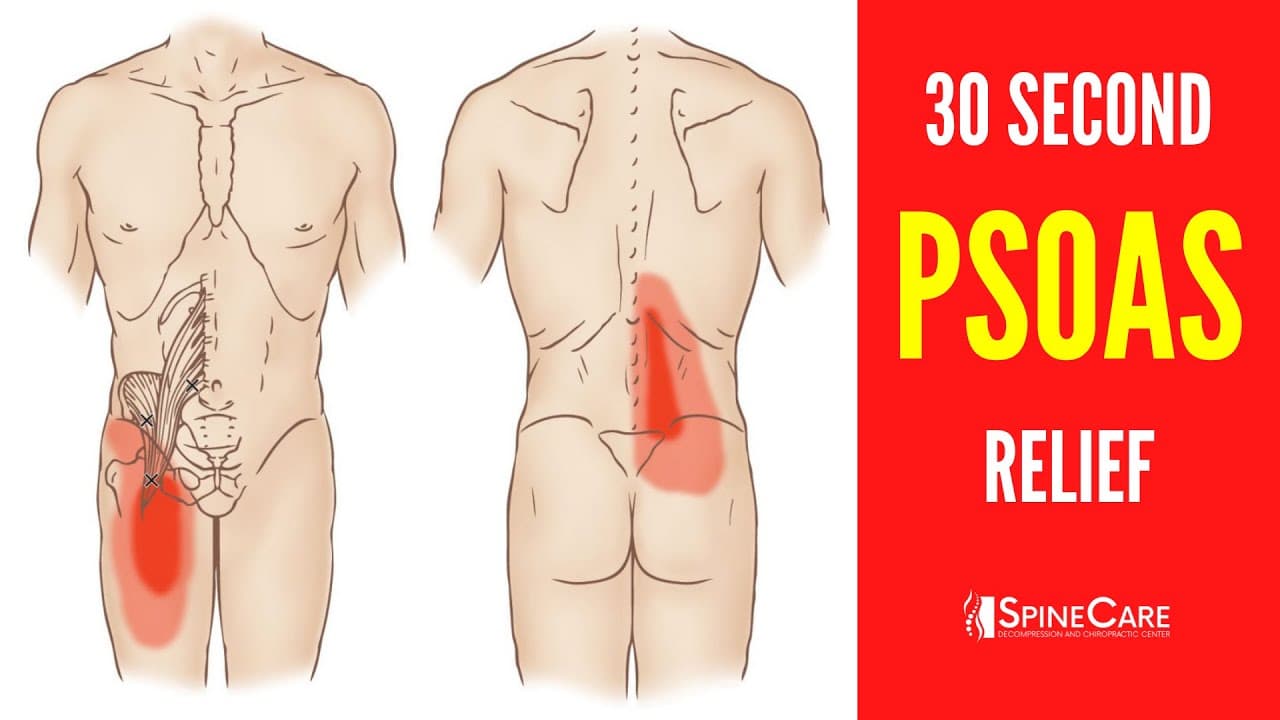
To quickly relieve a tight psoas muscle in 30 seconds, perform mobility exercises such as the psoas cobra and couch stretch. These exercises help to activate and strengthen the psoas and hip flexors, reducing pain in the lower back and front of the leg.
Transcript
This video, I'm going to show you how to fix a tight psoas muscle in 30 seconds. Stay tuned! Hey, everyone. Dr. Rowe coming to you from SpineCare in Saint Joseph, Michigan. In this video, I want to go over a big overlooked cause of lower back pain which are tight hip flexors, notably that psoas muscle. A tight psoas tends to cause pain in the front... Read More
Key Insights
- 🥺 A tight psoas muscle can lead to lower back pain and discomfort.
- 🏃 Mobility exercises and strengthening exercises are essential for releasing and activating the psoas muscle.
- 💪 The psoas cobra, couch stretch, knee raiser, and hip lunge slider are effective exercises for targeting the psoas muscle.
- 💯 Core engagement and proper posture are important for maximizing the benefits of these exercises.
Install to Summarize YouTube Videos and Get Transcripts
Explore YouTube Video Summarizer or Get YouTube Transcript Extractor
Questions & Answers
Q: What causes tight psoas muscles and how do they contribute to lower back pain?
Tight psoas muscles can be caused by prolonged sitting, improper posture, or muscle imbalances. When tight, they can pull on the lower back, leading to pain and discomfort.
Q: How can the psoas cobra exercise help relieve tightness in the psoas muscle?
The psoas cobra exercise targets the hip flexors and lower back. By stretching and activating these muscles, it can help release tension in the psoas and provide relief from pain.
Q: What is the purpose of the couch stretch exercise?
The couch stretch is designed to specifically target and stretch the psoas muscle. By maintaining good posture and lunging forward, you can deepen the stretch and alleviate tightness in the hip flexors.
Q: How do exercises like the knee raiser and hip lunge slider strengthen the hip flexors?
The knee raiser exercise involves driving the knee up and activating the hip flexors, including the psoas muscle. The hip lunge slider exercise challenges the hip flexors by sliding one foot back into a lunge position, providing strength and stability.
Key Insights:
- A tight psoas muscle can lead to lower back pain and discomfort.
- Mobility exercises and strengthening exercises are essential for releasing and activating the psoas muscle.
- The psoas cobra, couch stretch, knee raiser, and hip lunge slider are effective exercises for targeting the psoas muscle.
- Core engagement and proper posture are important for maximizing the benefits of these exercises.
- Consistency and gradually increasing the intensity of these exercises can lead to long-lasting relief from tightness and pain in the psoas muscle.
Summary & Key Takeaways
-
A tight psoas muscle can cause pain in the front part of the leg, near the groin and lower back.
-
To alleviate pain and tightness, focus on mobility exercises and strengthening the hip flexors.
-
Exercises like the psoas cobra, couch stretch, hip lunge slider, and knee raiser can help release and activate the psoas muscle.
Read in Other Languages (beta)
Share This Summary 📚
Summarize YouTube Videos and Get Video Transcripts with 1-Click
Try YouTube Summary with ChatGPT & Claude or YouTube Transcript Generator
Explore More Summaries from SpineCare Decompression and Chiropractic Center 📚


Summarize YouTube Videos and Get Video Transcripts with 1-Click
Try YouTube Summary with ChatGPT & Claude or YouTube Transcript Generator