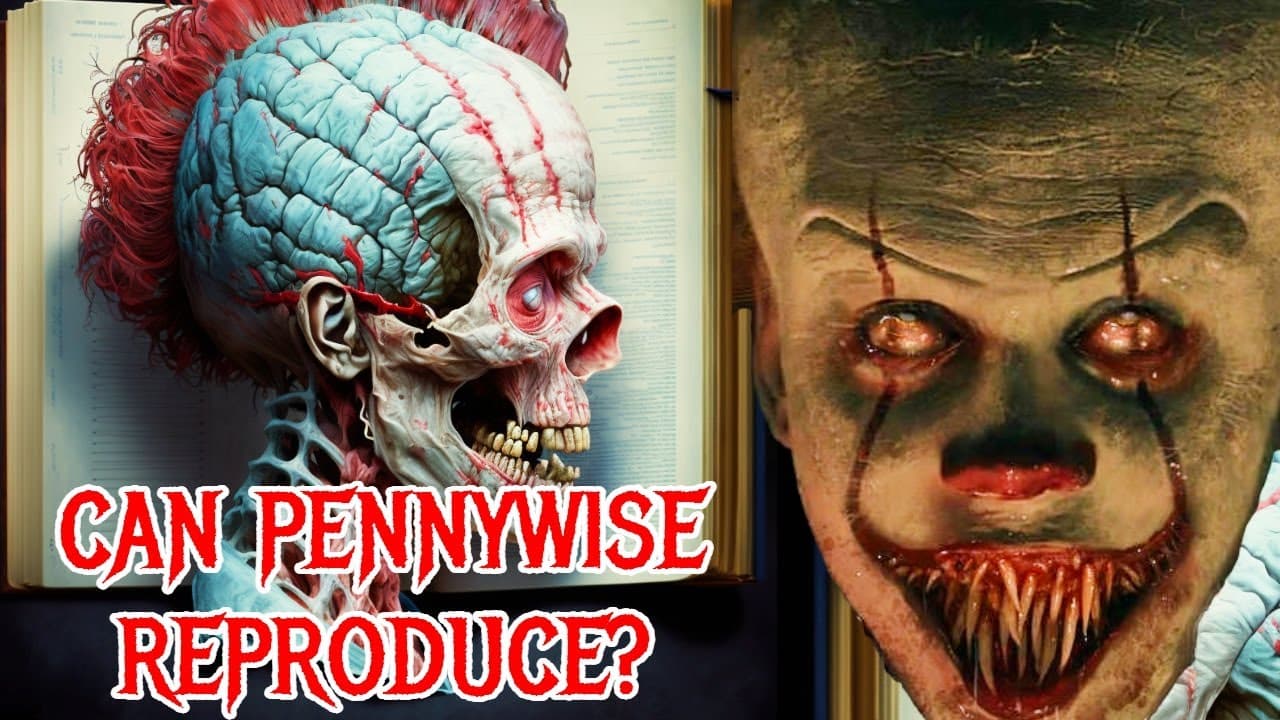
Pennywise Anatomy Explored - Can IT Creature Reproduce? What Is Its True Form? And Many More!
TL;DR
A deep dive into Pennywise's origin, powers, and impact in Stephen King's "It."
Transcript
beep beep Richie Hello friends and welcome to another marvelous video where we explore the terrifying character it the legendary work of the legend himself Stephen King yes this episode is totally dedicated to the infamous clown who creates chaos around the town of dairy with wild red hair and green pom-poms Pennywise is just its other form to lure... Read More
Key Insights
- 😱 Pennywise is not merely a clown; it symbolizes the complexities of human fear, especially that of children, making it a multifaceted horror figure.
- 😥 The entity’s origins point to a cosmic struggle between good and evil, establishing a larger narrative context within King’s universe.
- 😱 The fear exploitation method sets Pennywise apart from typical horror villains, as it reveals vulnerabilities inherent in human emotions and relationships.
- 😨 Derry's townspeople display a collective amnesia concerning Pennywise’s atrocities, indicating the deep psychological scars that fear can impose.
- 🙂 The duality of the characters Maturin (the guardian) and Pennywise reflects the battle between light and darkness, enhancing the depth of the story's themes.
- 🖐️ The power of illusion and telepathy plays a crucial role in how Pennywise attacks, suggesting deeper psychological manipulation rather than mere physical violence.
- 😨 Pennywise's embodiment of fear indicates that terror can be more impactful and enduring than physical destruction, highlighting the need for emotional resilience.
Install to Summarize YouTube Videos and Get Transcripts
Explore YouTube Video Summarizer or Get YouTube Transcript Extractor
Questions & Answers
Q: What does Pennywise represent in Stephen King's narrative?
Pennywise symbolizes fear itself, using terror as a means to empower and sustain its existence. As an ancient cosmic entity, it emphasizes the struggle between good and evil, illustrating the vulnerabilities that come with human emotions, especially fear in children.
Q: How does Pennywise manage to terrify its victims?
Pennywise employs shape-shifting to manifest as its victims’ deepest fears, ranging from clowns to monstrous creatures. By understanding the individual fears of its prey, it creates illusions that can manipulate their mental state and ensure a more profound sense of terror, making it easier to feed on their fear.
Q: What is the significance of Pennywise's ability to manipulate reality?
This ability underscores the psychological horror in King's work, showing that the true terror lies in fear itself rather than just physical threats. Pennywise's manipulation of reality amplifies the emotional turmoil of the characters, emphasizing the consequences of unresolved trauma and anxiety prevalent in the community of Derry.
Q: How is the Losers’ Club able to confront Pennywise?
The Losers' Club confronts Pennywise through the power of friendship and shared courage. Their bond allows them to challenge their fears collectively, weakening Pennywise. They demonstrate that confronting trauma and embracing unity can effectively diminish the stranglehold of fear.
Q: Does Pennywise have a true form, and what is it?
Pennywise's true form is more complex than the clown persona portrayed. It is ultimately connected to the deadlights, a source of immense power that can drive individuals into madness. This true form represents an ancient entity existing beyond human comprehension, highlighting its horror.
Q: How often does Pennywise attack, and what influences this cycle?
Pennywise's attacks occur approximately every 27 years. This cyclical pattern reflects a deeper theme of generational trauma, suggesting that as long as fear exists within the community, Pennywise can continue its reign of terror by exploiting that fear.
Q: Can Pennywise ever be truly killed?
King’s narrative implies that while the physical manifestations of Pennywise can be defeated, the entity itself might endure in its true form. The power of love and friendship can weaken it, but Pennywise's existential prolongation raises questions about the permanence of evil.
Summary & Key Takeaways
-
The character of Pennywise, from Stephen King's "It," is an ancient cosmic entity that feeds on fear, utilizing shape-shifting abilities to torment children.
-
Pennywise appears primarily as a clown to exploit children's simple fears, but its true form is much more complex, linked to themes of good and evil in the universe.
-
The cyclical nature of its terror in Derry occurs every 27 years, with the Losers' Club playing a vital role in confronting and temporarily weakening the creature through unity and courage.
Read in Other Languages (beta)
Share This Summary 📚
Summarize YouTube Videos and Get Video Transcripts with 1-Click
Try YouTube Summary with ChatGPT & Claude or YouTube Transcript Generator
Explore More Summaries from Marvelous Videos 📚



Summarize YouTube Videos and Get Video Transcripts with 1-Click
Try YouTube Summary with ChatGPT & Claude or YouTube Transcript Generator