Patenting Person Parts
TL;DR
Can companies own your genes? Gene patents raise scientific and ethical concerns.
Transcript
welcome to scishow news i'm michael aranda in for hank green and today we're talking about jeans i've got them you've got them they're natural someone asked me whether they belong in the public domain i think my answer would be yes but on monday the us supreme court began hearing a weird case that raises a weirder question can someone own your gene... Read More
Key Insights
- 🤨 Gene patents raise concerns about limiting access to vital genetic information for medical purposes.
- 👨🔬 Patent holders restricting research impede scientific progress by hindering studies on diseases like leukemia and Huntington's.
- 🙈 Ethical considerations arise when commercial interests clash with the public good, as seen in the gene patent debate.
- 🎮 Collaboration and sharing in scientific endeavors may be hampered by monopolistic control of gene patents.
- 🤗 Balancing monetary incentives with open access to genetic data is crucial for promoting scientific innovation and patient care.
- 🗯️ The controversy surrounding gene patents underscores broader issues of intellectual property rights in the field of genetics.
- 💼 The Supreme Court's involvement in gene patent cases highlights the legal complexities and ethical implications of genetic ownership.
Install to Summarize YouTube Videos and Get Transcripts
Explore YouTube Video Summarizer or Get YouTube Transcript Extractor
Questions & Answers
Q: What are gene patents, and how do they impact genetic research?
Gene patents are legal protections that grant exclusive rights to companies, limiting access to genetic information and hindering scientific progress by impeding research and testing across various diseases.
Q: How do gene patents affect patient access to genetic testing?
Gene patents, like those on BRCA1 and BRCA2, create monopolies, forcing patients to pay high costs for testing and limiting healthcare professionals' ability to provide comprehensive care based on genetic information.
Q: Why are some organizations advocating against gene patents?
Organizations like the ACLU argue that gene patents stifle innovation, hamper collaboration among scientists, and prioritize profit over advancing medical knowledge and improving patient outcomes.
Q: What is the argument in favor of gene patents?
Proponents claim that gene patents incentivize investment in genetic research, leading to a better understanding of specific genes like BRCA1 and BRCA2 while fostering scientific discovery and advancements in personalized medicine.
Summary & Key Takeaways
-
Over 4,000 human genes are patented, raising questions about research limitations.
-
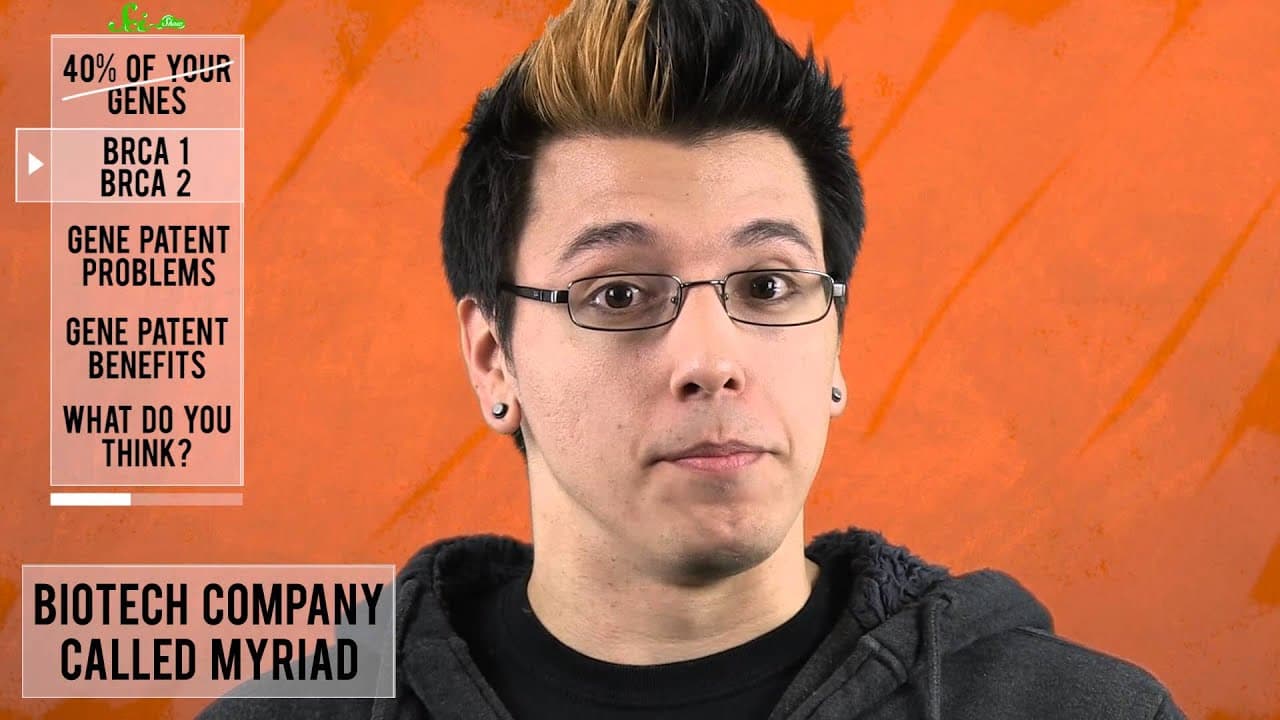
Myriad's gene patents on BRCA1 and BRCA2 restrict access to crucial genetic information for breast and ovarian cancer.
-
Debate centers on whether gene patents hinder or incentivize scientific collaboration and progress.
Read in Other Languages (beta)
Share This Summary 📚
Summarize YouTube Videos and Get Video Transcripts with 1-Click
Try YouTube Summary with ChatGPT & Claude or YouTube Transcript Generator
Explore More Summaries from SciShow 📚


Summarize YouTube Videos and Get Video Transcripts with 1-Click
Try YouTube Summary with ChatGPT & Claude or YouTube Transcript Generator