Space Station Crewmembers Discuss Life in Space with the Media
TL;DR
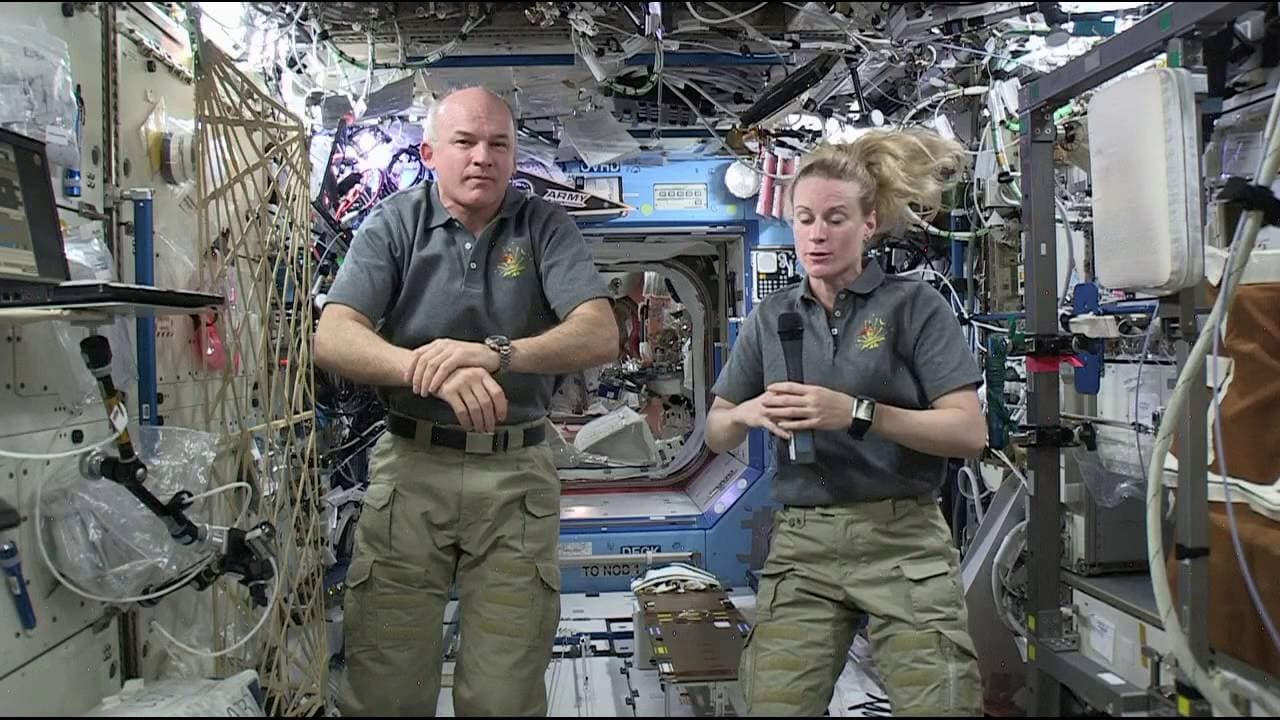
NASA astronauts Commander Jeff Williams and Flight Engineer Kate Rubins discuss their upcoming spacewalk to install an international docking adapter on the International Space Station and their ongoing scientific research in areas such as heart cells and microorganisms.
Transcript
station this is houston are you ready for the event for the event houston we are ready for the event westwood one this is mission control houston please call station for a voice check this is westwood one how do you hear me westwood one we have you loud and clear and we're ready for your questions welcome on board the international station this is ... Read More
Key Insights
- 🎟️ The spacewalk's main objective is to facilitate future crewed missions to the International Space Station by installing a docking adapter.
- 👾 Research in space includes studying the behavior of heart cells in microgravity, analyzing the microbiome of the space station, and observing the effects of microgravity on the reactivation of viruses.
- 😷 The development of DNA sequencing technology for space exploration holds promise for future research and medical applications.
- 👨🚀 Microgravity conditions in space resemble the training astronauts undergo in the neutral buoyancy laboratory, which helps them adapt to the unique challenges of working in space.
- 👾 Commander Jeff Williams reflects on the growth of the space station and the international partnership that made its construction and utilization possible.
- 🚂 Astronauts train extensively for spacewalks and collaborate closely with ground teams to ensure successful execution of tasks.
- 😴 Sleep in space is reported to be restful and beneficial for muscle recovery, with astronauts using sleeping bags tethered to the walls of their crew quarters.
Install to Summarize YouTube Videos and Get Transcripts
Explore YouTube Video Summarizer or Get YouTube Transcript Extractor
Questions & Answers
Q: What is the main purpose of the upcoming spacewalk?
The primary task for the spacewalk is to install an international docking adapter on the International Space Station to enable future commercial crew vehicles to dock.
Q: How does microgravity affect the behavior of heart cells?
In microgravity, there is an upward shift of fluid in the body, which puts unique stresses on the cardiovascular system. By studying heart cells in space, researchers hope to gain insights into how they organize, function, and respond in a gravity-free environment.
Q: Are the astronauts conducting research on viruses, such as the Zika virus?
While the space station cannot harbor dangerous pathogens, the astronauts observe how common human viruses reactivate and become more virulent in microgravity. This research helps in understanding virus-host interactions and developing better strategies to fight them.
Q: How does the experience of looking through a microscope in microgravity differ from on Earth?
According to Dr. Rubins, the microscope works well in space, with the observations looking similar to those on Earth. The absence of gravity does not significantly affect the experience of using a microscope.
Summary & Key Takeaways
-
Commander Jeff Williams and Flight Engineer Kate Rubins are aboard the International Space Station, preparing for a spacewalk to install an international docking adapter for future commercial crew vehicles.
-
Dr. Rubins is conducting research on heart cells, studying their behavior in microgravity, and analyzing the microbiome of the space station.
-
The astronauts also discuss the potential for affordable space travel for civilians and the development of DNA sequencing technology for use in space.
Read in Other Languages (beta)
Share This Summary 📚
Summarize YouTube Videos and Get Video Transcripts with 1-Click
Try YouTube Summary with ChatGPT & Claude or YouTube Transcript Generator
Explore More Summaries from NASA 📚

Summarize YouTube Videos and Get Video Transcripts with 1-Click
Try YouTube Summary with ChatGPT & Claude or YouTube Transcript Generator