Products
Features
YouTube Video Summarizer
Summarize YouTube videos
Web & PDF Highlighter
Highlight web pages & PDFs
Chat with PDF
Ask any PDF questions with AI
Ask AI Clone
Chat with your highlights & memories
Audio Transcriber
Transcribe audio files to text
Glasp Reader
Read and highlight articles
Kindle Highlight Export
Export your Kindle highlights
Idea Hatch
Hatch ideas from your highlights
Integrations
Obsidian Plugin
Notion Integration
Pocket Integration
Instapaper Integration
Medium Integration
Readwise Integration
Snipd Integration
Hypothesis Integration
Apps & Extensions
Chrome Extension
Safari Extension
Edge Add-ons
Firefox Add-ons
iOS App
Android App
Discover
Discover
Ideas
Discover new ideas and insights
Articles
Curated articles and insights
Books
Book recommendations by great minds
Posts
Essays and notes from readers
Quotes
Inspiring quotes collection
Videos
Curated videos and summaries
Explore Glasp
Glasp Newsletter
Weekly insights and updates
Glasp Talk
Interview series with great minds
Glasp Blog
Latest news and articles
Glasp Use Cases
Learn how others use Glasp
Build & Support
Glasp API
Access Glasp's API for developers
MCP Connector
Connect Glasp to Claude & ChatGPT
Community
Glasp Reddit Community
Students
Student discount and benefits
FAQs
Frequently Asked Questions
AboutPricing
DashboardLog inSign up

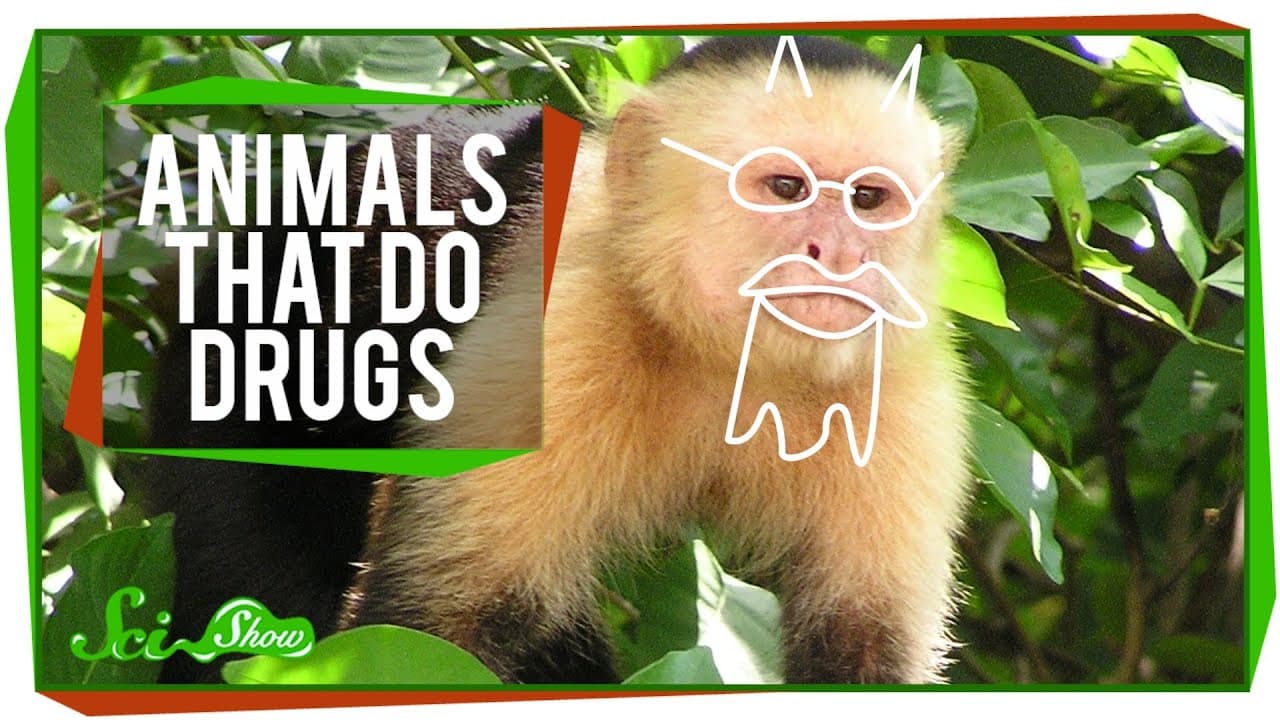
Animals That Do Drugs
1.1M views
•
January 3, 2013
by
SciShow
YouTube video player
Animals That Do Drugs

TL;DR

Animals self-medicate using ants, millipedes, and vines for various health benefits.

Transcript

If you got a headache you got a stash of ibuprofen or whatever to help put you to rights, right? But if you're an animal, they can't just pop down to the nearest Walgreens when they got a tummy ache. So how do they cure what ails them? Well it turns out, some animals have figured out how to self medicate using some pretty weird stuff. [Intro] Antin... Read More

Key Insights

  • 🐦 Anting helps birds maintain cleanliness and prevent pesky parasites.
  • 😒 Capuchin monkeys use millipedes for insect-repelling and skin protection.
  • 😒 Jaguars in the Amazon may use Yage vines for parasite-purging effects.
  • 🤳 Natural remedies in animals showcase their instinctual ability to self-medicate.
  • 🤳 Understanding animal self-medication can provide insights into natural healing methods.
  • 🧑‍⚕️ The behavior of animals seeking out specific substances for health purposes is intriguing.
  • 🤳 Self-medication in animals highlights the complexity of their evolutionary adaptations.

Install to Summarize YouTube Videos and Get Transcripts

Explore YouTube Video Summarizer or Get YouTube Transcript Extractor

Questions & Answers

Q: How do birds benefit from anting?

Anting helps birds keep parasites away, soothes irritated skin, and prevents mites from gnawing on their feathers, promoting overall health and well-being.

Q: Why do Capuchin monkeys rub poisonous millipedes on themselves?

Capuchin monkeys use millipedes filled with Benzoquinones to repel insects and avoid dangerous skin infections from botflies, showing their ability to self-medicate in nature.

Q: What is the purpose of jaguars eating Yage vines in the Amazon?

Jaguars consume Yage vines to purge parasites from their system and potentially experience hallucinations, demonstrating a natural form of self-medication in the wild.

Summary & Key Takeaways

  • Birds engage in anting, allowing ants to secrete chemicals that help keep parasites away and soothe skin.

  • Capuchin monkeys rub poisonous millipedes on themselves to repel insects and prevent skin infections.

  • Jaguars in the Amazon eat Yage vines to purge parasites and potentially experience hallucinations.


Read in Other Languages (beta)

English

Share This Summary 📚

Summarize YouTube Videos and Get Video Transcripts with 1-Click

Download browser extensions on:

Try YouTube Summary with ChatGPT & Claude or YouTube Transcript Generator

Explore More Summaries from SciShow 📚
What Penguin Bones Can Tell Us About Dying Glaciers thumbnail
What Penguin Bones Can Tell Us About Dying Glaciers
SciShow
A Timeline of Life on Earth: 4 Billion Years of History thumbnail
A Timeline of Life on Earth: 4 Billion Years of History
SciShow

Summarize YouTube Videos and Get Video Transcripts with 1-Click

Download browser extensions on:

Try YouTube Summary with ChatGPT & Claude or YouTube Transcript Generator

Apps & Extensions

  • Chrome Extension
  • Safari Extension
  • Edge Add-ons
  • Firefox Add-ons
  • iOS App
  • Android App

Key Features

  • YouTube Video Summarizer
  • Web & PDF Summarizer
  • Web & PDF Highlighter
  • Chat with PDF
  • Ask AI Clone
  • Audio Transcriber
  • Glasp Reader
  • Kindle Highlight Export
  • Idea Hatch

Integrations

  • Obsidian Plugin
  • Notion Integration
  • Pocket Integration
  • Instapaper Integration
  • Medium Integration
  • Readwise Integration
  • Snipd Integration
  • Hypothesis Integration

More Features

  • APIs
  • MCP Connector
  • Blog & Post
  • Embed Links
  • Image Highlight
  • Personality Test
  • Quote Shots

Company

  • About us
  • Blog
  • Community
  • FAQs
  • Job Board
  • Newsletter
  • Pricing
Terms

•

Privacy

•

Guidelines

© 2026 Glasp Inc. All rights reserved.