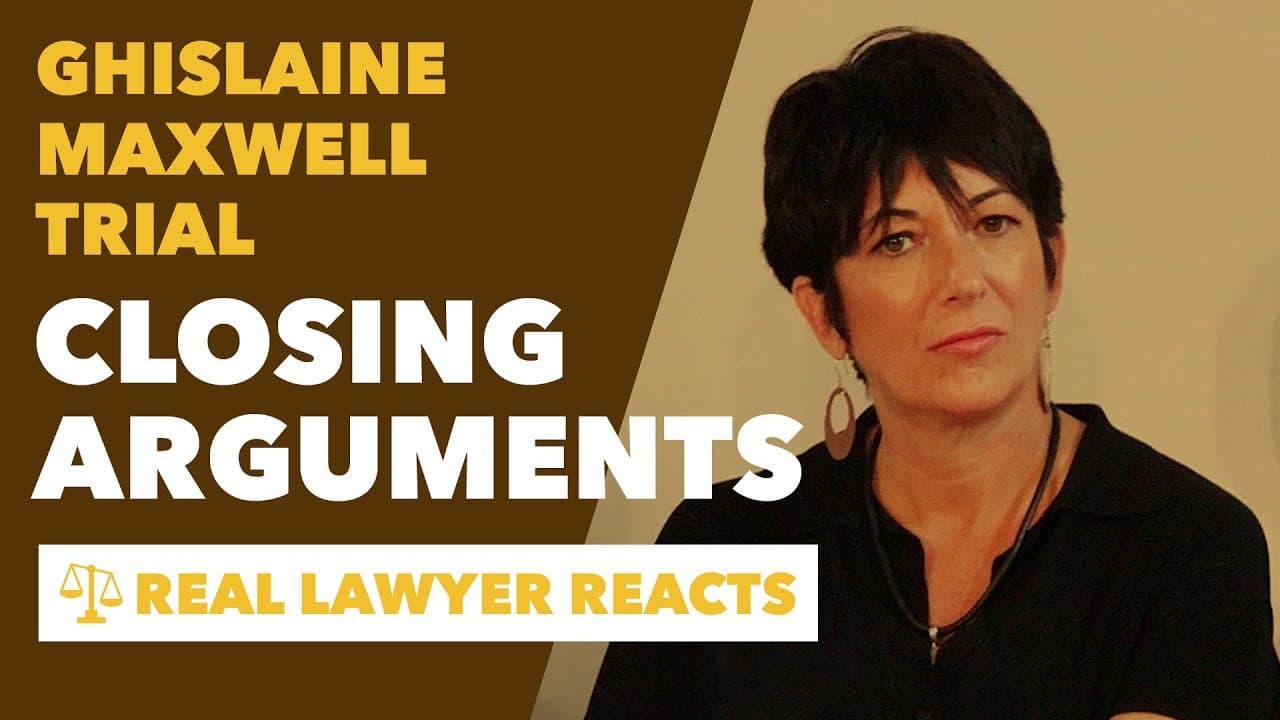
Lawyer Reacts: Ghislaine Maxwell Trial - Closing Arguments
TL;DR
Two lawyers dissect the defense and prosecution's closing arguments in the high-profile Maxwell trial, focusing on inconsistencies and strategies.
Transcript
welcome in everyone it's the lawyer you know and i've got my dad george tragos on with me today to talk about the elaine maxwell trial federal criminal trial in new york um it's a high-profile trial because of all of the celebrities and money and power and eyes that are on it because of what happened to jeffrey epstein earlier in this saga but it's... Read More
Key Insights
- 😓 Defense strategy includes memory manipulation and financial motives to cast doubt on witness testimonies in the Maxwell trial.
- 🍻 Prosecution highlights corroboration and inconsistencies in testimony to link Maxwell to Epstein and abuse allegations.
- 🖤 Appellate challenges post-conviction may focus on legal errors rather than lack of evidence in Maxwell trial.
Install to Summarize YouTube Videos and Get Transcripts
Explore YouTube Video Summarizer or Get YouTube Transcript Extractor
Questions & Answers
Q: How does the defense use a memory expert in the Maxwell trial, and what is the potential impact on the jury?
The defense leverages the memory expert to highlight memory issues and inconsistencies to create doubt about witness credibility, especially regarding traumatic events affecting recollections.
Q: Will the lack of direct evidence against Maxwell affect a potential appeal strategy based on a lack of evidence?
While lack of direct evidence may impact an appeal, the legal standard for lack of evidence (JOA) is high, making success unlikely unless substantial errors occurred during the trial.
Q: Can parents of alleged victims face legal repercussions for failing to protect their children from abuse?
Parents may face civil liability if proven they were aware of potential abuse and failed to protect their children. However, once victims are adults, legal action against parents becomes complex.
Q: Could Maxwell appeal for lack of evidence post-conviction, and what is the likelihood of success?
Appeal based on lack of evidence is challenging due to the high standard of proof required. The focus may shift to legal errors during the trial rather than evidence insufficiency.
Q: In a hypothetical scenario, could Maxwell negotiate a reduced sentence by providing evidence of other crimes after conviction?
Maxwell could potentially cooperate post-conviction, leading to a reduced sentence, under Rule 35, where prosecutors can recommend leniency for substantial cooperation in unraveling criminal activities.
Summary & Key Takeaways
-
Two lawyers analyze the closing arguments in the high-profile Maxwell trial, delving into defense and prosecution strategies.
-
Prosecution focuses on Maxwell's involvement with Epstein, while defense counters with memory manipulation and financial motives.
-
Emphasis on corroboration, inconsistencies in witness testimony, and how memory expert testimony affects the case.
Read in Other Languages (beta)
Share This Summary 📚
Summarize YouTube Videos and Get Video Transcripts with 1-Click
Try YouTube Summary with ChatGPT & Claude or YouTube Transcript Generator
Explore More Summaries from Lawyer You Know 📚

Summarize YouTube Videos and Get Video Transcripts with 1-Click
Try YouTube Summary with ChatGPT & Claude or YouTube Transcript Generator