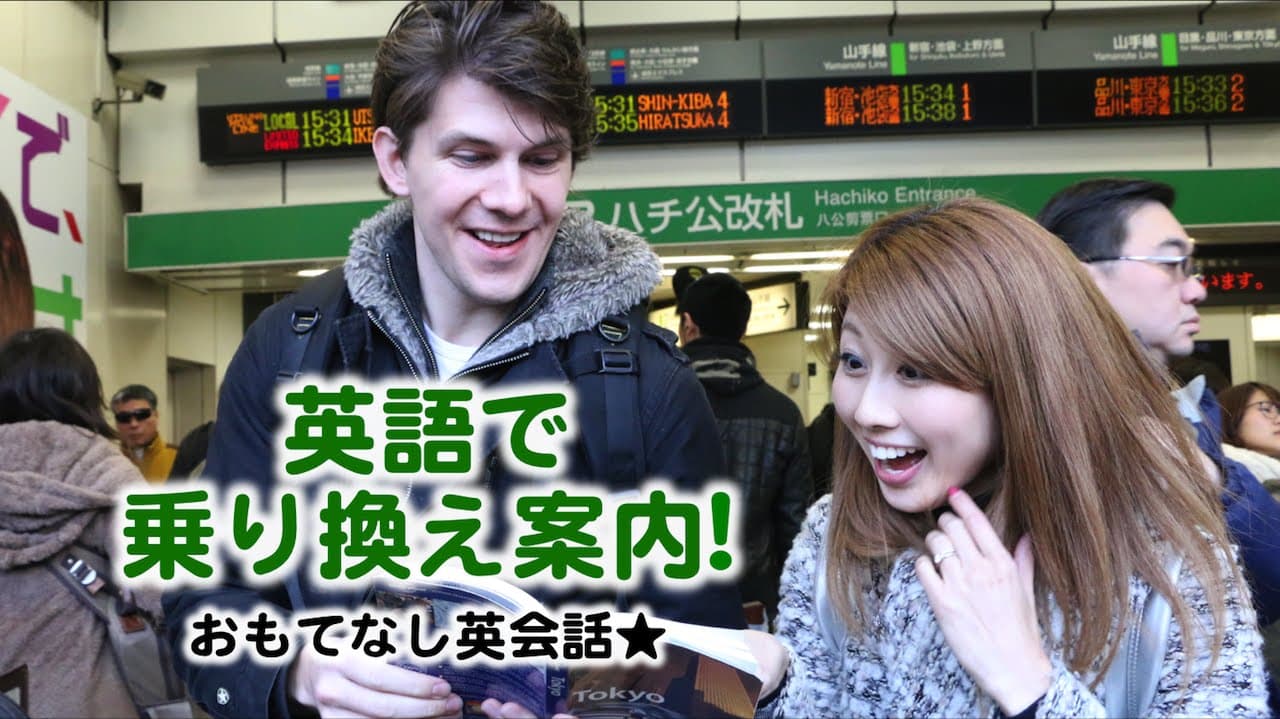
英語で乗り換え案内!// Explaining train transfers!〔#406〕
TL;DR
The video provides English guidance for navigating Tokyo's train system.
Transcript
Excuse me. Yes? I want to go to Asakusa. Ah yeah, Asakusa. Yeah. I'm supposed to meet a friend there. Do you know how I can go from here? Asakusa is... ah.. not.. Another train company. A different train company? Yeah, yeah. Not this one? Ginza subway. I only know Yamanote line. The green one. No Yamanote. Not Yamanote. Yeah. Ginza subway... Upstai... Read More
Key Insights
- The video demonstrates the importance of understanding different train lines in Tokyo, such as the Ginza and Yamanote lines, when traveling to specific destinations like Asakusa and Roppongi.
- Travelers often need to switch between different train companies and lines, requiring knowledge of transfer stations like Shinjuku and Ebisu for seamless travel.
- Asakusa can be reached directly via the Ginza subway line, which is convenient for tourists looking to visit Sensoji Temple.
- Navigating stations often involves understanding platform directions and line colors, which can be confusing for non-Japanese speakers.
- The video emphasizes the utility of asking station staff for directions, highlighting their availability and helpfulness in guiding travelers.
- For destinations like Takaosan, travelers need to change lines at major stations like Shinjuku and buy new tickets for lines operated by different companies.
- The Yamanote line provides access to many key locations, but understanding the direction and platform is crucial for reaching the correct destination.
- The video includes a comedic element, showcasing bilingual improv comedy by the Pirates of Tokyo Bay, adding entertainment to the educational content.
Install to Summarize YouTube Videos and Get Transcripts
Explore YouTube Video Summarizer or Get YouTube Transcript Extractor
Questions & Answers
Q: How can I get to Asakusa from the current location?
To reach Asakusa, you need to take the Ginza subway line, which is accessed upstairs from the current location. The train goes directly to Asakusa without any transfers, making it a straightforward journey for visitors wanting to explore Sensoji Temple.
Q: What is the best way to reach Roppongi using public transport?
To get to Roppongi, take the Yamanote line to Ebisu station, then transfer to the Hibiya line, which is not part of the JR network. This requires exiting the gate at Ebisu and locating the grey Hibiya line, which will take you directly to Roppongi.
Q: How do I travel to Takaosan for hiking?
Traveling to Takaosan involves taking a train to Shinjuku station and then transferring to the Keio line, which is operated by a different company. You will need to purchase a new ticket at Shinjuku for the Keio line to reach Takaosan-Guchi station.
Q: What should I do if I want to visit Ginza using the train?
To visit Ginza, take the Yamanote line in the correct direction towards Yurakucho station, which is within walking distance of Ginza. Ensure you board the train going in the right direction by checking the platform and line information.
Q: Is there a direct train to Sensoji Temple in Asakusa?
Yes, the Ginza subway line provides a direct route to Asakusa, where Sensoji Temple is located. This eliminates the need for any train changes, offering a convenient travel option for those visiting the temple.
Q: What are some challenges travelers face when navigating Tokyo's train system?
Travelers often face challenges such as understanding different train lines, the need for transfers between lines operated by different companies, and the complexity of station layouts. Language barriers can also make it difficult to ask for directions or understand signage.
Q: How can station staff assist travelers in Tokyo?
Station staff are usually available by the gates and can provide valuable assistance to travelers, offering directions, information on train lines, and guidance on ticket purchases. They play a crucial role in helping non-Japanese speakers navigate the train system effectively.
Q: What role does bilingual comedy play in the video?
The bilingual comedy by Pirates of Tokyo Bay adds an entertaining element to the video, making the instructional content more engaging. It showcases the use of English in a fun and relatable way, enhancing the viewer's learning experience while providing cultural insights.
Summary & Key Takeaways
-
This video provides practical advice on navigating Tokyo's complex train system, focusing on key lines like the Ginza and Yamanote. It includes interactions between English-speaking travelers and locals, emphasizing the importance of asking for help and understanding train line directions.
-
Travelers are guided on how to reach popular destinations such as Asakusa, Roppongi, and Takaosan, highlighting the need for line transfers and ticket purchases at certain stations. The video also features bilingual improv comedy, adding a humorous touch to the instructional content.
-
The interactions in the video serve as real-life examples of how to communicate effectively in English when seeking directions in Tokyo. The content is both educational and entertaining, showcasing the benefits of language skills in travel and everyday situations in Japan.
Read in Other Languages (beta)
Share This Summary 📚
Summarize YouTube Videos and Get Video Transcripts with 1-Click
Try YouTube Summary with ChatGPT & Claude or YouTube Transcript Generator
Explore More Summaries from バイリンガール英会話 | Bilingirl Chika 📚





Summarize YouTube Videos and Get Video Transcripts with 1-Click
Try YouTube Summary with ChatGPT & Claude or YouTube Transcript Generator