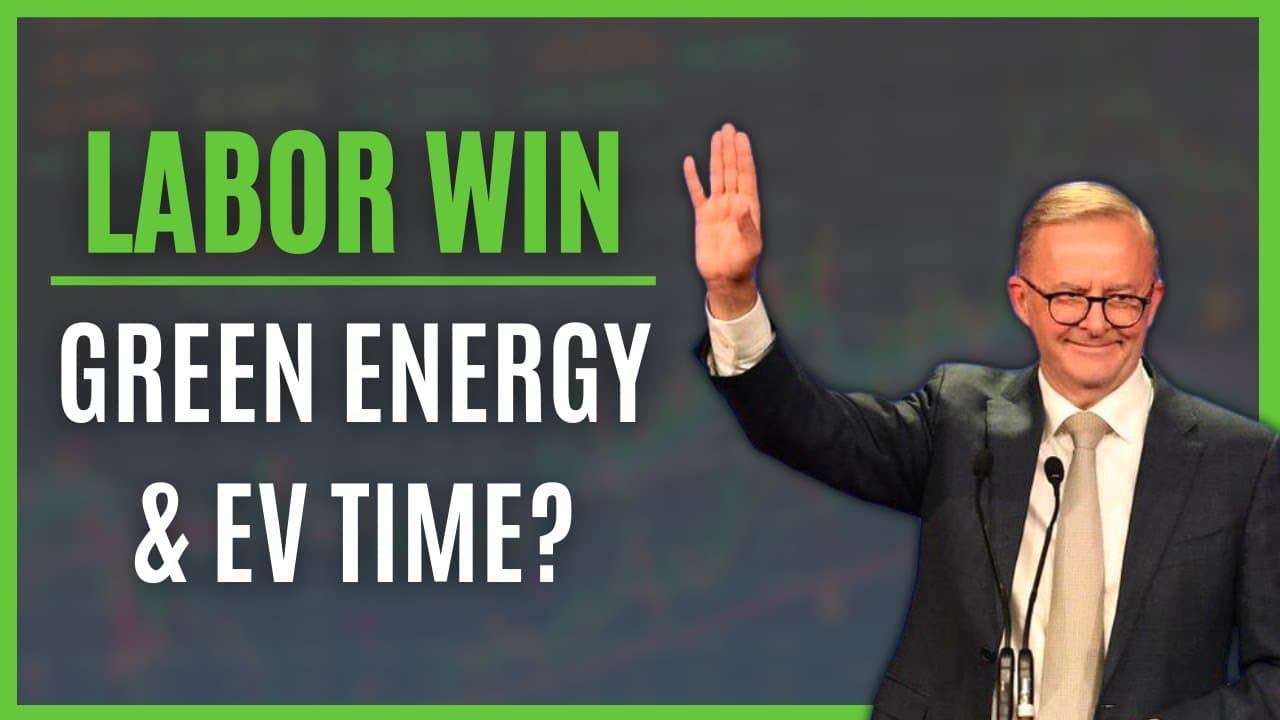
What Labor’s Win Means For The EV Sector & Green Energy Trend
TL;DR
Australia's recent federal election saw a focus on climate change, with the Labor Party set to secure a majority government and a swing towards the Greens. The country faces a dichotomy as a major fossil fuel producer but with a clear demand for climate action.
Transcript
the federal election is behind us and many are now wondering what does this mean for the ev transition the green energy trend and decarbonisation around the nation some people have described this past election as a green slide while others have called it the climate election what is clear is that voters voted and stated that climate change is an im... Read More
Key Insights
- 🛀 The Australian federal election showed a clear demand from voters for action on climate change.
- ✊ Labor's "Powering Australia" plan aims to create jobs, cut power bills, and boost renewable energy.
- 💨 The transition away from fossil fuels will require careful navigation to support affected workers and industries.
- ❓ Labor's flagship policy includes a $20 billion investment in modernizing the electricity grid and facilitating renewable energy.
- 🌏 Australia's focus on onshoring battery materials and resources necessary for decarbonization is crucial.
- 🎯 Considerations include meeting targets, implementing effective policies, and managing the interplay between the crossbench and Labor.
- 💚 Australia's significant reliance on fossil fuel exports and projects in the pipeline presents challenges for the transition to green energy.
Install to Summarize YouTube Videos and Get Transcripts
Explore YouTube Video Summarizer or Get YouTube Transcript Extractor
Questions & Answers
Q: What were the main focus and outcomes of Australia's federal election in relation to climate change?
The election showed a clear demand for climate action, with Labor aiming to reduce emissions and boost renewables. The Greens also gained support with more ambitious emissions reduction targets.
Q: How does Australia balance its position as a major fossil fuel producer with the desire for climate action?
Australia faces a dichotomy as it relies on the fossil fuel sector for jobs and GDP, but there is a clear demand from voters for action on climate change. The transition away from fossil fuels will be a delicate task for policymakers.
Q: What are the key policies of Labor's "Powering Australia" plan?
The plan focuses on job creation, cutting power bills, and reducing emissions through boosting renewable energy. It aims for renewables to comprise 82% of the national energy market by 2030.
Q: How does Labor plan to invest in the transition to green energy?
Labor's plan includes a $20 billion investment to modernize the electricity grid, along with investments in green metals, solar banks, and community batteries. It aims to spur $76 billion of public and private investment.
Summary & Key Takeaways
-
Labor Party aims to reduce emissions by 43% by 2030 and achieve net zero emissions by 2050, while the Greens have more ambitious targets.
-
Labor's "Powering Australia" plan focuses on job creation, reducing emissions, and boosting renewable energy to comprise 82% of the national energy market by 2030.
-
Labor's flagship policy includes a $20 billion investment to modernize the electricity grid and facilitate renewable energy, along with investments in green metals, solar banks, and community batteries.
Read in Other Languages (beta)
Share This Summary 📚
Summarize YouTube Videos and Get Video Transcripts with 1-Click
Try YouTube Summary with ChatGPT & Claude or YouTube Transcript Generator
Explore More Summaries from ASX Investor 📚






Summarize YouTube Videos and Get Video Transcripts with 1-Click
Try YouTube Summary with ChatGPT & Claude or YouTube Transcript Generator