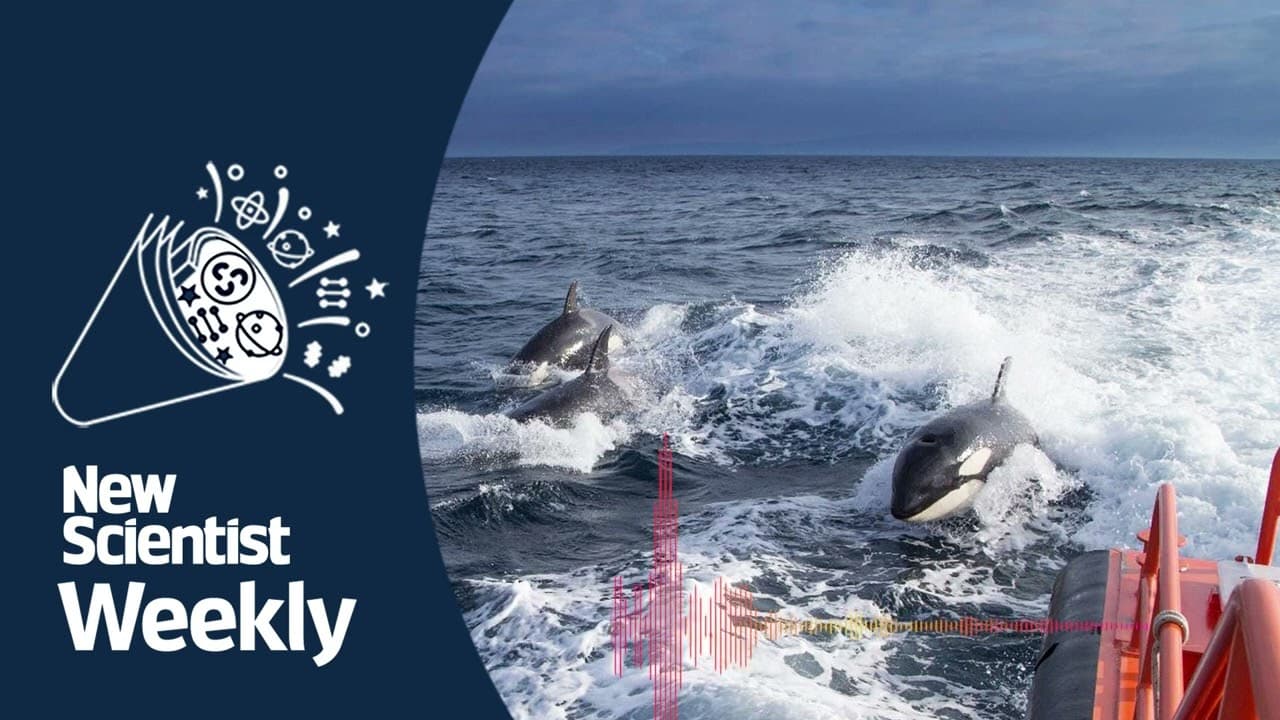
The truth behind the orca uprising | New Scientist Weekly podcast 201
TL;DR
New developments in fetal therapy, rogue stars, biodiversity protection, and Orca behavior explained.
Transcript
hello and welcome to a New Scientist weekly this is your curated selection of the week's science stories I'm Ron Hooper in London and I'm Christy Taylor in New York welcome to the show and welcome Christy to your first New Scientist podcast at Christie is our new podcast host based in New York uh welcome to New scientists yeah welcome Chris hey tha... Read More
Key Insights
- ❓ Fetal therapy injects proteins in the womb to combat genetic disorders.
- 🤩 Rogue stars escaping galaxies raise questions about astronomical phenomena.
- 😀 30 by 30 biodiversity protection goal faces challenges in data selection and financial mobilization.
- 🚣 Orca behavior reveals intriguing insights into rogue activity towards boats.
- 💱 Interconnected nature of ecosystems and climate change necessitates urgent biodiversity protection efforts.
- 🔀 Justin Cronin's novel "The Ferryman" involves a major plot twist that rewires the narrative.
- 🌸 Alex Antonelli highlights the urgency of addressing biodiversity loss and the importance of data-driven protection measures.
Install to Summarize YouTube Videos and Get Transcripts
Explore YouTube Video Summarizer or Get YouTube Transcript Extractor
Questions & Answers
Q: How does fetal therapy for x-linked ectodermal dysplasia work?
German doctors inject a protein into the amniotic fluid of fetuses, enabling the formation of sweat glands and teeth, preventing severe complications.
Q: Why are rogue stars entering our galaxy from other galaxies?
Scientific studies suggest that rogue stars may have been slingshot by supernova explosions, propelling them out of their original galaxies into ours.
Q: What is the significance of the 30 by 30 biodiversity protection goal?
Protecting 30% of land and sea by 2030 is crucial to prevent irreparable loss of biodiversity and ecosystem services impacted by climate change.
Q: How do rogue stars contribute to understanding intergalactic life possibilities?
Rogue stars potentially carrying planets could harbor extragalactic life, emphasizing the interconnected nature of cosmic systems and potential for diverse life forms.
Summary & Key Takeaways
-
Innovative fetal therapy helps prevent a severe genetic disorder by injecting proteins in the womb.
-
Investigative report on rogue stars escaping galaxies and entering our galaxy.
-
Slow progress on protecting biodiversity with the 30 by 30 goal and intriguing insights into Orca behavior.
Read in Other Languages (beta)
Share This Summary 📚
Summarize YouTube Videos and Get Video Transcripts with 1-Click
Try YouTube Summary with ChatGPT & Claude or YouTube Transcript Generator
Explore More Summaries from New Scientist weekly podcast 📚


Summarize YouTube Videos and Get Video Transcripts with 1-Click
Try YouTube Summary with ChatGPT & Claude or YouTube Transcript Generator