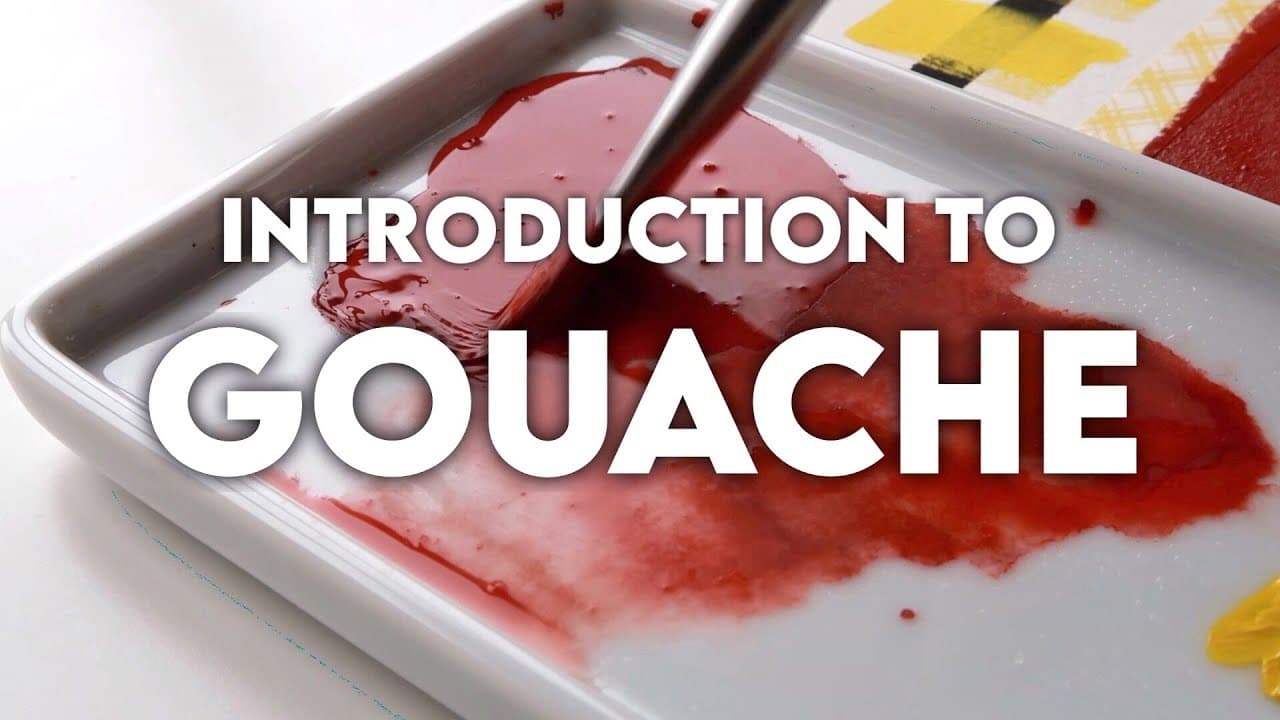
INTRODUCTION TO GOUACHE | A Beginners Guide - Materials, Blending, Techniques and more
TL;DR
Learn about the basics of gouache painting, including its properties, materials needed, and various painting techniques.
Transcript
Hi everyone in this video we're going to talk all about gouache what it is how to use it and the materials you'll need so let's just get right into it Gouache is a water media commonly known as an opaque watercolor You use water to thin down the paint so it can be used thin and transparently or thick and opaquely if less water is added typical... Read More
Key Insights
- 💦 Gouache is a water-based medium that can be used thinly or thickly, resulting in different levels of opacity.
- 🏁 It dries to a matte finish, which is ideal for capturing artwork without any glare in photographs.
- 👨🎨 Understanding paint consistency and layering techniques is crucial for achieving desired effects in gouache painting.
- 🎨 Key materials for gouache painting include gouache paint, watercolor paper, brushes, a palette, water jars, tape, and a spray bottle.
- ❓ Various painting techniques, such as dry brushing, glazing, blending, stippling, and sprinkling, can be used to create different textures and effects with gouache.
- 🥡 Taking the time to practice and experiment with different techniques will help you become more confident and skilled in using gouache.
Install to Summarize YouTube Videos and Get Transcripts
Explore YouTube Video Summarizer or Get YouTube Transcript Extractor
Questions & Answers
Q: What is the main difference between gouache and watercolor?
Unlike watercolor, gouache is designed to be opaque and can be used thickly, which allows for more forgiveness and covering of mistakes. It also dries to a matte finish.
Q: Can dried gouache paint be reactivated?
Yes, gouache can be reactivated by using a wet brush to re-wet paint on paper or on the palette. Although, it requires more time and work compared to fresh paint.
Q: What are some essential materials needed for gouache painting?
You will need gouache paint, watercolor paper, brushes (synthetic or mixed-media), a palette, jars of water, a cloth or paper towel, tape, and a spray bottle.
Q: How can you achieve different textures and effects with gouache?
Gouache allows for various techniques, including dry brushing, glazing, blending, stippling, and sprinkling. Each technique can create unique texture and visual effects in your paintings.
Key Insights:
- Gouache is a water-based medium that can be used thinly or thickly, resulting in different levels of opacity.
- It dries to a matte finish, which is ideal for capturing artwork without any glare in photographs.
- Understanding paint consistency and layering techniques is crucial for achieving desired effects in gouache painting.
- Key materials for gouache painting include gouache paint, watercolor paper, brushes, a palette, water jars, tape, and a spray bottle.
- Various painting techniques, such as dry brushing, glazing, blending, stippling, and sprinkling, can be used to create different textures and effects with gouache.
- Taking the time to practice and experiment with different techniques will help you become more confident and skilled in using gouache.
- Gouache is a versatile medium that offers a unique combination of qualities from watercolor and acrylic, making it an exciting medium to explore and create with.
Summary & Key Takeaways
-
Gouache is an opaque watercolor medium that can be used thinly or thickly, making it forgiving and versatile.
-
Gouache dries to a matte finish, photographing beautifully without any glare.
-
Understanding paint consistency, layering, and blending techniques are essential for creating different effects in gouache painting.
Read in Other Languages (beta)
Share This Summary 📚
Summarize YouTube Videos and Get Video Transcripts with 1-Click
Try YouTube Summary with ChatGPT & Claude or YouTube Transcript Generator