What Was Tutankhamun's Burial Chamber Mystery?
TL;DR
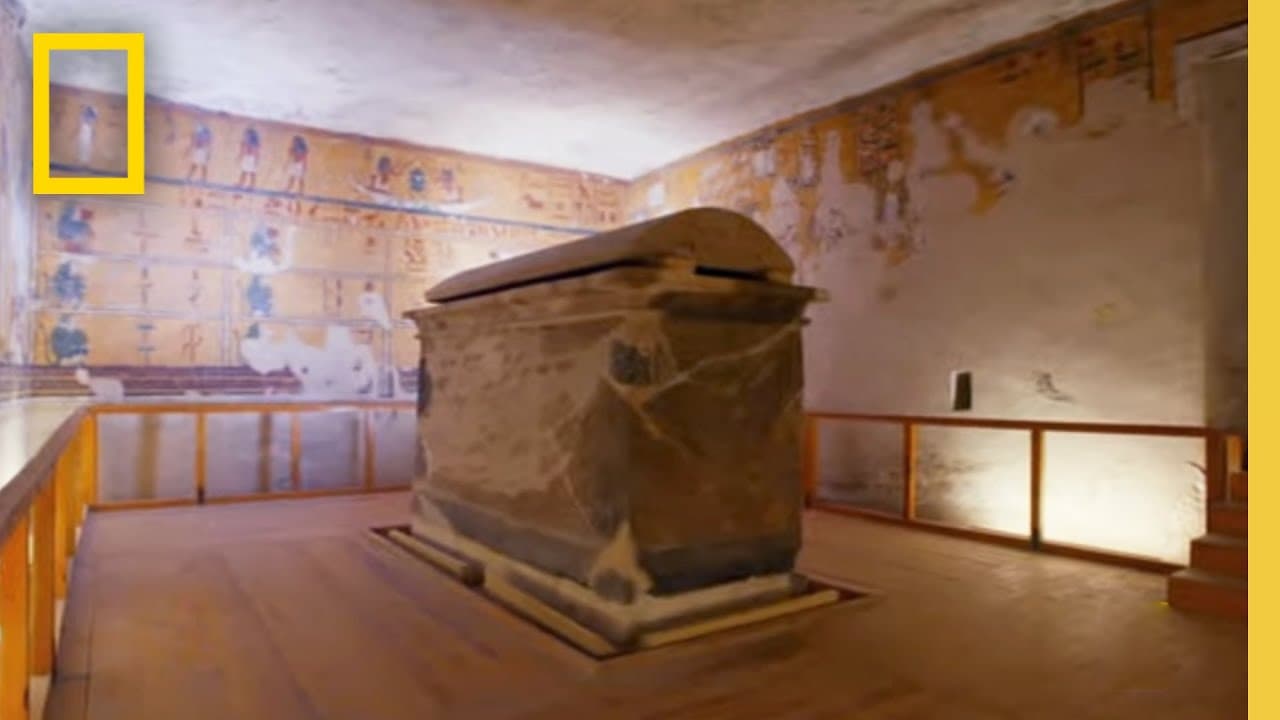
Tutankhamun's smaller burial chamber reflects a political power maneuver by Ay, who seized control after the young pharaoh's unexpected death. The discovery of the djed pillar symbolizes Tutankhamun's restoration of traditional religious beliefs following the Amarna Revolution. Ay's ambition led to the quick decoration and sealing of Tutankhamun's tomb, denying him a grand burial.
Transcript
[dramatic music playing] It's always exciting. Sometimes there is even between the workmen a bit of a competition. Who will find first? NARRATOR: While conservators move the painted walls to the store rooms for safekeeping, Tarek spots something in the sand. We have a pillar. And I can see already there is a djed pillar decorated on it. NARRATOR: I... Read More
Key Insights
- 🏣 The djed pillar discovery highlights Tutankhamun's religious beliefs post-religious revolution.
- 🖐️ Ay's manipulation in relegating Tutankhamun to a smaller tomb reflects political power play in ancient Egypt.
- ❓ Tutankhamun's tomb discovery reshaped his legacy from an erased figure to a renowned historical figure.
- 🤗 The artistic similarities between Tutankhamun's and Ay's tombs suggest a common hand in their creation.
- ✊ Ay's actions reveal a ruthless bid for power by overlooking Tutankhamun's burial in a grand tomb.
- 🛟 Tutankhamun's burial site serves as a window into the religious and political turmoil of ancient Egypt.
- 🙂 Investigator Aliyah's findings shed light on the dynamics between Tutankhamun and Ay in Egyptian history.
Install to Summarize YouTube Videos and Get Transcripts
Explore YouTube Video Summarizer or Get YouTube Transcript Extractor
Questions & Answers
Q: What did the discovery of the djed pillar reveal about Tutankhamun's religious beliefs?
The djed pillar indicated Tutankhamun's restoration of traditional Egyptian beliefs, particularly in the afterlife, post-religious revolution, showcasing his devotion to ancient Egyptian gods like Osiris.
Q: Why did Ay order Tutankhamun to be buried in a smaller tomb?
Ay's decision to bury Tutankhamun in a modest tomb stemmed from his ambition to secure power, as he intended to claim Tutankhamun's grand tomb for himself and cement his status as pharaoh.
Q: How did Tutankhamun's tomb reflect his true legacy amidst the erasure of his memory by later pharaohs?
Tutankhamun's tomb, discovered a century ago, allowed experts to unveil his legacy as a young king grappling with his father's religious revolution aftermath, shedding light on his importance in Egyptian history.
Q: What implications do the similarities between Tutankhamun's and Ay's tombs have on ancient Egyptian history?
The resemblances between the tombs suggest Ay's involvement in both, hinting at his opportunistic move to seize power by hastily arranging Tutankhamun's burial in a smaller tomb.
Summary & Key Takeaways
-
Conservators find a djed pillar, symbolizing Osiris, confirming Tutankhamun's religious beliefs post-revolution.
-
Investigator Aliyah uncovers Ay's role in Tutankhamun's small tomb, suggesting Ay's ambition to erase Tutankhamun's legacy.
-
Tutankhamun's tomb and Ay's tomb similarities hint at Ay seizing power and relegating Tutankhamun to a lesser burial.
Read in Other Languages (beta)
Share This Summary 📚
Summarize YouTube Videos and Get Video Transcripts with 1-Click
Try YouTube Summary with ChatGPT & Claude or YouTube Transcript Generator
Explore More Summaries from National Geographic 📚




Summarize YouTube Videos and Get Video Transcripts with 1-Click
Try YouTube Summary with ChatGPT & Claude or YouTube Transcript Generator