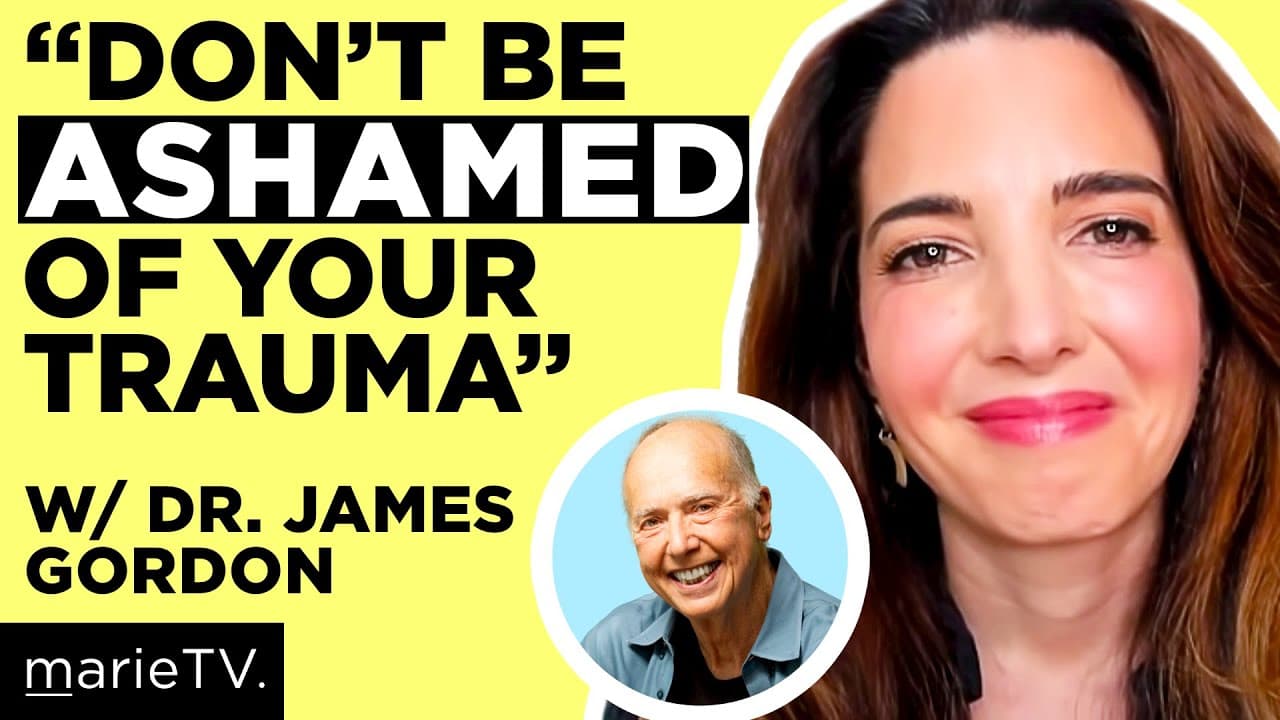
Healing Trauma with Science and Self-Care with Dr. James Gordon
TL;DR
- Dr. James Gordon shares how trauma can be healed through understanding, breathing, movement, and self-care.
Transcript
we can actually become better more integrated kinder more helpful and happier people after we have moved through the trauma that comes to us hey it's marie forleo and welcome to another episode of marietv and the marie forleo podcast you know given how intense this past year has been for everyone i am so excited about my guest today because he is a... Read More
Key Insights
- 😨 Trauma is a common human experience, and healing can come through understanding, self-care, and movement.
- 🤝 Practical tools like slow deep breathing, shaking, and dancing can help individuals process emotions and heal from trauma.
- 😀 Dr. James Gordon's work emphasizes post-traumatic growth, showcasing how individuals can become more integrated and happier after experiencing trauma.
- ❓ Writing and journaling about emotions, along with dialogue practices, can facilitate emotional processing and healing.
- ❓ Dr. James Gordon's programs and training offer accessible resources for individuals interested in personal development and healing trauma.
- 🍳 Laughter and playful exploration can be therapeutic in breaking down barriers and fostering emotional well-being.
- 🤳 Self-compassion and self-awareness are crucial in navigating trauma and building resilience.
Install to Summarize YouTube Videos and Get Transcripts
Explore YouTube Video Summarizer or Get YouTube Transcript Extractor
Questions & Answers
Q: What are the two dangerous myths about trauma as highlighted by Dr. James Gordon?
Dr. James Gordon identifies the myths that trauma only happens to others and that it leads to permanent disability, debunking these misconceptions by showcasing trauma as a universal experience that can be healed.
Q: How did Dr. James Gordon work with war-traumatized individuals in Bosnia and Kosovo?
Dr. James Gordon and his team conducted innovative interventions, including mind-body skills groups and self-care techniques, to help traumatized individuals during and after wars, leading to notable improvements in mental health.
Q: Why is slow deep breathing an effective tool in dealing with trauma?
Slow deep breathing activates the vagus nerve, promoting relaxation, reducing stress hormones, and enhancing cognitive functions, making it a powerful technique to restore balance in the body and mind.
Q: How can laughter be therapeutic in processing emotions?
Laughter breaks the spell of taking oneself too seriously, releasing tension, increasing feel-good hormones, and providing perspective on emotions, allowing individuals to navigate and process their emotions more effectively.
Summary & Key Takeaways
-
Dr. James Gordon discusses trauma myths, emphasizing that trauma is a part of everyone's life and can be healed through insights from ancient wisdom.
-
He shares his experiences in helping war-traumatized individuals, highlighting the power of self-care techniques in transforming trauma.
-
Practical tools like slow deep breathing, shaking, and dancing can help individuals process and heal from trauma, leading to post-traumatic growth.
Read in Other Languages (beta)
Share This Summary 📚
Summarize YouTube Videos and Get Video Transcripts with 1-Click
Try YouTube Summary with ChatGPT & Claude or YouTube Transcript Generator
Explore More Summaries from The Marie Forleo Podcast 📚




Summarize YouTube Videos and Get Video Transcripts with 1-Click
Try YouTube Summary with ChatGPT & Claude or YouTube Transcript Generator