How Tech Bros Get Sci-Fi Wrong
TL;DR
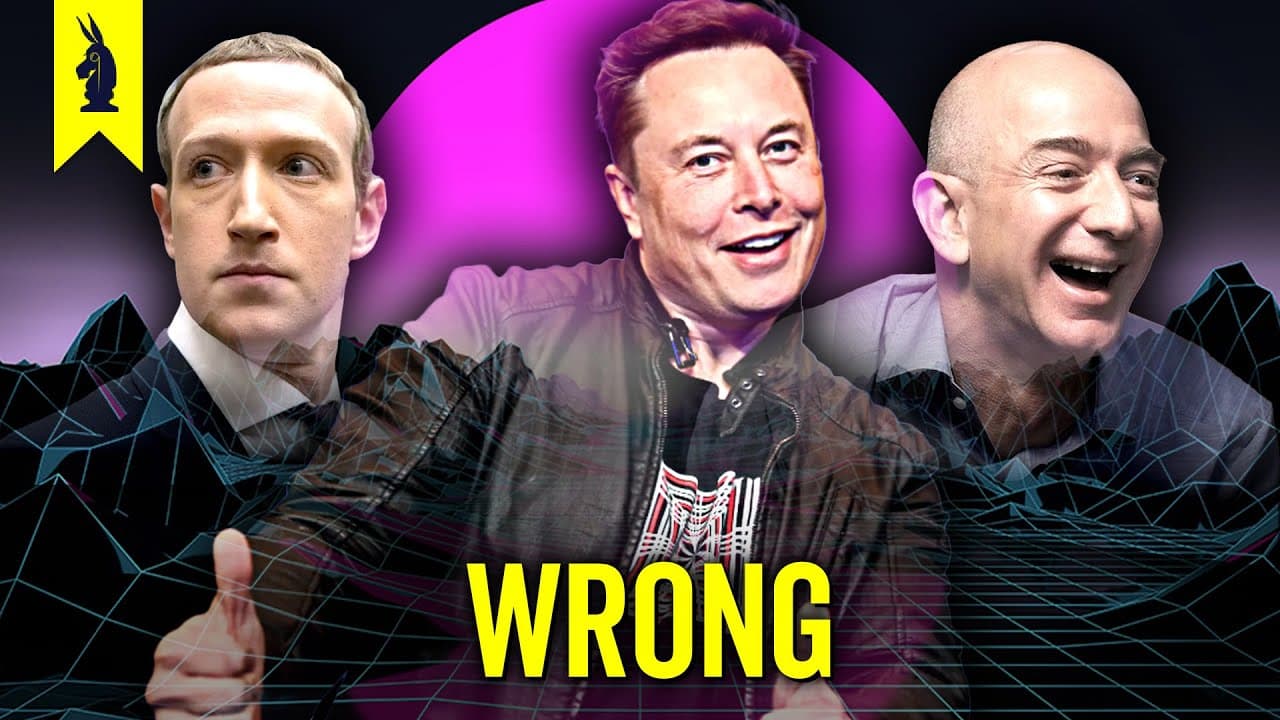
Tech billionaires misinterpret sci-fi themes, impacting societal futures.
Transcript
- This video is brought to you by Keeps. (gentle music) What's up, guys? Michael here. The last couple of years have taught us a lot. Like the value of social ties and community, and the value of leading with SPEAR. But mostly, we've learned how absolutely inextricable technology is from our daily lives. And if one Harvard dropout has his way, the ... Read More
Key Insights
- 🧑💼 Sci-fi serves as a pivotal inspiration for technological advancements, with notable figures in tech often referencing classic works as formative influences.
- 😆 Misinterpreting fundamental themes of sci-fi narratives can lead to real-world consequences, particularly in the practices of powerful tech companies.
- 💦 The portrayal of corporate control in works like "Snow Crash" highlights potential ethical issues with the tech industry's direction, including concerns over privacy and autonomy.
- 💀 Elon Musk's vision of a Martian colony disregards the complexities of empowerment critiqued in "Foundation," emphasizing the dangers of unilateral control and exceptionalism.
- 🧑⚕️ Star Trek's moral frameworks contrast sharply with the actions of its admirers in tech, particularly regarding wealth concentration and worker exploitation.
- 😥 The ongoing influences of billionaires on democratic structures point to a critical need for accountability and scrutiny of tech lobby efforts.
- 😆 The potential dystopia inspired by sci-fi becomes increasingly plausible as tech leaders overlook critical lessons embedded within narratives, impacting societal dimensions.
Install to Summarize YouTube Videos and Get Transcripts
Explore YouTube Video Summarizer or Get YouTube Transcript Extractor
Questions & Answers
Q: How have sci-fi works inspired real-world technology?
Sci-fi literature has historically inspired technological advancements by presenting visionary ideas. For instance, Fritz Lang's "Woman in the Moon" contributed to concepts foundational to space travel, influencing visionaries like Hermann Oberth and Wernher von Braun. Such works ignite imaginations, leading to real-life innovations like the Apollo spacecraft.
Q: What are the implications of tech leaders interpreting sci-fi differently?
When tech leaders misinterpret the lessons from their favorite sci-fi narratives, it risks manifesting dystopian elements into reality. For example, Musk’s vision for Mars colonization echoes themes from "Foundation," which critiques singular leadership and exceptionalism. This disconnect can lead to projects that replicate structures deemed problematic in the narratives.
Q: Why is the Metaverse concept significant in this discussion?
The Metaverse, prominently featured in "Snow Crash," represents a digitally free space independent of corporate control. However, with figures like Zuckerberg controlling the infrastructure, the envisioned free realm becomes a corporate-dominated environment, undermining the warnings embedded within the fiction and presenting a stark contradiction to its themes.
Q: How does Jeff Bezos relate to Star Trek's ideals?
Jeff Bezos admires Star Trek's Captain Jean-Luc Picard, known for his ethical and altruistic leadership. However, Bezos' business practices contradict Picard's principles, highlighting a disconnection between aspiration and action. While Picard seeks the betterment of humanity, Bezos continues to accumulate wealth, raising questions about aligning ideals with real-world impact.
Q: What role does lobbying play in shaping tech legislation?
Major tech firms wield substantial resources to influence legislation through lobbying, often tailoring laws to benefit their interests at the public's expense. This power dynamic creates a disconnect between the wealthy tech elite and the general population, limiting transparency and accountability in how technology impacts society.
Q: How could sci-fi narratives have been misinterpreted by tech leaders?
Tech leaders may latch onto the aspirational or exciting elements of sci-fi while neglecting the deeper critiques. For example, Musk's focus on innovative space travel ignores the critiques of imperialism in "Foundation." This selective interpretation can lead to misguided applications of sci-fi themes in the real world.
Summary & Key Takeaways
-
The video discusses the profound influence of sci-fi literature on tech leaders, like Elon Musk and Mark Zuckerberg, who draw inspiration from works such as "Snow Crash" and "Foundation." However, they often overlook critical themes embedded within these narratives.
-
Major sci-fi works have inspired significant technological advancements, with creators like Wernher von Braun and modern billionaires adopting themes without fully grasping their underlying critiques, such as corporate control and imperialism.
-
The consequences of these misinterpretations could shape societal futures, as the ambitions of these tech giants reflect their personal understandings of the sci-fi genre, often leading to dystopian outcomes in real life.
Read in Other Languages (beta)
Share This Summary 📚
Summarize YouTube Videos and Get Video Transcripts with 1-Click
Try YouTube Summary with ChatGPT & Claude or YouTube Transcript Generator