Pakistan's worst ever smog: BBC Learning English from the News
TL;DR
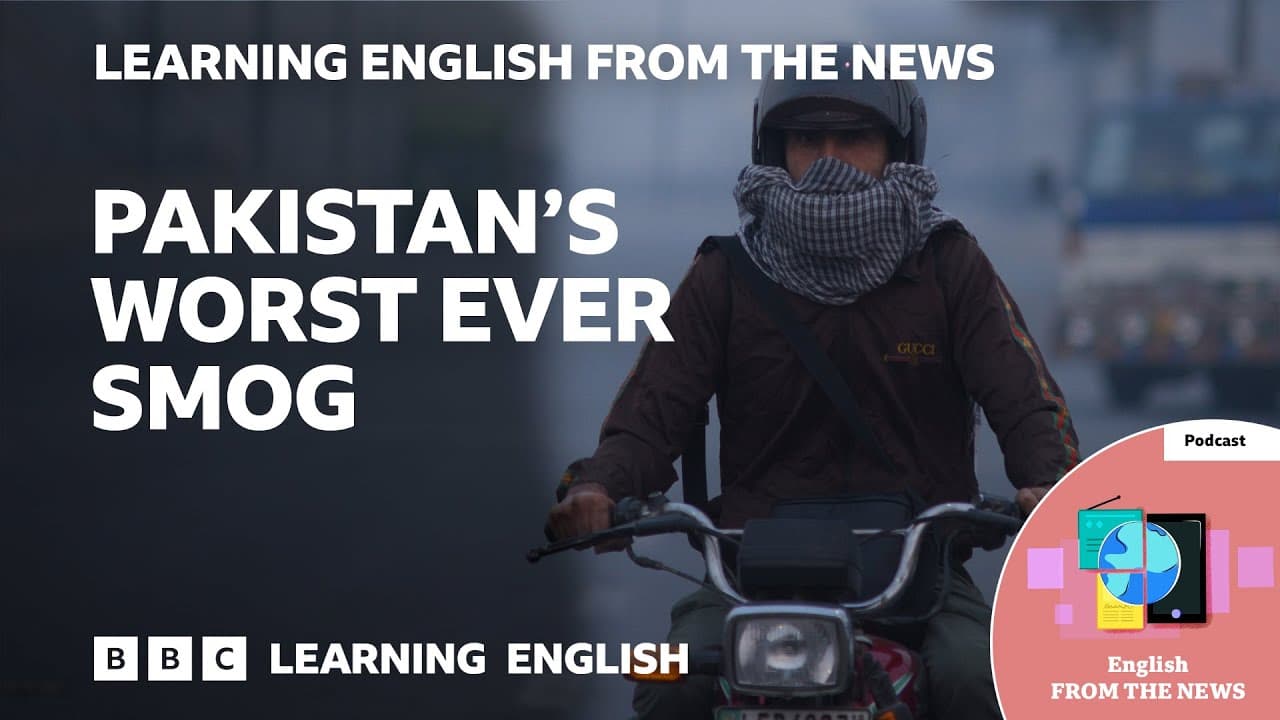
Pakistan's smog is visible from space, severely affecting Lahore.
Transcript
From BBC Learning English, this is Learning English from the News, our podcast about the news headlines. In this programme, Pakistan's smog is so bad you can see it from space. Hello, I'm Beth. And I'm Neil. In this programme, we look at one big news story and the vocabulary in the headlines that will help you understand it. You can find all of the... Read More
Key Insights
- The smog in Lahore, Pakistan, has reached unprecedented levels, severely impacting the health of its 13 million residents.
- Smog, a combination of smoke and fog, can cause various health issues such as sore throats, burning eyes, and dizziness.
- Authorities have advised residents to stay indoors, closed schools, and banned vehicles in the worst-affected areas.
- The air quality index in Lahore has surpassed 1,000, with anything above 300 considered dangerous.
- Illegal crop burning by farmers in Pakistan and India, along with pollution from factories and traffic, are major contributors to the smog.
- Smog is particularly severe in winter due to colder air trapping pollution instead of dispersing it like warmer air.
- The distinction between smog and climate change is often blurred, though they require different solutions.
- Smog is a local issue needing immediate action, while climate change is a global challenge requiring long-term strategies.
Install to Summarize YouTube Videos and Get Transcripts
Explore YouTube Video Summarizer or Get YouTube Transcript Extractor
Questions & Answers
Q: What is causing the severe smog in Lahore?
The severe smog in Lahore is primarily caused by illegal crop burning by farmers in Pakistan and neighboring India. This practice, combined with emissions from coal-fired factories and heavy traffic, has led to dangerous levels of pollution. The situation is worsened by winter weather, which traps the pollution in the air.
Q: How is the smog affecting the residents of Lahore?
The smog in Lahore is severely affecting the health of its residents, causing issues such as sore throats, burning eyes, dizziness, chest tightness, and coughing. The government has advised people to stay indoors, closed schools, and banned vehicles in the most affected areas to mitigate the health risks.
Q: What measures have been taken to address the smog problem in Lahore?
To address the smog problem, authorities have advised residents to stay indoors, closed schools, and banned vehicles in the worst-affected areas. These measures aim to reduce exposure to the hazardous air quality, which has reached levels over 1,000 on the air quality index, far exceeding the dangerous threshold of 300.
Q: What is the difference between smog and climate change?
Smog is a localized environmental issue that occurs at certain times of the year, mainly due to pollution from various sources. In contrast, climate change is a global issue caused by greenhouse gases that remain in the atmosphere, leading to a gradual increase in Earth's temperature. Both issues require different approaches for resolution.
Q: How does winter weather exacerbate the smog situation in Lahore?
Winter weather exacerbates the smog situation in Lahore because colder, drier air traps pollution close to the ground, preventing it from dispersing. In contrast, warmer air tends to rise, which helps lift pollutants away from the surface. This seasonal effect makes smog particularly severe during the winter months.
Q: What vocabulary was highlighted in the podcast to describe the smog situation?
The podcast highlighted vocabulary such as 'smog,' 'choking,' 'hits new highs,' and 'blurred lines.' These terms help describe the severity of the smog situation, its health impacts, and the confusion between smog and climate change. Understanding these terms aids in comprehending the environmental challenges faced by Lahore.
Q: Why is the air quality index in Lahore considered dangerous?
The air quality index (AQI) in Lahore is considered dangerous because it has surpassed 1,000, far exceeding the threshold of 300, which is deemed hazardous. Such high levels of pollution pose significant health risks to the population, leading to respiratory issues and other health problems, prompting urgent measures to protect public health.
Q: How does the podcast differentiate between smog and climate change?
The podcast differentiates between smog and climate change by explaining that smog is a temporary, local issue caused by pollutants in the air, while climate change is a long-term, global problem resulting from greenhouse gas emissions. Smog requires immediate local interventions, whereas climate change demands comprehensive, international policy efforts.
Summary & Key Takeaways
-
Lahore, Pakistan, is experiencing its worst smog levels ever, visible from space and affecting millions. The smog, a mix of smoke and fog, causes health issues and has led to school closures and vehicle bans in the city.
-
The air quality index in Lahore has exceeded 1,000, well above the dangerous threshold of 300. Contributing factors include illegal crop burning, factory emissions, and heavy traffic, with winter weather exacerbating the situation.
-
While smog and climate change are related, they are distinct issues. Smog requires immediate local solutions, whereas climate change demands global, long-term policies. The lines between the two are often blurred, complicating efforts to address them.
Read in Other Languages (beta)
Share This Summary 📚
Summarize YouTube Videos and Get Video Transcripts with 1-Click
Try YouTube Summary with ChatGPT & Claude or YouTube Transcript Generator
Explore More Summaries from BBC Learning English 📚

Summarize YouTube Videos and Get Video Transcripts with 1-Click
Try YouTube Summary with ChatGPT & Claude or YouTube Transcript Generator