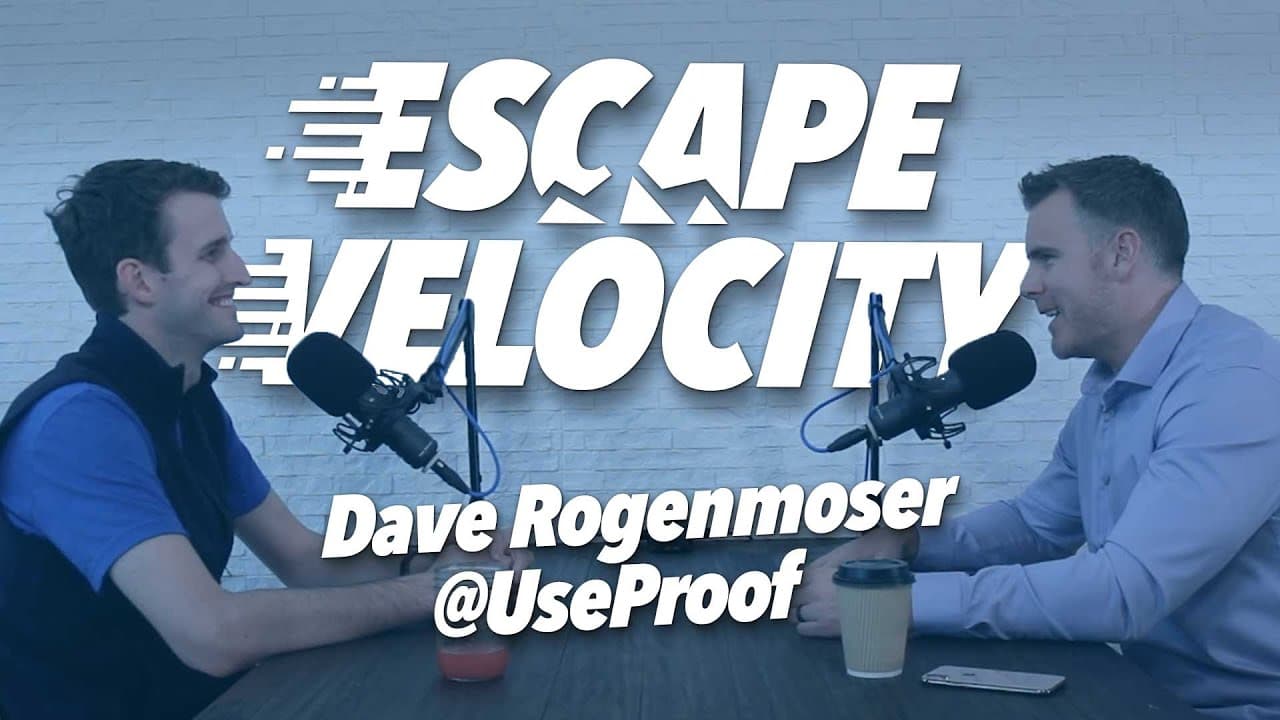
Upgrade Your SaaS Company's Customer Support with Dave @ UseProof.com - Escape Velocity Show #1
TL;DR
Dave shares Proof's growth journey through launch, scale, and overcoming challenges.
Transcript
Dave, we are live man, how's it going? Going well, glad to be here. Dude, Proof launched at TNC, we're at TNC. Yeah. Two years ago. Two years ago. To the day. We're talking launch, scale, YC, fundraise, two years. It's been a crazy couple of years. Dude, that's amazing. And how big is the team now? We have 16 right now. Yeah, all in Austin? 15 all ... Read More
Key Insights
- Proof launched at TNC and grew rapidly in the first year, adding thousands in MRR, but faced challenges like high churn rates which they worked to reduce by over half.
- The team initially leveraged pre-sales to validate their product, selling yearly plans before the product was built, raising $40,000.
- The company’s growth was driven by early market entry and viral product features, but they faced challenges in maintaining that momentum as competitors emerged.
- Customer support became a team-wide responsibility, enhancing product development and customer satisfaction by having engineers directly involved in support tasks.
- Dave emphasizes the importance of a co-founder relationship for support and decision-making, highlighting the need for clear leadership roles within the team.
- The experience at Y Combinator shifted their focus to thinking bigger, aiming for large-scale impact and growth rather than just focusing on short-term gains.
- The discussion touches on the value of building a company culture that supports continuous learning, feedback, and personal growth for all team members.
- Dave reflects on the significance of creating a company environment that he and his co-founders are passionate about, rather than solely focusing on an exit strategy.
Install to Summarize YouTube Videos and Get Transcripts
Explore YouTube Video Summarizer or Get YouTube Transcript Extractor
Questions & Answers
Q: What was the hardest part of growing Proof?
The hardest part was tackling high churn rates. Initially, Proof experienced rapid growth, but as they matured, they faced challenges in maintaining customer retention. Despite reducing churn by over half, it remained a significant focus and source of sleepless nights for the team.
Q: How did Proof validate their product before launch?
Proof validated their product through pre-sales, selling yearly plans for $997 before the product was built. This approach raised $40,000, which provided the necessary funds to focus on product development and validated the demand for their solution in the market.
Q: How does the team at Proof handle customer support?
Customer support is a team-wide responsibility at Proof. All employees, including engineers, participate in customer support power hours. This approach ensures that everyone is customer-focused, leads to better product development, and allows engineers to directly address and understand customer issues.
Q: What role do co-founders play at Proof?
Co-founders at Proof provide essential support and decision-making collaboration. They maintain open communication and trust, ensuring that each member can provide honest feedback. This relationship is crucial for navigating challenges and fostering a supportive company culture.
Q: What was the impact of Y Combinator on Proof?
Y Combinator shifted Proof's focus to thinking bigger and aiming for large-scale impact. The experience encouraged them to look beyond short-term gains and consider how to achieve significant growth, ultimately leading to a more ambitious and strategic approach to their business.
Q: How does Proof differentiate itself in a competitive market?
Proof differentiates itself by focusing on a strong brand and customer experience. They emphasize building a consumer-grade user experience, engaging content through platforms like podcasts, and maintaining a customer-centric company culture to stand out in a crowded market.
Q: What is Dave's approach to company culture at Proof?
Dave focuses on creating a company culture that supports continuous learning, feedback, and personal growth. He encourages open communication, values team input, and aims to build a supportive environment where employees feel valued and motivated to contribute to the company's success.
Q: What is Dave's perspective on building to sell versus building to last?
Dave believes in building a company he loves, rather than focusing solely on an exit strategy. By creating a company environment that he and his co-founders are passionate about, they aim to sustain long-term success and potentially achieve a better outcome when considering future acquisition opportunities.
Summary & Key Takeaways
-
Proof's initial growth was rapid, aided by pre-sales and a viral product feature, but they faced challenges with high churn rates which they worked to reduce. The team emphasizes customer support and a strong co-founder relationship to navigate challenges.
-
Y Combinator helped Proof think bigger and focus on long-term growth. The experience shifted their mindset from short-term gains to aiming for significant impact, encouraging them to create a supportive company culture and environment.
-
Dave discusses the importance of building a company he loves, rather than focusing solely on an exit strategy. He highlights the need for a strong team culture, continuous learning, and personal growth to sustain long-term success.
Read in Other Languages (beta)
Share This Summary 📚
Summarize YouTube Videos and Get Video Transcripts with 1-Click
Try YouTube Summary with ChatGPT & Claude or YouTube Transcript Generator
Explore More Summaries from Dan Martell 📚



Summarize YouTube Videos and Get Video Transcripts with 1-Click
Try YouTube Summary with ChatGPT & Claude or YouTube Transcript Generator