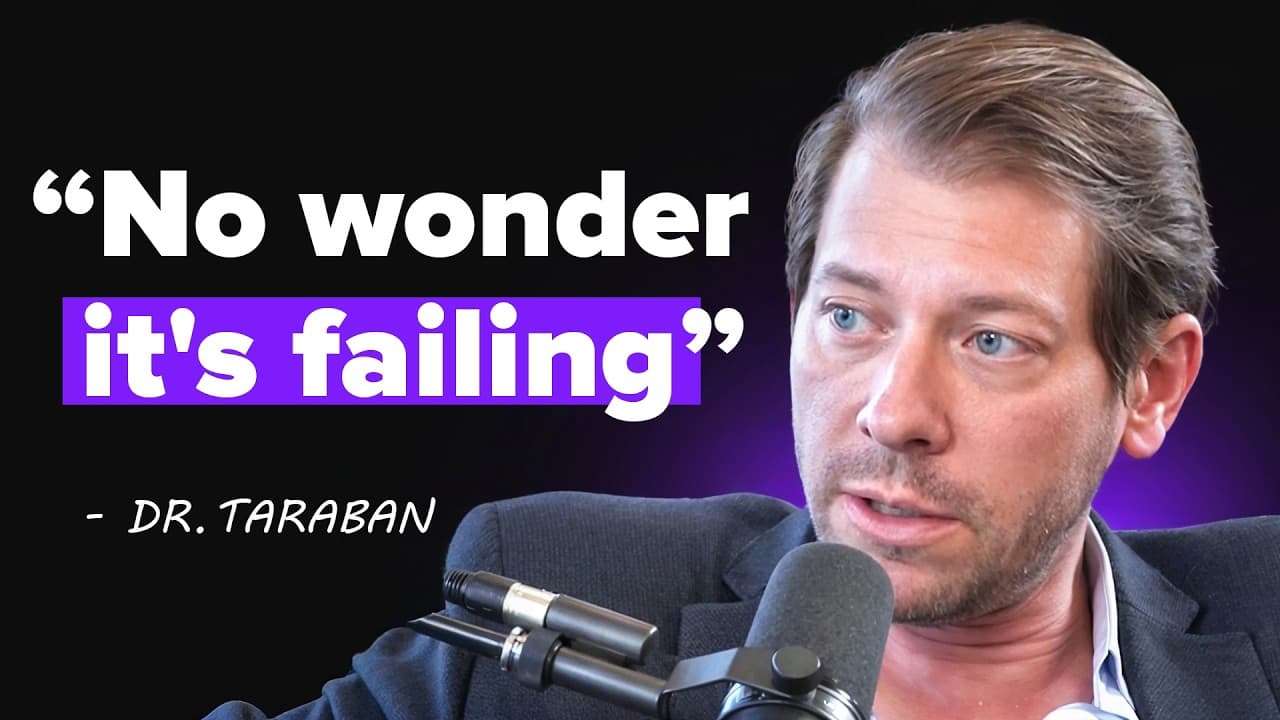
Why Most Marriages Fail | Dr. Taraban
TL;DR
Modern marriages fail due to unrealistic expectations and evolving partner value.
Transcript
well I think most marriages fail oh this is going to be a good one for a number of reasons one touches on something that I said earlier which is that we marriage has become too many things in my opinion marriage is fundamentally a very humble institution it was not designed to support being married to a co-parent who's also your best friend and als... Read More
Key Insights
- Modern marriages are burdened by the expectation for partners to fulfill multiple roles, such as best friend, lover, and therapist, which is unsustainable.
- The lack of extended kinship networks has led to the nuclear family being expected to fulfill the role of an entire community, adding pressure to marriages.
- The value of a partner evolves as they fulfill our needs, similar to a plumber whose value changes once the job is done.
- People tend to value their partners less once their expectations and desires have been met, leading to relationship dissatisfaction.
- Gratitude for past actions is not enough to sustain a relationship; continuous fulfillment of new needs is expected.
- Relationships become costly if partners do not meet evolving needs, especially when compared to other potential options.
- Unrealistic expectations and rising demands contribute to the failure of marriages, as partners struggle to meet all desires.
- The dynamic nature of relationships requires constant adaptation and communication to ensure both partners' needs are met.
Install to Summarize YouTube Videos and Get Transcripts
Explore YouTube Video Summarizer or Get YouTube Transcript Extractor
Questions & Answers
Q: Why do modern marriages often fail?
Modern marriages often fail due to the unrealistic expectations placed on partners to fulfill multiple roles, such as being a best friend, lover, and therapist. This all-encompassing expectation is unsustainable and leads to dissatisfaction when partners cannot meet all these diverse needs, ultimately resulting in relationship breakdowns.
Q: How does the value of a partner change over time?
The value of a partner changes as they meet our needs and desires. Once a partner fulfills a specific need, similar to a plumber fixing a sink, their perceived value may decrease. This natural tendency to value partners less after they meet expectations can lead to emotional challenges and relationship dissatisfaction.
Q: What role does gratitude play in sustaining a relationship?
Gratitude for past actions is not enough to sustain a relationship. While appreciation for a partner's contributions is important, relationships require continuous fulfillment of evolving needs. Without ongoing adaptation and effort to meet new desires, relationships can become costly and less appealing compared to other potential options.
Q: Why is the nuclear family under pressure in modern marriages?
The nuclear family is under pressure because it is now expected to function as an entire village, fulfilling roles traditionally supported by extended kinship networks. This lack of community support places unrealistic demands on the family unit, contributing to the strain and eventual failure of modern marriages.
Q: How do evolving needs impact relationships?
Evolving needs impact relationships by requiring partners to continuously adapt and meet new expectations. If partners fail to address these changing desires, relationships can become too costly, leading to dissatisfaction and the potential exploration of other options. Constant communication and adaptation are essential for relationship longevity.
Q: What are the consequences of rising expectations in marriages?
Rising expectations in marriages lead to increased pressure on partners to fulfill diverse roles and meet ever-changing needs. This can result in dissatisfaction when partners are unable to meet all expectations, contributing to relationship strain and potential failure as partners seek fulfillment elsewhere.
Q: How can partners manage unrealistic expectations in a marriage?
Partners can manage unrealistic expectations by maintaining open communication and setting realistic boundaries regarding their roles within the relationship. Recognizing that no single person can fulfill all needs is crucial. Building a supportive community and seeking external support can also help alleviate pressure on the marriage.
Q: What is the importance of communication in sustaining a marriage?
Communication is vital in sustaining a marriage as it allows partners to express evolving needs, set realistic expectations, and address potential issues before they escalate. Open dialogue fosters understanding and adaptability, ensuring both partners feel valued and supported, which is essential for maintaining a healthy and lasting relationship.
Summary & Key Takeaways
-
Dr. Taraban discusses the unrealistic expectations placed on modern marriages, where partners are expected to fulfill multiple roles, creating unsustainable pressure. The lack of community support exacerbates this issue, as the nuclear family is now expected to function as an entire village.
-
The value of a partner changes over time, similar to how a plumber's value changes after fixing a sink. This analogy highlights the emotional challenge of valuing partners less once they have fulfilled our desires.
-
Gratitude for past contributions is insufficient to maintain a relationship. As expectations and needs evolve, partners must continuously adapt to avoid relationships becoming too costly compared to other potential options.
Read in Other Languages (beta)
Share This Summary 📚
Summarize YouTube Videos and Get Video Transcripts with 1-Click
Try YouTube Summary with ChatGPT & Claude or YouTube Transcript Generator
Explore More Summaries from Leveling Up with Eric Siu 📚


Summarize YouTube Videos and Get Video Transcripts with 1-Click
Try YouTube Summary with ChatGPT & Claude or YouTube Transcript Generator