What Did Katie Mack Say About the End of the Universe?
TL;DR
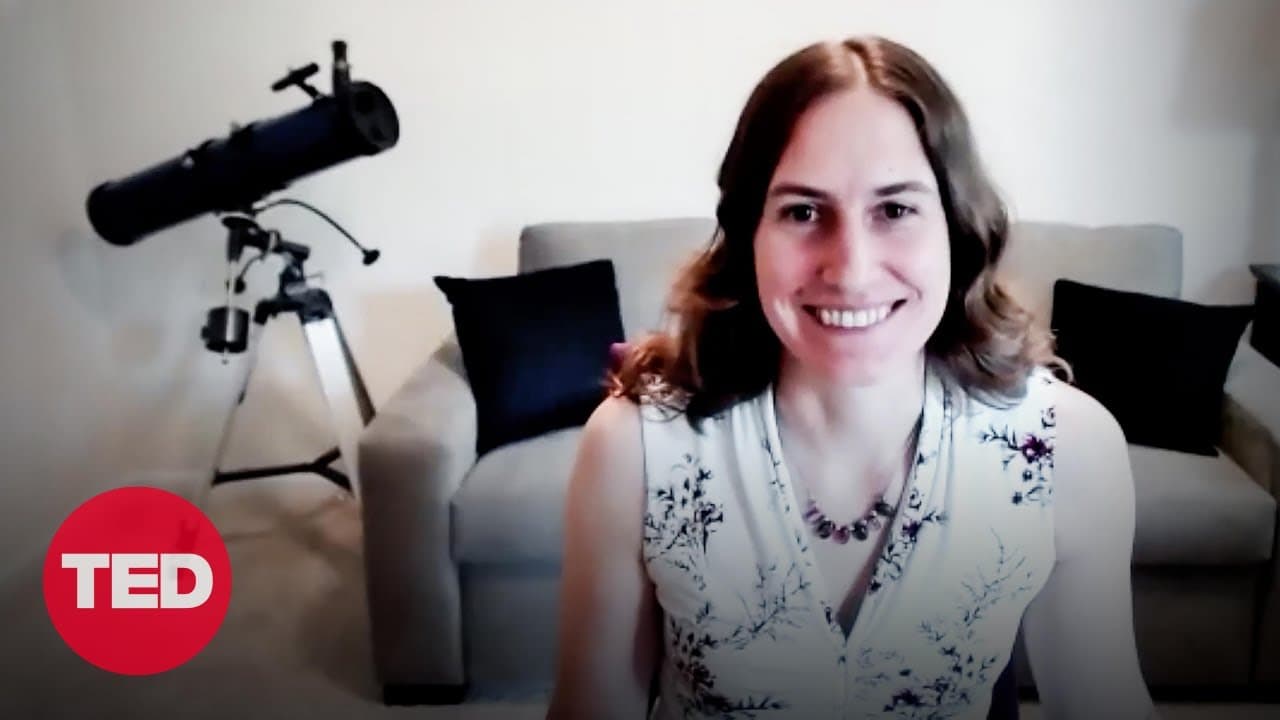
Katie Mack explains that the universe began with the Big Bang, which was smaller, denser, and hotter. The most likely end scenario is the heat death, where everything becomes isolated and cold, though alternatives like the Big Crunch or Big Rip exist. Additionally, she suggests that space and time may not be fundamental, but rather emergent properties of a deeper mathematical reality.
Transcript
Lily James Olds: Hi, Katie, welcome. Katie Mack: Thank you. Thanks for having me. LJO: So happy to have you. I would love if, for those of us who are not astrophysicists, you could return and help us give a little refresher on how the universe did begin and how we know that. KM: Right, right, yeah. So we know actually quite a lot about the early un... Read More
Key Insights
- 🔭 We can see the beginning of the universe because the light from distant galaxies takes billions of years to reach us, giving us a glimpse into the past.
- 🔭 The Big Bang theory suggests that the universe was smaller, denser, and hotter in the past, and we have evidence of this from the light we observe from the early universe.
- 🔭 The heat death is the most likely scenario for the end of the universe, where everything becomes isolated, starless, dark, and cold due to the expansion caused by dark energy.
- 🌌 There are alternative possibilities for the end of the universe, including a Big Crunch or a Big Rip, depending on the behavior of dark energy.
- 🌌 The concept of what exists beyond the universe is complex, but it could involve a multiverse with different regions and laws of physics, or higher dimensions of space. ⏳ Space and time may not be the fundamental aspects of the universe, and there are mathematical calculations that suggest they might be emergent or not necessary for understanding fundamental processes. ⏳ Some physicists believe that we are, in essence, mathematical beings existing within a more abstract mathematical reality, where space and time are not the true fabric of the universe.
- 🌟 We are part of the cosmos, born from stardust and interconnected with the universe. Our existence allows the universe to marvel at its own awe-inspiring nature.
Install to Summarize YouTube Videos and Get Transcripts
Explore YouTube Video Summarizer or Get YouTube Transcript Extractor
Questions & Answers
Q: How do we know about the beginning of the universe?
We know about the beginning of the universe because we can see it. When we look at distant galaxies, we see them moving away from us, suggesting that the universe was smaller and denser in the past. In the 1960s, we got direct evidence of the Big Bang when we were able to see the light from the very early universe.
Q: What happens when we look at something so far away in the universe?
If we look at something so far away in the universe that the light took more than 13 billion years to reach us, it means we are looking at the time when the universe was just beginning. We should see fire, as the early universe was hot and dense. When we use microwave telescopes, we see background light, which is the kind of light we get when something is hot.
Q: What is the most likely theory about how the universe will end?
The most likely theory, according to current knowledge, is the heat death of the universe. Due to the expansion of the universe, galaxies are moving farther apart, and there is something called "dark energy" pushing things apart. Eventually, all the galaxies will be isolated, stars will die away, and the universe will become dark, cold, and empty. This is known as the heat death.
Q: Are space and time fundamental aspects of the universe?
According to theoretical physicists, space and time are not fundamental. There are calculations in physics where space and time are not considered salient variables and yet produce the correct results. This suggests that space and time may not be the fundamental fabric of the universe but may be emergent or a result of some other mathematical space that doesn't follow the same rules as space and time.
Q: What does the poem "Disorientation" convey about the universe?
The poem "Disorientation" explores the concept that the universe is vast, random, and uncaring, yet calls on us to create our own beauty and meaning. It encourages wonder and contemplation about what lies beyond, the wonders we may discover, and the splendors that may never reach us. It emphasizes our connection to the cosmos, our origins from stardust, and the awe-inspiring nature of the universe.
Summary & Key Takeaways
-
The universe began with the Big Bang theory, where everything was smaller, denser, and hotter. We can observe this through distant galaxies moving away from us and the background radiation.
-
The most likely end of the universe is the heat death, where everything becomes isolated, dark, and cold. However, other possibilities include a big crunch or a Big Rip, depending on the behavior of dark energy.
-
Space and time may not be fundamental aspects of the universe, but rather emergent properties. They may be part of a larger mathematical reality that we perceive as space and time.
Read in Other Languages (beta)
Share This Summary 📚
Summarize YouTube Videos and Get Video Transcripts with 1-Click
Try YouTube Summary with ChatGPT & Claude or YouTube Transcript Generator
Explore More Summaries from TED 📚


Summarize YouTube Videos and Get Video Transcripts with 1-Click
Try YouTube Summary with ChatGPT & Claude or YouTube Transcript Generator