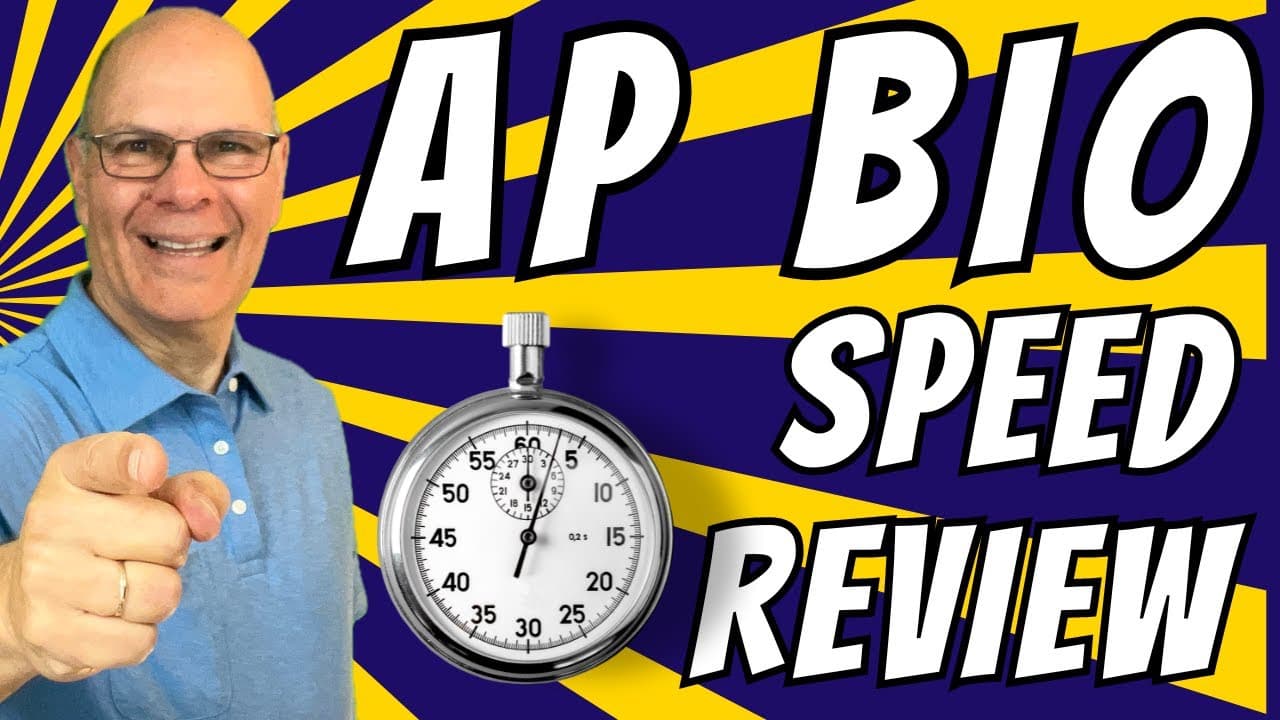
How to Ace Your AP Biology Exam in 56 Minutes
TL;DR
This video outlines an efficient study strategy for the AP Biology exam using a color-coded checklist to prioritize knowledge gaps. It covers essential biological concepts, including cell processes, energy conversion, and evolution, providing a solid foundation for students to master the material and perform well on the test.
Transcript
hey it's Mr W from learn biology.com the AP Bio exam is coming up and you're going to need a plan to prioritize what you study that's what this video is designed to give you here's your review plan download this checklist AT AP bios sus.com checklist get three highlighters red green and yellow follow along with me du... Read More
Key Insights
- The video provides a strategic plan for AP Biology exam preparation, emphasizing the use of a checklist and color-coded prioritization to focus on weak areas.
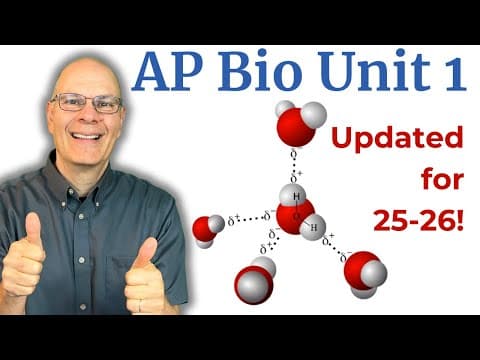
- Water's properties such as cohesion, adhesion, and high specific heat are due to its polarity and hydrogen bonding, making it a universal solvent.
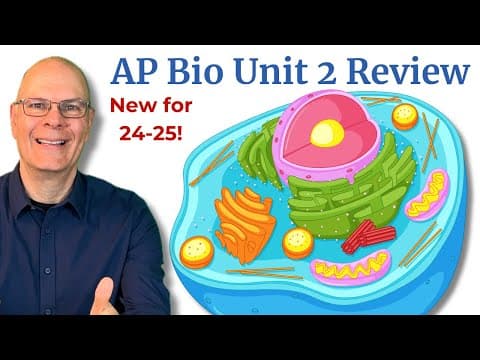
- Cell membranes are described by the fluid mosaic model, consisting of phospholipids, proteins, and cholesterol, allowing selective permeability.
- Photosynthesis and cellular respiration are key metabolic pathways, with photosynthesis converting light energy into chemical energy and respiration converting glucose into ATP.
- The cell cycle is regulated by checkpoints and involves phases like interphase, mitosis, and cytokinesis, with disruptions leading to cancer.
- Meiosis introduces genetic diversity through independent assortment, crossing over, and random fertilization, contrasting with mitosis which creates identical cells.
- Gene expression in eukaryotes is regulated through mechanisms like acetylation and methylation, with operons playing a role in prokaryotic gene regulation.
- Evolutionary concepts include natural selection, genetic drift, and gene flow, with evidence for evolution found in fossils, homologous structures, and molecular biology.
Install to Summarize YouTube Videos and Get Transcripts
Explore YouTube Video Summarizer or Get YouTube Transcript Extractor
Questions & Answers
Q: What is the stoplight method mentioned in the video?
The stoplight method is a study strategy that involves using three highlighters to prioritize study topics. Green is used for topics the student knows well, yellow for topics they know somewhat, and red for topics they don't know at all. This method helps students focus their study efforts on areas where they need the most improvement, starting with red topics, followed by yellow, and finally green to keep all topics fresh.
Q: How does the video describe the structure and function of cell membranes?
The video describes cell membranes using the fluid mosaic model, which highlights the dynamic nature of the membrane. It consists of a phospholipid bilayer with embedded proteins and cholesterol. The phospholipids provide a flexible framework, while proteins serve various functions such as transport, signal transduction, and cell recognition. Cholesterol acts as a fluidity buffer, maintaining membrane stability across temperature changes.
Q: What role does photosynthesis play according to the video?
Photosynthesis is described as a fundamental process where photoautotrophs convert light energy into chemical energy stored in carbohydrates. It involves two main stages: light reactions, which convert light energy into ATP and NADPH, and the Calvin cycle, which uses these products to fix carbon dioxide into glucose. Photosynthesis is crucial for biomass production and serves as the basis for most food chains on Earth.
Q: How is genetic diversity achieved through meiosis?
Genetic diversity in meiosis is achieved through three main mechanisms: independent assortment, crossing over, and random fertilization. Independent assortment allows maternal and paternal chromosomes to be distributed randomly to gametes. Crossing over involves the exchange of genetic material between homologous chromosomes, creating new allele combinations. Random fertilization further increases diversity by combining gametes from two different parents, resulting in unique offspring.
Q: What are the key phases of the cell cycle covered in the video?
The cell cycle includes interphase and mitotic phases. Interphase consists of G1 (cell growth), S (DNA synthesis), and G2 (preparation for mitosis). Mitosis involves prophase, metaphase, anaphase, telophase, and cytokinesis. The cycle is regulated by checkpoints ensuring proper cell division. Disruptions in this regulation can lead to uncontrolled cell division, resulting in cancer. Cells may also enter a quiescent state called G0.
Q: How does the video explain the concept of evolution and natural selection?
Evolution is explained as a process driven by natural selection, genetic drift, and gene flow. Natural selection favors traits that enhance survival and reproduction, leading to adaptations. Genetic drift causes random changes in allele frequencies, especially in small populations. Gene flow involves the transfer of genes between populations. Evidence for evolution includes fossils, homologous structures, and observed evolutionary changes like antibiotic resistance.
Q: What is the significance of gene regulation in eukaryotes?
Gene regulation in eukaryotes is crucial for cellular differentiation and function. It involves mechanisms like acetylation, which activates genes, and methylation, which silences them. These modifications affect chromatin structure and gene accessibility. Eukaryotic genes contain introns and exons, allowing alternative splicing and phenotypic variation. Unlike prokaryotes, eukaryotes do not use operons, but instead rely on complex regulatory networks for gene expression control.
Q: What human activities are impacting biodiversity according to the video?
Human activities negatively impacting biodiversity include habitat destruction, fragmentation, and the introduction of invasive species. Overexploitation of resources through logging, overfishing, and clear-cutting forests also contribute to biodiversity loss. These actions lead to an extinction vortex, where reduced population sizes cause genetic drift and inbreeding, further decreasing genetic diversity and fitness, ultimately increasing extinction risk for many species.
Summary & Key Takeaways
-
The video provides a thorough review of the AP Biology curriculum, covering essential topics from cellular processes to ecology. It offers strategies for exam preparation, emphasizing the importance of understanding key concepts and utilizing resources like checklists and live reviews.
-
Key biological processes such as photosynthesis, cellular respiration, and gene expression are explained with clarity, highlighting their roles in energy conversion, genetic regulation, and cellular function. The video also covers the structure and function of biomolecules and cell membranes.
-
Evolutionary biology is explored in depth, discussing natural selection, genetic drift, and speciation. The video provides evidence for evolution through examples like fossils and molecular homologies, while also addressing the impact of human activities on biodiversity and ecological balance.
Read in Other Languages (beta)
Share This Summary 📚
Summarize YouTube Videos and Get Video Transcripts with 1-Click
Try YouTube Summary with ChatGPT & Claude or YouTube Transcript Generator
Explore More Summaries from sciencemusicvideos 📚
Summarize YouTube Videos and Get Video Transcripts with 1-Click
Try YouTube Summary with ChatGPT & Claude or YouTube Transcript Generator