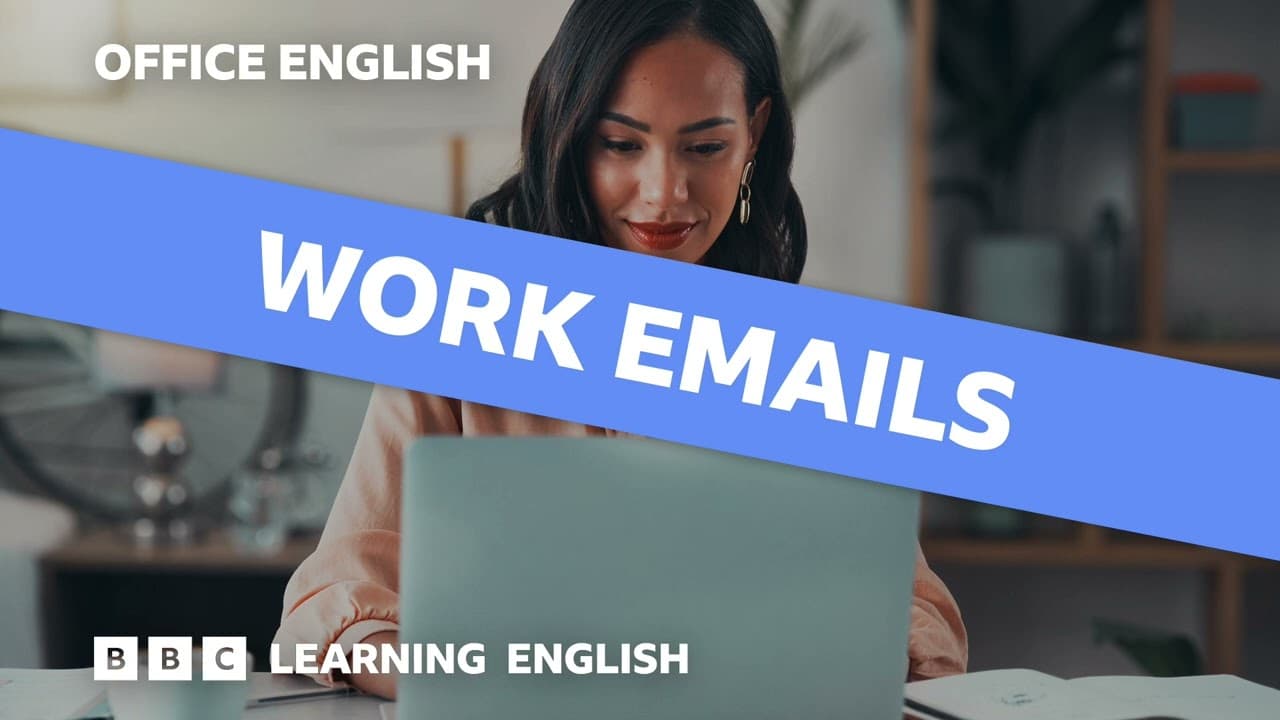
Work emails: Office English episode 1
TL;DR
Learn how to write effective and appropriate work emails.
Transcript
Emails. Should they be formal? Friendly? It can be difficult to know. More formal than informal, although at times you might get a smiley face from me. If it's someone that I've never spoken to before then it's more formal, but I'd still probably say 'Hi' rather than 'Dear'. You know, those technicalities of when to write 'Kind regards' and when to... Read More
Key Insights
- Emails should be more formal than informal, but the level of formality depends on the recipient. Use 'Hi' for informal emails and 'Dear' for more formal ones.
- The choice of email greeting and sign-off reflects the relationship with the recipient. 'Kind regards' and 'Best wishes' are versatile options.
- Emails are generally less formal than letters and should mimic spoken communication. Avoid overly formal phrases like 'I am writing to enquire about'.
- To address unknown recipients, use 'Hi' or 'Good morning/afternoon' instead of 'Dear Sir or Madam' to avoid sounding cold.
- Smiley faces in emails can convey friendliness but should be used cautiously, especially with unfamiliar or senior contacts.
- Email phrases like 'Please find attached' can be replaced with more conversational alternatives like 'Here is the document you asked for'.
- 'Looking forward to hearing from you' is a friendly way to encourage a response, creating an expectation of a reply.
- Mirroring the tone and style of the recipient's email can help maintain appropriate formality and rapport in email communication.
Install to Summarize YouTube Videos and Get Transcripts
Explore YouTube Video Summarizer or Get YouTube Transcript Extractor
Questions & Answers
Q: What is the main topic of this podcast episode?
The main topic of this podcast episode is how to write effective work emails, focusing on the appropriate level of formality, suitable greetings, and sign-offs, as well as useful phrases for different work-related situations.
Q: How should you decide the level of formality in an email?
The level of formality in an email should be determined by the relationship with the recipient and the context of the communication. For unfamiliar or formal contacts, a more formal tone is appropriate, while a casual tone is suitable for colleagues or familiar contacts.
Q: What are some recommended greetings for work emails?
Recommended greetings for work emails include 'Hi' for informal communications and 'Dear' for more formal ones. 'Good morning' or 'Good afternoon' can be used when the recipient's name is unknown, providing a balance between formality and friendliness.
Q: What are some alternatives to the phrase 'Please find attached'?
Alternatives to 'Please find attached' include more conversational phrases like 'Here is the document you asked for' or 'Here's the link to the podcast you wanted to listen to', which sound friendlier and more in line with spoken communication.
Q: When is it appropriate to use smiley faces in emails?
Smiley faces can be used in emails to convey friendliness, but they should be used cautiously, especially with unfamiliar or senior contacts. It's best to mirror the recipient's use of smiley faces to ensure appropriateness in the communication context.
Q: What is a friendly way to encourage a response in an email?
A friendly way to encourage a response in an email is to use the phrase 'Looking forward to hearing from you'. This creates a positive expectation of a reply without being overly demanding or impolite.
Q: How can you address an email when you don't know the recipient's name?
When you don't know the recipient's name, you can address the email with 'Hi' or use a time-specific greeting like 'Good morning' or 'Good afternoon'. These options avoid the coldness of phrases like 'Dear Sir or Madam'.
Q: What is the benefit of mirroring the recipient's email style?
Mirroring the recipient's email style helps maintain appropriate formality and rapport, ensuring that your response matches their tone and expectations. This technique can help build a positive relationship and facilitate effective communication.
Summary & Key Takeaways
-
The podcast discusses the appropriate level of formality in work emails, suggesting that emails should generally be less formal than letters, with greetings like 'Hi' being more common.
-
Pippa and Phil explore different email phrases and sign-offs, emphasizing the importance of matching the email's tone to the recipient's relationship and expectations.
-
Listeners are encouraged to use more conversational language in emails, avoid overly formal expressions, and consider cultural and industry-specific variations in email etiquette.
Read in Other Languages (beta)
Share This Summary 📚
Summarize YouTube Videos and Get Video Transcripts with 1-Click
Try YouTube Summary with ChatGPT & Claude or YouTube Transcript Generator
Explore More Summaries from BBC Learning English 📚
Summarize YouTube Videos and Get Video Transcripts with 1-Click
Try YouTube Summary with ChatGPT & Claude or YouTube Transcript Generator