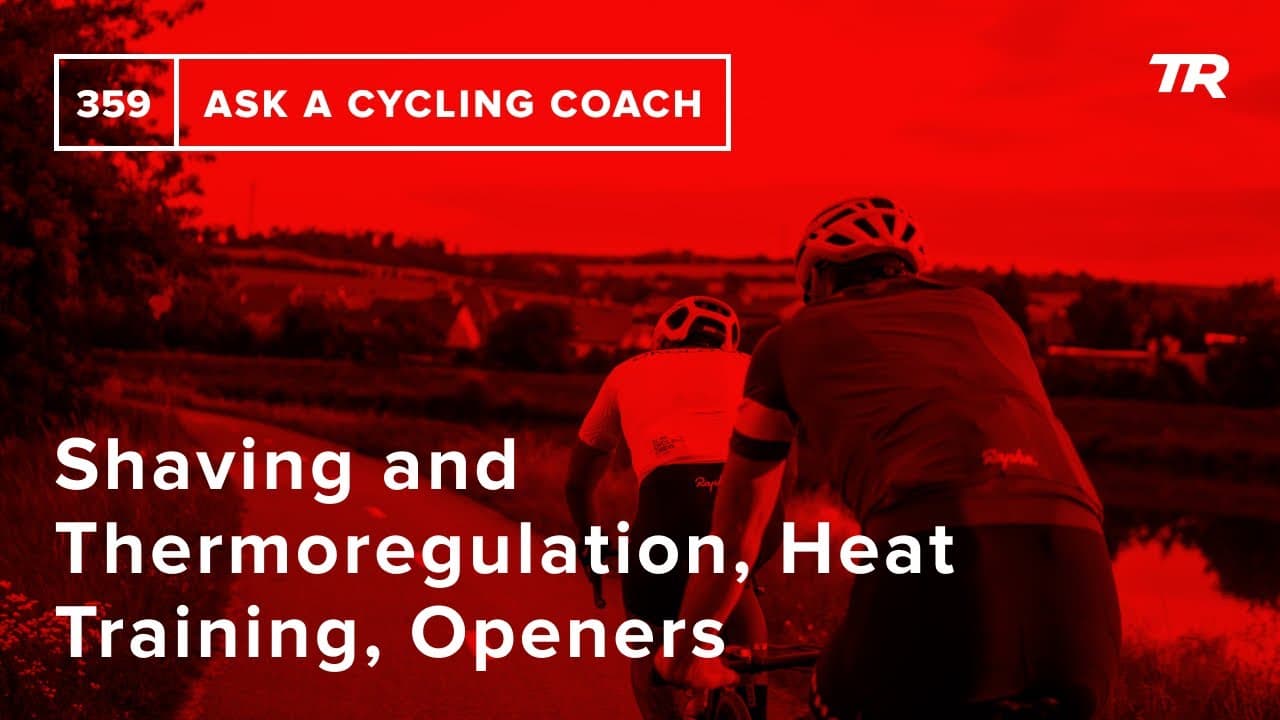
Shaving and Thermoregulation, Heat Training, Openers and More – Ask a Cycling Coach 359
TL;DR
This podcast discusses the effects of leg shaving and heat training on cycling performance.
Transcript
Welcome to the podcast is dedicated to making you a faster cyclist to ask. It's like when coach podcast presented by TrainerRoad, coach Jonathan Lee, we have TrainerRoad and Cannondale's. Amber Pierce. Good morning. We have our head coach, Chad Timmerman. And our CEO, Nate Pearson, who's smiling. And it's making me nervous. The difference between t... Read More
Key Insights
- 😅 Leg shaving may facilitate faster sweat evaporation, improving body cooling but could also complicate thermal regulation based on individual physiology.
- 🥵 Microclimate is created between clothing and skin, influencing heat retention and cooling efficiency during rides.
- 🥵 Effective heat training involves gradual exposure with an emphasis on comfort rather than performance intensity to avoid overheating.
- 👰♀️ The psychological aspect of performance is significant; how cyclists mentally prepare can influence their physical output during races or long rides.
- 👰♀️ Cyclists should avoid comparing their performance against others in social rides to maintain a proper pacing strategy for endurance events.
- 👨🎨 Finding a balance in intensity for training is essential; cycling-related shoulder pain may indicate improper fit or positioning on the bike.
- 👰♀️ Engaging in regular long rides and focusing on pacing and fueling can enhance a cyclist's endurance capacity over time.
Install to Summarize YouTube Videos and Get Transcripts
Explore YouTube Video Summarizer or Get YouTube Transcript Extractor
Questions & Answers
Q: How does shaving affect a cyclist's thermoregulation?
Shaving is believed to improve skin's ability to evaporate sweat, potentially aiding in cooling. Nevertheless, studies suggest that leg hair may help retain cooler air close to the skin and could contribute to effective heat management. The exact impact may vary among individuals, as observational data is largely anecdotal.
Q: What are the minimum effective doses for heat training?
Minimum effective doses for heat training refer to the least amount of exposure needed to achieve physiological adaptations. Experts suggest around two weeks of exposure, several times a week, where the aim is to simply feel hotter rather than pushing the body to extremes that might lead to heat-related illnesses.
Q: How can cyclists assess if their pacing is appropriate for long rides?
Cyclists can assess their pacing by starting significantly easier than their usual pace during long rides. Monitoring perceived exertion and heart rate can help gauge whether they are going too hard initially. A successful approach is one that allows the cyclist to maintain energy and feel good later in the ride.
Q: What nutritional strategies should be used for long rides?
Proper nutrition for long rides involves consuming easily digestible carbohydrates, electrolytes, and hydration early and consistently. Cyclists must plan their fueling strategy to avoid large fluctuations in energy levels and to ensure they are adequately fueled before fatigue sets in.
Summary & Key Takeaways
-
The podcast addresses how shaving legs may impact evaporative cooling and thermoregulation, exploring both theoretical and anecdotal evidence.
-
Key insights include findings from studies that suggest hair may aid in thermoregulation, while shaved skin might allow for faster heat exchange.
-
Heat training is defined in terms of minimum effective doses for performance enhancement, emphasizing gradual acclimatization and the risks of overexertion.
Read in Other Languages (beta)
Share This Summary 📚
Summarize YouTube Videos and Get Video Transcripts with 1-Click
Try YouTube Summary with ChatGPT & Claude or YouTube Transcript Generator
Explore More Summaries from The Ask a Cycling Coach Podcast 📚





Summarize YouTube Videos and Get Video Transcripts with 1-Click
Try YouTube Summary with ChatGPT & Claude or YouTube Transcript Generator