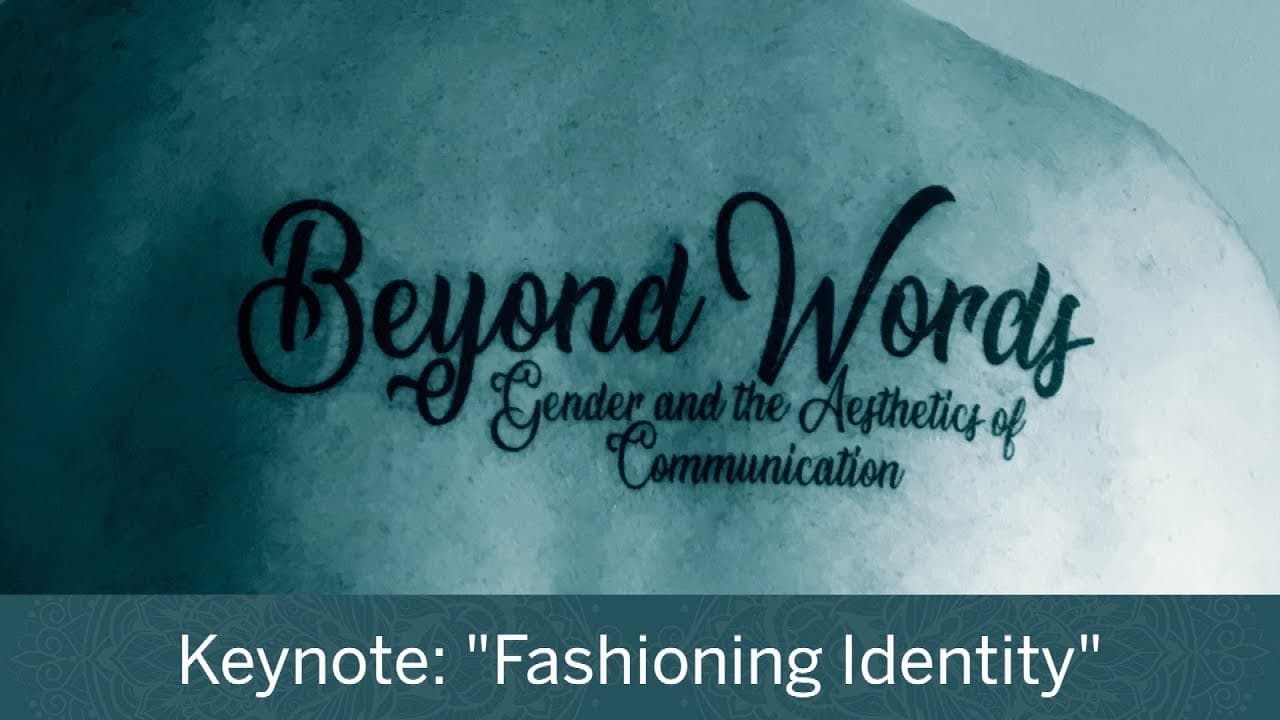
Beyond Words | Keynote: “Fashioning Identity” | Valerie Steele || Radcliffe Institute
TL;DR
Fashion author and curator Valerie Steele discusses the history, symbolism, and power dynamics of fashion, including corsets, fetish wear, and gender-nonconforming fashion.
Transcript
[MUSIC PLAYING] - So welcome, everyone, back to the final, the keynote lecture, which is about to begin, and then two more very stimulating panels. So we're very pleased to welcome as our keynote speaker Valerie Steele. In the interest of time, I'm not going to give too much detail. As for the other speakers, you have a more detailed description in... Read More
Key Insights
- 😑 Fashion is a powerful form of nonverbal communication, allowing individuals to express their identity, social status, and sexuality.
- ⚧️ Throughout history, fashion has reflected and reinforced gender and sexual norms, with garments like corsets highlighting and shaping feminine figures.
- 😩 Fetish wear has influenced mainstream fashion, with elements like leather and bondage appearing in both high-end and streetwear designs.
Install to Summarize YouTube Videos and Get Transcripts
Explore YouTube Video Summarizer or Get YouTube Transcript Extractor
Questions & Answers
Q: How has fashion been used as a form of nonverbal communication throughout history?
Fashion allows individuals to communicate information about their identity, social status, and sexuality through their clothing choices. It serves as a way to convey messages without the need for words.
Q: What was the historical significance of corsets in fashion?
Corsets have played multiple roles throughout history, including shaping and emphasizing female figures, highlighting sexual characteristics, and expressing power and authority. They have evolved with changing societal norms and continue to be a symbolic garment in certain subcultures.
Q: How has fashion intersected with the fetish community?
Fashion has often drawn inspiration from fetish wear, highlighting elements such as leather, bondage, and high heels. This can be seen in the designs of both high-end fashion houses and streetwear brands. However, there is ongoing debate and critique surrounding the appropriation of fetishistic styles for mainstream consumption.
Q: How has streetwear influenced the fashion industry?
Streetwear, often associated with urban youth and subcultures, has become a significant force in the fashion industry. Its influence can be seen in high-end designer collections and the increasing popularity of casual, sporty styles. Streetwear has challenged traditional fashion conventions and empowered marginalized communities to express their individuality.
Summary & Key Takeaways
-
Fashion is a form of nonverbal communication that conveys information about identity, social status, and sexuality.
-
Throughout history, fashion has been used to highlight and differentiate gender and sexual characteristics.
-
Corsets have served various purposes, including creating an idealized feminine figure, emphasizing sexual characteristics, and expressing power and authority.
-
Fetish wear and streetwear have both influenced and been influenced by mainstream fashion, with marginalized communities often shaping trends and challenging societal norms.
Read in Other Languages (beta)
Share This Summary 📚
Summarize YouTube Videos and Get Video Transcripts with 1-Click
Try YouTube Summary with ChatGPT & Claude or YouTube Transcript Generator
Explore More Summaries from Harvard University 📚





Summarize YouTube Videos and Get Video Transcripts with 1-Click
Try YouTube Summary with ChatGPT & Claude or YouTube Transcript Generator