Engaging Adult Learners in Virtual Training
TL;DR
Webinar on engaging adult learners in virtual training environments.
Transcript
good morning everyone the webinar will begin in just a few minutes while waiting i do encourage you to download the handout that is available under the handouts tab on the control panel and while we wait for the webinar to begin we do have christine's on the line uh christine with the nature of training drastically changing recently what ar... Read More
Key Insights
- Facilitators face challenges in adapting traditional in-person activities to virtual environments, requiring creativity and adaptation.
- Understanding platform tools is crucial; trainers must ensure participants are familiar with tools like Zoom, WebEx, and GoToMeetings.
- Advanced work and post-training assignments enhance engagement by allowing learners to prepare and continue learning beyond sessions.
- Breakout rooms are highly effective for fostering interaction and bonding among participants, enhancing the learning experience.
- Adult learners have different learning styles: visual, auditory, and kinesthetic, which should be considered when designing virtual training.
- Role-playing can be a powerful tool in virtual training, allowing learners to understand different perspectives, but requires clear guidelines.
- Webcams can enhance engagement but should be used with clear ground rules to minimize distractions and ensure comfort.
- Trainers should focus on providing a supportive environment, understanding that participants may face unique challenges during virtual sessions.
Install to Summarize YouTube Videos and Get Transcripts
Explore YouTube Video Summarizer or Get YouTube Transcript Extractor
Questions & Answers
Q: What are some challenges facilitators face in virtual training?
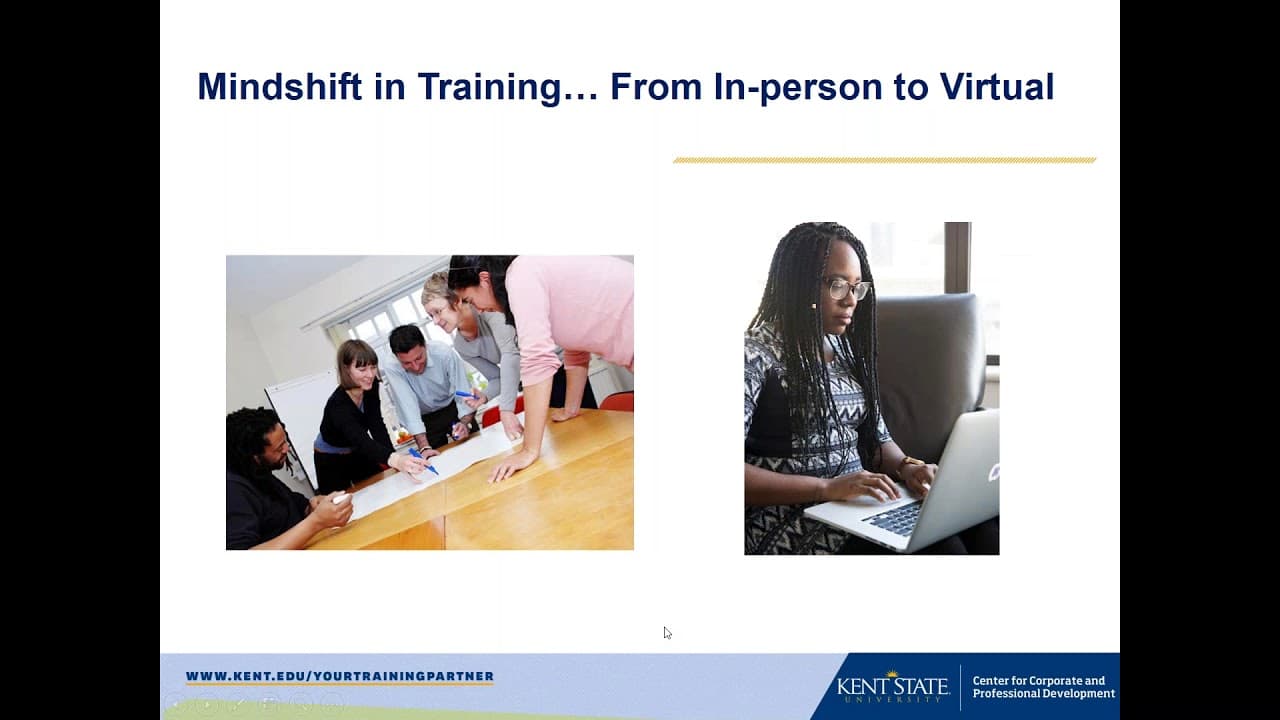
Facilitators face challenges in adapting traditional in-person activities to virtual environments. Many activities that worked well in person do not translate directly to virtual settings, requiring creativity and adaptation. Additionally, ensuring participants are familiar with and can effectively use virtual platforms is a key challenge.
Q: How can trainers ensure participants are familiar with virtual platforms?
Trainers can provide documentation and pre-training sessions to familiarize participants with platform tools. For example, Kent State provides documents outlining Zoom features and offers pre-training meetings with clients to ensure participants understand the tools they will use during training.
Q: Why are breakout rooms effective in virtual training?
Breakout rooms are effective because they allow participants to interact in smaller groups, fostering communication and bonding. They provide a space for participants to engage more deeply with the content and each other, which enhances the overall learning experience. Trainers should ensure adequate time is given for meaningful interaction.
Q: What are the different learning styles trainers should consider?
Trainers should consider visual, auditory, and kinesthetic learning styles when designing virtual training. Visual learners benefit from graphics and videos, auditory learners from discussions and lectures, and kinesthetic learners from hands-on activities and experiences. Mixing up activities ensures all learning styles are addressed.
Q: How can role-playing be used effectively in virtual training?
Role-playing allows learners to assume different perspectives and roles, enhancing understanding and empathy. It requires clear guidelines and roles for participants. In virtual settings, creative solutions like using finger puppets or assigning specific roles can help participants fully engage in the exercise.
Q: What are the benefits and challenges of using webcams in training?
Webcams can enhance engagement by allowing participants to see each other, which fosters connection. However, they can also be distracting if not managed well. Trainers should set clear ground rules to minimize distractions and ensure participants are comfortable with being on camera.
Q: How should trainers address participant engagement during the pandemic?
Trainers should be sensitive to the unique challenges participants face during the pandemic. Engagement might vary due to personal stressors, so trainers should focus on delivering their best content and creating a supportive environment. Understanding and flexibility are key to maintaining engagement.
Q: What tools can enhance virtual training for adult learners?
Tools like advance work, post-training assignments, teamwork, breakout rooms, and technology assignments can enhance virtual training. These tools encourage ongoing engagement and learning, allowing participants to prepare, interact, and apply what they've learned outside of the training sessions.
Summary & Key Takeaways
-
Virtual training has become essential due to recent changes, and trainers are adapting by learning to use platforms like Zoom and WebEx. The webinar discusses the importance of ensuring participants are familiar with these tools and offers strategies for engaging adult learners.
-
The webinar covers various tools to engage learners, such as pre-training work, teamwork, and breakout rooms, emphasizing the need to cater to different learning styles: visual, auditory, and kinesthetic. It highlights the importance of creativity in adapting activities for virtual environments.
-
Role-playing, breakout rooms, and webcams are discussed as methods to enhance engagement. The webinar stresses the need for clear guidelines and understanding of participants' challenges, encouraging trainers to focus on delivering supportive and effective virtual training experiences.
Read in Other Languages (beta)
Share This Summary 📚
Summarize YouTube Videos and Get Video Transcripts with 1-Click
Try YouTube Summary with ChatGPT & Claude or YouTube Transcript Generator