Why Michael Malice doesn't vote | Lex Fridman Podcast Clips
TL;DR
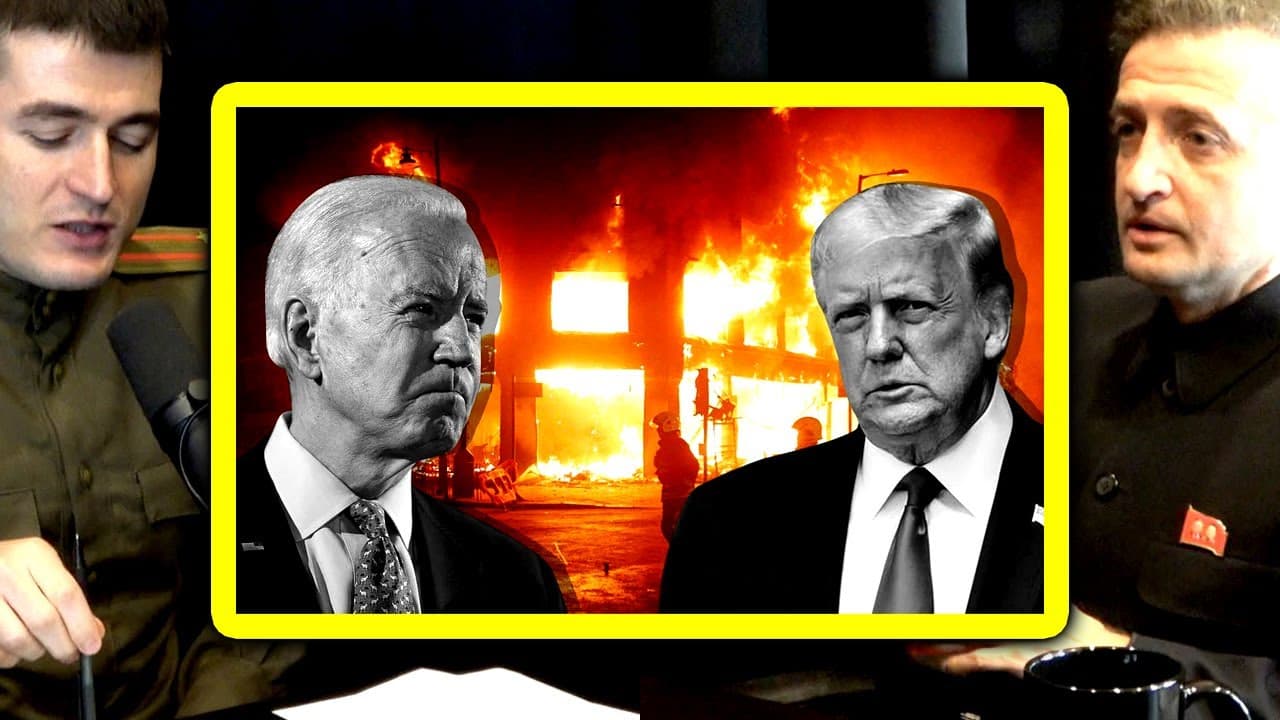
This essay discusses why the author refuses to vote, equating it to not taking communion or relying on a religious leader, and suggests that voting for ideas and issues rather than leaders would make more sense.
Transcript
nevertheless you wrote the essay why i'm not not going to vote this time or ever yeah i think i won't vote this year or any other year or any year uh and the basic idea i hope you do a better job reading it than you just read that title i guess you'll take as many takes as necessary [Laughter] i'll read it in russian and then pay somebody to just t... Read More
Key Insights
- 🙈 Voting is seen as settling for what the majority wants, rather than getting true representation.
- 🙈 Referendums on specific issues are seen as a more coherent way to make decisions and gauge public opinion.
- 🥺 The author believes that voting for one person to represent all issues leads to unfulfilled promises and unaligned representation.
- 🏛️ The War on Drugs is criticized for its disproportionate punishment and double standards for different socio-economic classes.
- 🎯 The author believes that politicians have done more harm in the War on Drugs than the individuals they aim to target.
- 🖤 The American prison system is criticized for its inhuman conditions and lack of effectiveness in rehabilitation.
- 😒 Drug use among the elite is highlighted as having little consequence, while marginalized individuals face harsh punishments.
Install to Summarize YouTube Videos and Get Transcripts
Explore YouTube Video Summarizer or Get YouTube Transcript Extractor
Questions & Answers
Q: Isn't voting a way to hire the most qualified person to represent you?
No, because if a lawyer screws up, they can be fired, but if a voted candidate doesn't deliver what they promised, there is little recourse.
Q: Why is voting for ideas and issues more coherent than voting for representatives?
Voting for one person to represent all aspects of governance is unrealistic, as no one person can align with every individual's beliefs and deliver on their promises.
Q: What is the author's view on referendums?
The author finds referendums on specific issues, such as deciding whether to remain part of the European Union, more logical as they simplify decision-making and allow for clearer representation.
Q: What is the author's opinion on hierarchy in governance?
The author argues that some degree of hierarchy is inevitable, even in anarchism, as someone will always be in charge of framing questions and controlling the decision-making process.
Summary & Key Takeaways
-
The author refuses to vote for the same reasons they don't take communion or rely on a religious leader, as they believe no one person can speak for them on all issues.
-
They argue that voting is like settling for what their neighbors want, instead of getting their desired representation.
-
The author prefers referendums on specific issues, as they find it more coherent and defensible than voting for representatives.
Read in Other Languages (beta)
Share This Summary 📚
Summarize YouTube Videos and Get Video Transcripts with 1-Click
Try YouTube Summary with ChatGPT & Claude or YouTube Transcript Generator
Explore More Summaries from Lex Clips 📚




Summarize YouTube Videos and Get Video Transcripts with 1-Click
Try YouTube Summary with ChatGPT & Claude or YouTube Transcript Generator