Game Theory: How Assassin's Creed Predicted the Future of Science
TL;DR
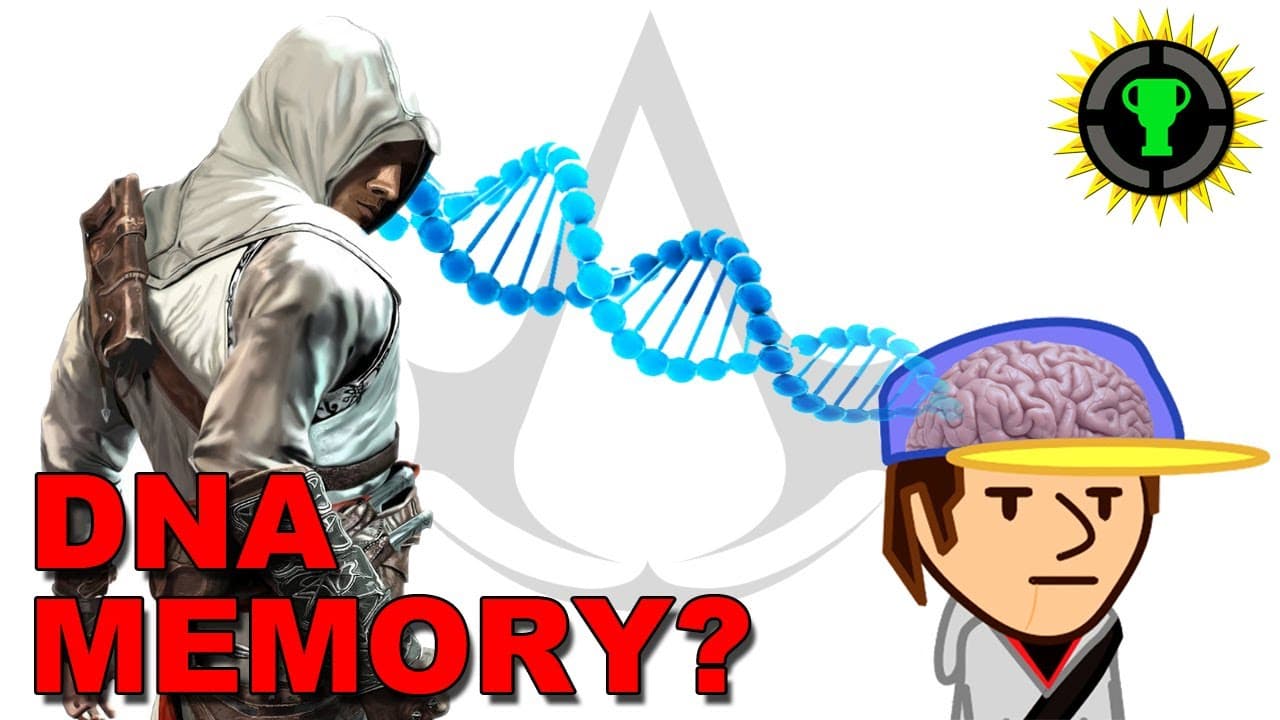
Exploring the possibility of passing memories through DNA, referencing psychology and recent DNA encoding research, linking it to the plot of "Assassin's Creed."
Transcript
because i'm on location scouting for information on a episode that may or may not be about "Assassins Creed" when i say im gonna give you an assassins creed video i give you an assassins creed video- half a year later! and that's a MatPat guarantee! (intro music plays) Hello internet, welcome to "Game Theory" A show thats just as complex as "Biosho... Read More
Key Insights
- 🧭 "Assassin's Creed" portrays a unique concept of passing memories through DNA, blending fiction with potential scientific advancements.
- 👾 Carl Jung's collective unconscious theory parallels the game's depiction of ancestral memory transfer, adding depth to the narrative.
- 👨🔬 Recent DNA encoding research shows promising advancements in storing vast amounts of data in genetic material, opening possibilities for future applications.
- ⛩️ The cost implications of encoding memories into DNA highlight the current impracticality but hint at potential future developments.
- 👾 MatPat's analysis bridges gaming narratives with real-world scientific concepts, engaging viewers with intriguing connections.
- 🎮 "Assassin's Creed" integrates psychological theories like the anima and animus into its storyline, showcasing a depth of narrative beyond gameplay.
- 🤨 The discussion on genetic memory transfer raises thought-provoking questions about the intersection of science fiction and scientific plausibility.
Install to Summarize YouTube Videos and Get Transcripts
Explore YouTube Video Summarizer or Get YouTube Transcript Extractor
Questions & Answers
Q: How does "Assassin's Creed" portray the passing of memories through DNA?
"Assassin's Creed" depicts the transmission of ancestral memories through DNA, where protagonists relive the experiences of their assassin ancestors stored in genetic material.
Q: What is Carl Jung's collective unconscious theory, and how does it relate to passing memories through DNA?
Jung's theory suggests humans share universal memories and traits, including passing down archetypes, like the anima and animus, through generations, connecting to the game's storyline of genetic memory transfer.
Q: How does recent DNA encoding research tie into the possibility of storing memories in genetic material?
Recent experiments have encoded data into DNA, showcasing the potential for encoding vast amounts of information in genetic material, hinting at a future where memories may be stored this way.
Q: What are the cost implications of encoding memories into DNA, as discussed in the content?
The content highlights the expensive process of encoding memories into DNA, estimating the cost to be millions of dollars, making it currently impractical for widespread use.
Summary & Key Takeaways
-
MatPat explores the concept of passing memories through DNA, referencing Carl Jung's collective unconscious theory and the plot of "Assassin's Creed."
-
Recent research on DNA encoding data, suggesting the potential for future encoding of memories akin to the game's storyline.
-
Discusses the cost implications of encoding memories into DNA, connecting it to "Assassin's Creed" and genetic research.
Read in Other Languages (beta)
Share This Summary 📚
Summarize YouTube Videos and Get Video Transcripts with 1-Click
Try YouTube Summary with ChatGPT & Claude or YouTube Transcript Generator
Explore More Summaries from The Game Theorists 📚

Summarize YouTube Videos and Get Video Transcripts with 1-Click
Try YouTube Summary with ChatGPT & Claude or YouTube Transcript Generator