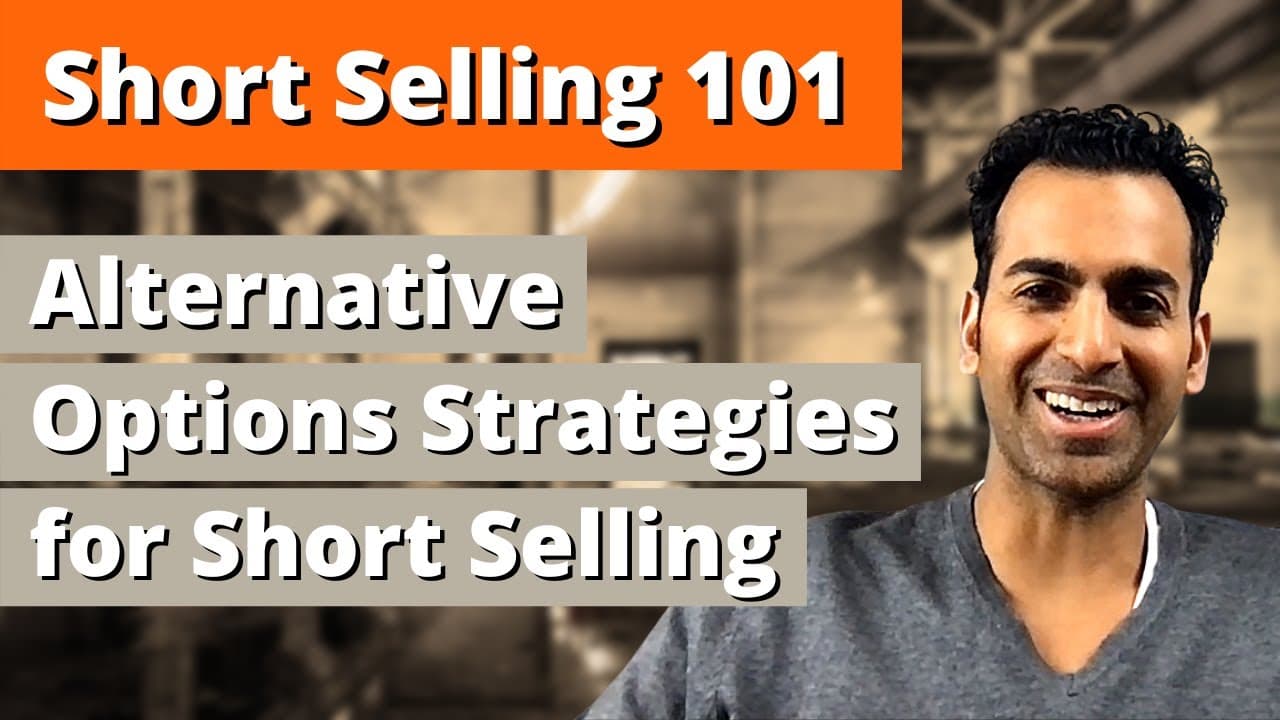
Alternative Options Strategies for Short Selling | Short Selling 101
TL;DR
Using put spreads and back spreads can optimize downside bets with limited risk exposure.
Transcript
hi i'm imran larka the founder of options insight i used to be a trader for 20 years trading for investment banks in options markets and also on the buy side now i run options insight which is a training company where i teach people how to trade options and manage their risk so as opposed to just going short outright using options is a really commo... Read More
Key Insights
- ✳️ Put spreads can help reduce premium costs and manage downside risk in options trading.
- 💨 Back spreads offer a zero-cost way to capitalize on potential market crashes without committing premium upfront.
- 🤙 Risk reversal trades involve selling calls and buying puts to fund bearish positions and benefit from downside potential.
- 😫 Setting mental stops is crucial when selling naked options to limit losses and effectively manage risk.
- ❓ Understanding option pricing and implied volatility is essential to crafting efficient trading strategies.
- ✳️ Market dynamics and positioning should be considered when implementing options strategies to avoid unexpected risks.
- ⌛ Time decay and volatility can impact options trading, making strategic structuring necessary for profitable outcomes.
Install to Summarize YouTube Videos and Get Transcripts
Explore YouTube Video Summarizer or Get YouTube Transcript Extractor
Questions & Answers
Q: What are put spreads and how do they help manage risk in options trading?
Put spreads involve buying and selling puts to reduce premium costs while still expressing a bearish view on a stock. By structuring these spreads, traders can limit their exposure to volatility and time decay.
Q: How does a back spread work in options trading, and what are the benefits of using this strategy?
A back spread involves selling a put near the money and buying multiple puts far out of the money, creating a zero-cost trade with significant potential for profit if the market moves in the expected direction.
Q: What is a risk reversal trade, and when is it a suitable strategy in options trading?
A risk reversal trade involves selling calls and buying puts to express a bearish view on a stock while funding the position with premium from the sold calls. It is beneficial in high-volatility environments to capture downside potential.
Q: How can traders manage risk when selling naked options in options trading?
Traders should set mental stops to limit losses when selling naked options. By defining an acceptable level of loss before entering a trade, traders can effectively manage risk and avoid unlimited losses.
Summary & Key Takeaways
-
Options Insight founder, Imran Larka, discusses efficient strategies like put spreads and back spreads to manage risk and speculate on asset declines.
-
Put spreads involve buying and selling puts to reduce premium costs while expressing a bearish view on a stock.
-
Back spreads involve selling a put near the money and buying multiple puts far out of the money to capitalize on potential market crashes.
Read in Other Languages (beta)
Share This Summary 📚
Summarize YouTube Videos and Get Video Transcripts with 1-Click
Try YouTube Summary with ChatGPT & Claude or YouTube Transcript Generator
Explore More Summaries from Real Vision 📚

Summarize YouTube Videos and Get Video Transcripts with 1-Click
Try YouTube Summary with ChatGPT & Claude or YouTube Transcript Generator