What does 'out with the old, in with the new' mean?
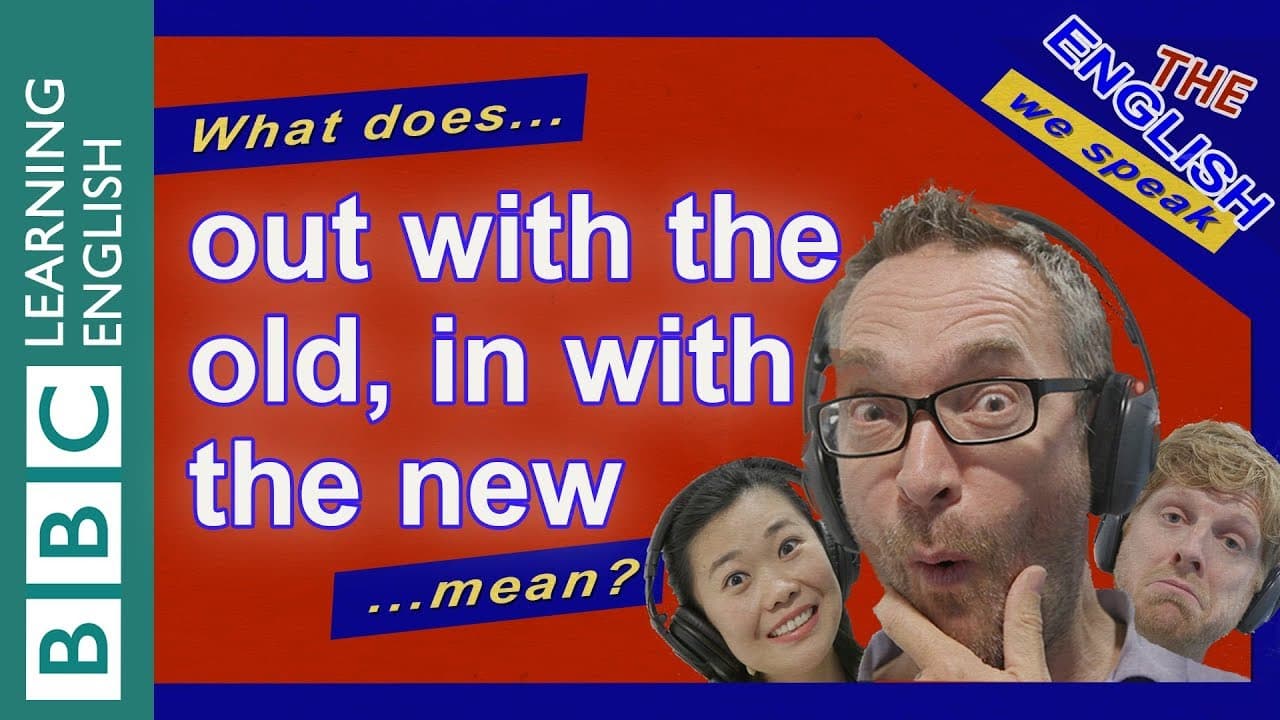
TL;DR
Learn the idiom 'out with the old, in with the new'.
Transcript
Feifei: Hello. It's time for The English We Speak, with you, Rob... Rob: ... and you, Feifei. Hello! Feifei: So, Rob, another year over. Rob: Yes, goodbye 2019. It's been a good year, but it's time for a clear up. Feifei: Rob's tidying up! Why, Rob? Rob: Well, there's so much junk lying around - let's clear out the old stuff. I'd like to start the ... Read More
Key Insights
- The phrase 'out with the old, in with the new' is used to describe the act of replacing old ideas or items with new ones, often used around New Year.
- Rob and Feifei discuss the importance of clearing out old things, with Rob planning to tidy the office for a fresh start.
- Examples provided in the transcript illustrate the use of the idiom in various contexts, such as buying new shoes or gadgets.
- The idiom is particularly relevant during New Year as people often make resolutions to change habits or refresh their surroundings.
- Feifei humorously suggests replacing Rob with a new presenter, highlighting the playful use of the idiom.
- The programme encourages listeners to consider changes they might want to make in the new year.
- Listeners are directed to additional resources for learning more English idioms and expressions.
- The transcript and additional materials are available on the BBC Learning English website, offering further educational content.
Install to Summarize YouTube Videos and Get Transcripts
Explore YouTube Video Summarizer or Get YouTube Transcript Extractor
Questions & Answers
Q: What does 'out with the old, in with the new' mean?
The phrase 'out with the old, in with the new' is an idiom that means to leave behind old ideas, habits, or items and replace them with new ones. It is often used around the New Year when people are making resolutions and looking to start fresh with new goals or possessions.
Q: How is the idiom used in the transcript?
In the transcript, the idiom is used to describe Rob's intention to tidy up the office by clearing out old things and introducing new items, such as a vase of flowers. It is also humorously applied by Feifei when she suggests replacing Rob with a new presenter, demonstrating the idiom's versatility and playful use.
Q: Why is the idiom relevant during New Year?
The idiom 'out with the old, in with the new' is particularly relevant during New Year because it aligns with the common practice of making resolutions and setting new goals for personal improvement. People often use this time to reflect on the past year and decide what changes they want to make moving forward, making the idiom a fitting expression for this period.
Q: What examples are provided in the transcript?
The transcript provides several examples of the idiom in use, such as getting rid of old boots to buy a new pair, replacing an old chunky phone with a new lightweight touchscreen model, and resolving to join a gym to improve one's fitness. These examples illustrate the idiom's application in everyday situations.
Q: What new ideas or things does Rob consider for 2020?
For 2020, Rob considers adding new elements to the office, such as a vase of flowers, to create a fresh environment. He also contemplates introducing the programme himself each week, which would be a change from the usual format where Feifei does the introductions. These ideas reflect Rob's desire to embrace new beginnings.
Q: How does Feifei use the idiom humorously?
Feifei uses the idiom humorously by suggesting the replacement of Rob with a new presenter, Dan. This playful suggestion highlights the idiom's flexibility and the lighthearted nature of the conversation between Rob and Feifei. It serves as a humorous twist on the idea of making changes for the new year.
Q: What resources are available for further learning?
Listeners are directed to the BBC Learning English website, where they can access the transcript and additional resources for learning more English idioms and expressions. The website offers a variety of free English lessons and videos, providing a comprehensive platform for language learners to enhance their skills.
Q: What is the overall theme of the programme?
The overall theme of the programme is the exploration of the idiom 'out with the old, in with the new' and its application to New Year resolutions and personal change. Through examples and humorous dialogue, the programme encourages listeners to consider what old habits or items they might want to replace with new ones in the coming year.
Summary & Key Takeaways
-
The idiom 'out with the old, in with the new' signifies replacing old ideas or items with new ones, commonly used during New Year. Rob and Feifei discuss tidying up and making changes for the new year, exemplifying the idiom in various contexts.
-
Rob plans to tidy the office and introduce new elements like flowers, while Feifei humorously suggests replacing Rob himself, illustrating the idiom's playful application. The programme encourages reflection on personal changes for the upcoming year.
-
Listeners are provided with examples of the idiom in action, emphasizing its relevance to New Year resolutions. Additional resources for learning more idioms are available on the BBC Learning English website, enhancing the educational experience.
Read in Other Languages (beta)
Share This Summary 📚
Summarize YouTube Videos and Get Video Transcripts with 1-Click
Try YouTube Summary with ChatGPT & Claude or YouTube Transcript Generator
Explore More Summaries from BBC Learning English 📚

Summarize YouTube Videos and Get Video Transcripts with 1-Click
Try YouTube Summary with ChatGPT & Claude or YouTube Transcript Generator