Latent Heat
TL;DR
Understanding latent heat and phase changes can significantly reduce heating and cooling costs in buildings.
Transcript
If you put water in the freezer, you'll end up with ice. If you leave ice on your countertop, you'll end up with liquid water. You've almost certainly seen these phase changes in your everyday experience. But there's more to freezing and melting than meets the eye, and we can use these seemingly simple phenomena to make buildings significantly more... Read More
Key Insights
- 💱 Phase changes involve the exchange of energy and can be harnessed to make buildings more energy efficient.
- 🫗 Supercooling allows liquids to remain in a liquid state below their normal freezing point, providing additional cooling capacity.
- 💁 The formation of hydrogen bonds during freezing releases energy, resulting in a temperature increase.
- 🫠 Latent heat of fusion and melting plays a significant role in energy-efficient buildings by utilizing the energy released or absorbed during phase changes.
- 🧂 Phase change materials, such as inorganic salt hydrates and paraffinic hydrocarbons, can store and release energy, contributing to energy efficiency in buildings.
- 🙊 Peak load shifting, using off-peak electricity to store energy for daytime cooling, is a strategy employed to reduce energy consumption in buildings.
- 🥵 The selection of phase change materials in buildings depends on factors such as temperature ranges, heat of fusion, cost, and stability.
Install to Summarize YouTube Videos and Get Transcripts
Explore YouTube Video Summarizer or Get YouTube Transcript Extractor
Questions & Answers
Q: How can phase changes be used to make buildings more energy efficient?
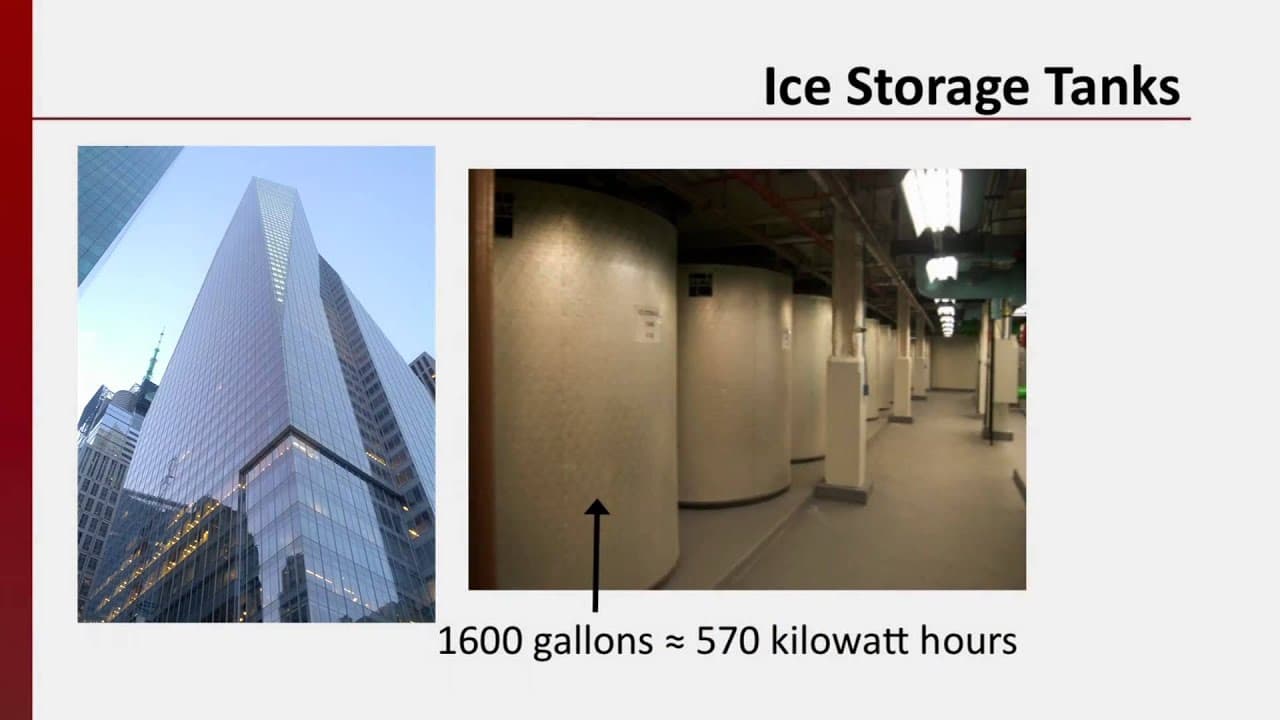
Phase changes, such as freezing and melting, can be harnessed to heat and cool buildings by utilizing the energy released or absorbed during these processes. For example, using ice to absorb thermal energy from the surroundings can reduce cooling costs.
Q: What is the significance of supercooling in the context of energy efficiency?
Supercooling refers to the phenomenon where a liquid remains in a liquid state below its normal freezing point. This can be used to cool water below freezing temperatures without solidifying, providing additional cooling capacity.
Q: What is the role of latent heat in energy-efficient buildings?
Latent heat refers to the energy released or absorbed during a phase change. In energy-efficient buildings, latent heat is utilized to store and release energy, reducing the amount of energy required for heating and cooling.
Q: How do phase change materials contribute to energy efficiency in buildings?
Phase change materials, specially designed substances that change phase at desirable temperatures, can store and release energy in a controlled manner. By incorporating phase change materials into building materials, energy can be stored and released to regulate temperature.
Summary & Key Takeaways
-
Phase changes, such as freezing and melting, involve the exchange of energy and can be used to make buildings more energy efficient.
-
Heating water with salt lowers its freezing point, allowing liquid water to cool below its normal freezing point in a process called supercooling.
-
When water freezes, the temperature increases due to the release of energy during the formation of hydrogen bonds.
-
Latent heat of fusion and melting refers to the energy released or absorbed during phase changes, and this phenomenon is used to heat and cool buildings.
Read in Other Languages (beta)
Share This Summary 📚
Summarize YouTube Videos and Get Video Transcripts with 1-Click
Try YouTube Summary with ChatGPT & Claude or YouTube Transcript Generator
Explore More Summaries from MIT OpenCourseWare 📚


Summarize YouTube Videos and Get Video Transcripts with 1-Click
Try YouTube Summary with ChatGPT & Claude or YouTube Transcript Generator