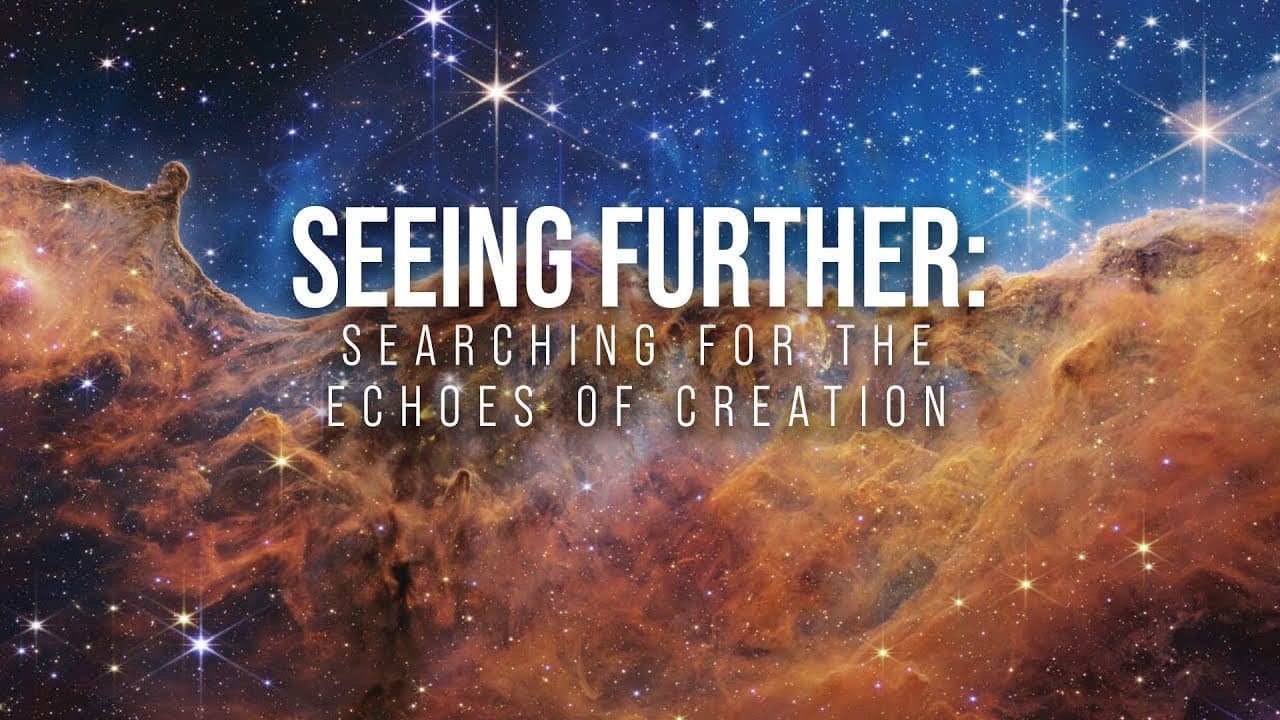
Seeing Further: Searching for the Echoes of Creation
TL;DR
Nobel laureate astrophysicist John Mather discusses cosmic background, James Webb Telescope discoveries, future astrophysics missions.
Transcript
the big bang our best understanding of cosmic Origins was a brief period of the most intense conditions colossal density and ferocious temperature but as space expanded conditions calmed the universe mellowed and the temperature steadily dropped today the prime remnant of that early intense heat is the cosmic microwave background radiation a cosmol... Read More
Key Insights
- ❓ Cosmic microwave background reveals the universe's fiery beginnings and early conditions.
- 💦 Nobel laureate John Mather's work on COBE and James Webb Telescope revolutionized astrophysics.
- 👾 Future missions focus on exoplanet discovery, space exploration, and technological advancements in astronomy.
- 🤩 Advancements like adaptive optics and star shades expand capabilities for viewing distant worlds.
- 👾 Student challenges and ideas promote innovative solutions for space exploration and discovery.
Install to Summarize YouTube Videos and Get Transcripts
Explore YouTube Video Summarizer or Get YouTube Transcript Extractor
Questions & Answers
Q: How did John Mather's work on the cosmic microwave background radiation contribute to our understanding of the early universe?
John Mather's discovery of the cosmic microwave background provided crucial insights into the fiery beginning of the universe, shedding light on its origins and evolution.
Q: What surprises and discoveries have emerged from the James Webb Space Telescope's initial data?
The Webb Telescope's early data revealed surprisingly quick galaxy formation, challenging previous theories and inspiring new perspectives on the evolution of the early universe.
Q: Why is finding Earth-like exoplanets significant, and what does this quest entail?
The search for Earth-like exoplanets is crucial in the quest for life beyond Earth, potentially leading to groundbreaking discoveries about the existence of other habitable worlds.
Q: How do advancements in astrophysics, such as new telescopes and technology, shape future exploration and knowledge?
Advancements like the James Webb Space Telescope and future missions significantly impact our understanding of the cosmos, paving the way for novel discoveries and insights into the mysteries of the universe.
Summary & Key Takeaways
-
John Mather reviews the cosmic microwave background revealing early universe insight.
-
Nobel-winning work on COBE & leadership at James Webb highlight discoveries in astrophysics.
-
Future missions include seeking Earth-like exoplanets, pushing boundaries of astrophysics.
Read in Other Languages (beta)
Share This Summary 📚
Summarize YouTube Videos and Get Video Transcripts with 1-Click
Try YouTube Summary with ChatGPT & Claude or YouTube Transcript Generator
Explore More Summaries from World Science Festival 📚


Summarize YouTube Videos and Get Video Transcripts with 1-Click
Try YouTube Summary with ChatGPT & Claude or YouTube Transcript Generator