Should We Revive Dinosaurs? Exploring De-Extinction | Charvi Thanakanti | TEDxYouth@AllianceAcademy
TL;DR
Scientists are reviving extinct species through cloning and genetic engineering.
Transcript
Transcriber: Mônia Correia Eller Reviewer: Walaa Mohammed Here's two sheep. The sheep look very similar but there is one difference between them. One of them is a clone, and the other one is not. Can you guess which one is which? Did you make your guesses? The answer is the one on the left. So this is Dolly, the first mammal to ever be cloned. An... Read More
Key Insights
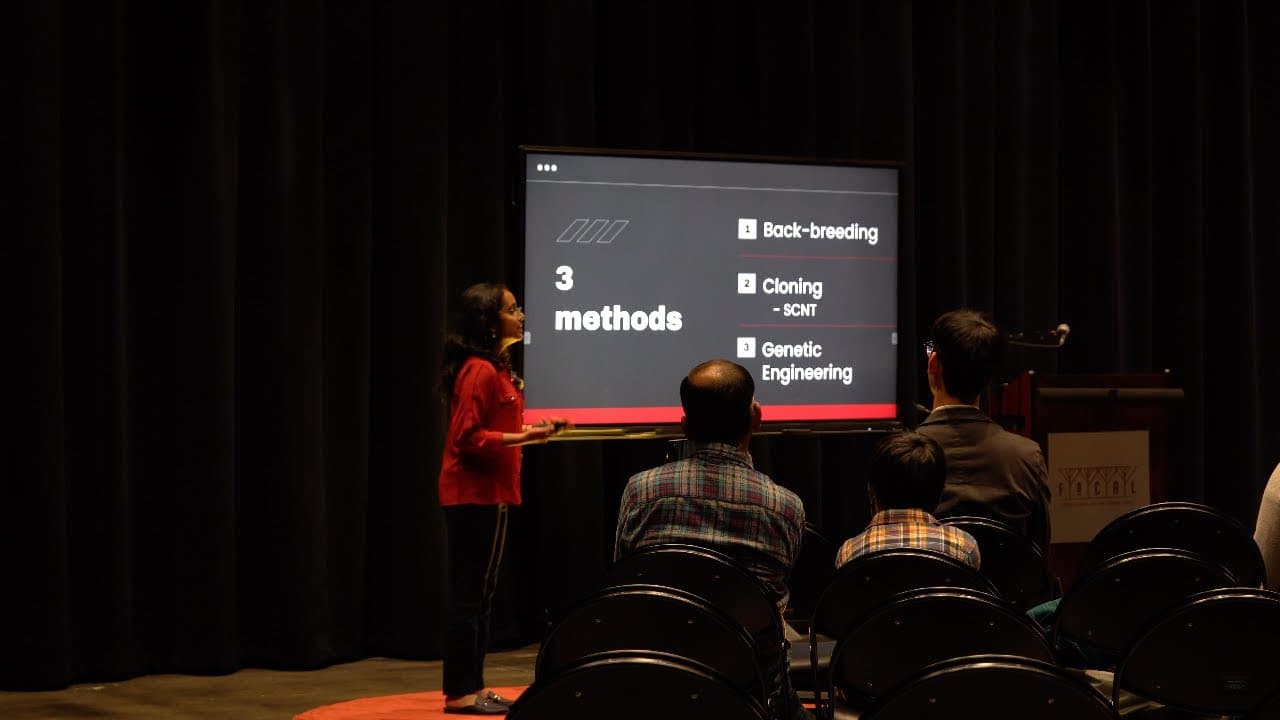
- 🙃 De-extinction involves methods like back-breeding, SCNT, and genetic engineering.
- 🙃 Successful de-extinction efforts include reviving the Bucardo goat and ongoing projects to bring back iconic species.
- 🚫 Pros of de-extinction include ecosystem restoration, genetic diversity, and expanding scientific knowledge.
- 😕 Cons include resource requirements, maintaining population numbers, and ethical considerations.
- 🙃 De-extinction raises questions about moral obligations, conservation priorities, and the impact on existing species.
- 🙃 Historical attempts like the Aurochs resurrection and Dolly the sheep showcase different de-extinction methods.
- 🙃 Organizations like Revive and Restore and Colossal are leading efforts in de-extinction research and implementation.
Install to Summarize YouTube Videos and Get Transcripts
Explore YouTube Video Summarizer or Get YouTube Transcript Extractor
Questions & Answers
Q: What is de-extinction, and how is it achieved?
De-extinction is the process of bringing back extinct species through techniques like back-breeding, SCNT, and genetic engineering.
Q: What are some examples of successful de-extinction efforts?
Successful de-extinction efforts include the Bucardo goat and ongoing projects to revive the woolly mammoth, thylacine, and dodo bird.
Q: What are the pros of de-extinction?
De-extinction can restore ecosystems, increase genetic diversity, and contribute to scientific knowledge.
Q: What are the cons of de-extinction?
Challenges include the need for extensive resources, maintaining populations, and ethical considerations regarding the impact on existing species.
Summary & Key Takeaways
-
Dolly the cloned sheep and the Heck brothers' attempt to revive the Aurochs illustrate different methods of de-extinction.
-
De-extinction involves back-breeding, somatic cell nuclear transfer (SCNT), and genetic engineering techniques.
-
Pros include ecosystem restoration and genetic diversity, while cons include resource limitations and ethical considerations.
Read in Other Languages (beta)
Share This Summary 📚
Summarize YouTube Videos and Get Video Transcripts with 1-Click
Try YouTube Summary with ChatGPT & Claude or YouTube Transcript Generator
Explore More Summaries from TEDx Talks 📚
Summarize YouTube Videos and Get Video Transcripts with 1-Click
Try YouTube Summary with ChatGPT & Claude or YouTube Transcript Generator