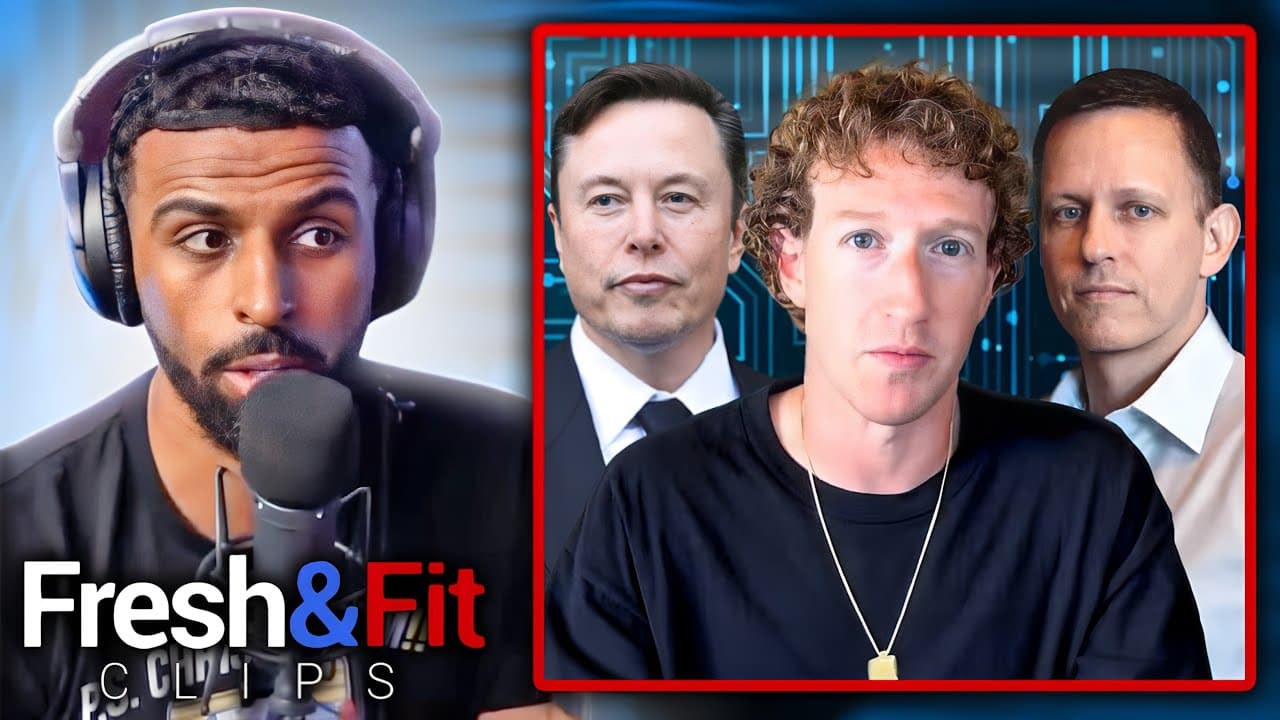
Why Mark Zuckerberg & Other Tech Bros Can't Be Trusted!
TL;DR
Facebook is removing fact checkers and adopting user-generated content moderation in a shift towards free expression.
Transcript
breaking news just moments ago Facebook announced it is getting rid of fact Checkers and also making major changes to what content is allowed this is just the latest move as Facebook's parent company meta and founder Mark Zuckerberg worked to very publicly win favor with Donald Trump yeah and they're doing this because as you guys know and I'm goin... Read More
Key Insights
- 🥶 Facebook's transition away from fact checkers indicates a significant policy shift aimed at fostering user trust and encouraging free speech.
- 👤 By implementing Community Notes, Meta is adopting a model that could decentralize content verification, creating a more interactive and participatory environment for users.
- 😑 The decision aligns with a larger trend in tech companies responding to political pressures and public sentiment regarding free expression.
- 🤨 Critics have raised concerns regarding the reliability of user-generated moderation, highlighting potential vulnerabilities to misinformation and bias in discussions.
- 🫵 Meta's shift may be viewed as a strategic move to attract conservative audiences, reflecting ongoing cultural and political divides within society.
- 😫 This reconfiguration of moderation strategies may set a precedent for other social media platforms grappling with similar issues of user trust and censorship.
- 😤 The relocation of safety teams aims to resonate more with certain demographics, indicating a targeted approach to content policies amid changing political landscapes.
Install to Summarize YouTube Videos and Get Transcripts
Explore YouTube Video Summarizer or Get YouTube Transcript Extractor
Questions & Answers
Q: What prompted Facebook's decision to remove fact checkers?
Facebook's removal of fact checkers stems from criticisms regarding their political bias, which the company believes undermined user trust. As they aim to restore free expression, the shift suggests a belief that community involvement in moderation could provide a more honest platform for public discourse.
Q: How does the new Community Notes system work?
The Community Notes system allows users to write notes providing context for posts. Other users can vote on the accuracy of these notes, which are then attached to posts. This decentralized approach is designed to increase engagement and accuracy by fostering a community-based verification process.
Q: What are the potential risks of relying on user-generated content moderation?
Relying on user-generated content moderation could lead to misinformation if users are not well-informed or have biased perspectives. Without professional fact-checking, there is a risk of echo chambers forming and harmful misinformation spreading unchecked, thus challenging the integrity of discussions on the platform.
Q: How does this policy change align with the current political climate?
This policy change aligns with a broader political shift as Meta attempts to appeal to conservative audiences. By reducing moderation regulations, they cater to sentiments around free speech prevalent among right-leaning users, mirroring strategies employed by other platforms under similar scrutiny.
Q: What does the move reflect about the relationship between tech companies and political figures?
The move reflects a strategic alignment between tech companies like Meta and political figures such as Donald Trump. By adopting policies that favor free expression and reduce censorship, these companies aim to curry favor with influential political groups and stakeholders, potentially redefining their user base.
Q: In what ways has the role of social media in moderating content been criticized?
Social media's role in content moderation is criticized for perceived overreach in censoring speech, particularly when deemed politically biased. Critics argue that this can inhibit free expression, create distrust among users, and lead to a decline in the platform's integrity and credibility.
Summary & Key Takeaways
-
Facebook's parent company, Meta, announced the removal of third-party fact checkers, attributing their decision to perceived political bias and a desire to restore free speech on the platform.
-
The new user-generated moderation system, similar to Twitter's Community Notes, allows users to add context to posts, relying on community voting for validity.
-
This decision comes amidst ongoing efforts to appeal to right-wing audiences, particularly with regard to Donald Trump's influence and anticipated political shifts following elections.
Read in Other Languages (beta)
Share This Summary 📚
Summarize YouTube Videos and Get Video Transcripts with 1-Click
Try YouTube Summary with ChatGPT & Claude or YouTube Transcript Generator
Explore More Summaries from FreshandFit 📚


Summarize YouTube Videos and Get Video Transcripts with 1-Click
Try YouTube Summary with ChatGPT & Claude or YouTube Transcript Generator