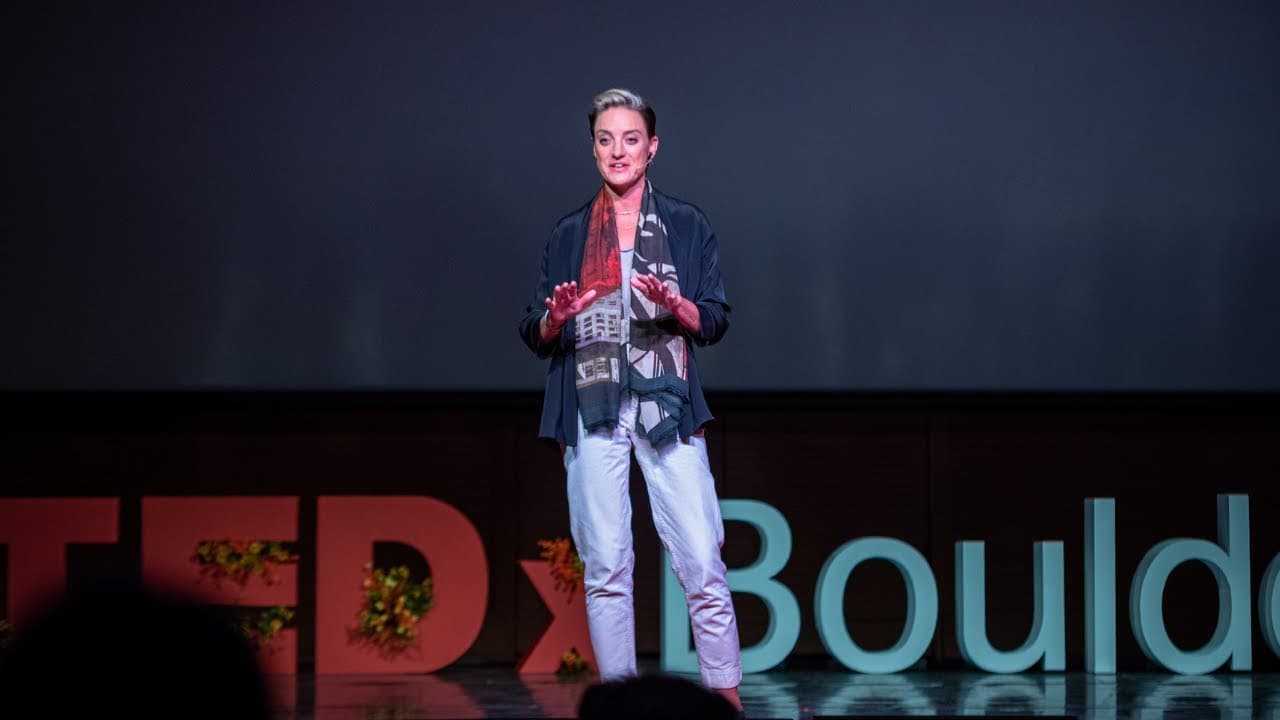
Reimagining City Beautiful: Boulder's Path to Equity | Jill Grano | TEDxBoulder
TL;DR
A deep dive into Boulder’s history of exclusionary zoning and the impact on housing equity today.
Transcript
[Applause] it was winter of 2018 and I was serving on Boulder City Council when a colleague of mine ordered a police sweep of the diagonal Plaza parking lot an informal community of people living in their vehicles had established there and my colleague called it dangerous and deplorable now understanding and tackling housing insecurity is my passio... Read More
Key Insights
- 🫚 Boulder's history of exclusionary zoning is deeply rooted in classist and racist ideals.
- ☠️ The impact of exclusionary zoning policies is evident in high rates of homelessness and housing insecurity in Boulder.
- 💨 Embracing shared housing models and equity-driven policies can pave the way for a more inclusive and vibrant city.
- 🔓 Advocating for policy changes around accessory dwelling units and occupancy limits can unlock affordable homeownership opportunities.
- 🏛️ Exclusionary zoning perpetuates social injustices and marginalizes working-class and minority populations.
- 🍝 Boulder’s past decisions continue to shape its present housing landscape, highlighting the need for policy reform.
- 🏙️ Prioritizing equity in housing policies can address the city's housing crisis and promote a more diverse and thriving community.
Install to Summarize YouTube Videos and Get Transcripts
Explore YouTube Video Summarizer or Get YouTube Transcript Extractor
Questions & Answers
Q: How did Boulder's history of exclusionary zoning impact present-day housing insecurity?
Boulder's past decisions rooted in exclusionary zoning have led to a housing crisis, with high rates of homelessness and housing insecurity in the city. The prioritization of single-family homes over equitable housing models has marginalized many community members.
Q: What role did Frederick Olmstead Jr. play in shaping Boulder's housing policies?
Frederick Olmstead Jr.'s influence on Boulder's design and land use policies emphasized classist and racist ideals, leading to the exclusion of working-class and minority populations in the city. His vision of a "White City" shaped Boulder's urban landscape in detrimental ways.
Q: How can Boulder begin to undo its history of exclusionary zoning and promote housing equity?
By embracing shared housing models, such as tiny homes, cottage clusters, and cooperative housing, Boulder can move towards a more equitable housing landscape. Policy changes around accessory dwelling units and occupancy limits can unlock more affordable homeownership opportunities.
Q: What are the current challenges faced by Boulder residents due to exclusionary zoning practices?
Boulder residents are grappling with high rates of homelessness, housing insecurity, and affordability challenges. The consequences of exclusionary zoning policies are visible in the growing number of individuals struggling to find stable housing in the city.
Summary & Key Takeaways
-
Boulder's history of exclusionary zoning dates back to its founding, shaped by classist and racist ideals.
-
The consequences of Boulder's exclusionary zoning are evident in the high rates of homelessness and housing insecurity.
-
Advocating for shared housing models and equity-driven policies can pave the way for a more inclusive and vibrant Boulder.
Read in Other Languages (beta)
Share This Summary 📚
Summarize YouTube Videos and Get Video Transcripts with 1-Click
Try YouTube Summary with ChatGPT & Claude or YouTube Transcript Generator
Explore More Summaries from TEDx Talks 📚


Summarize YouTube Videos and Get Video Transcripts with 1-Click
Try YouTube Summary with ChatGPT & Claude or YouTube Transcript Generator