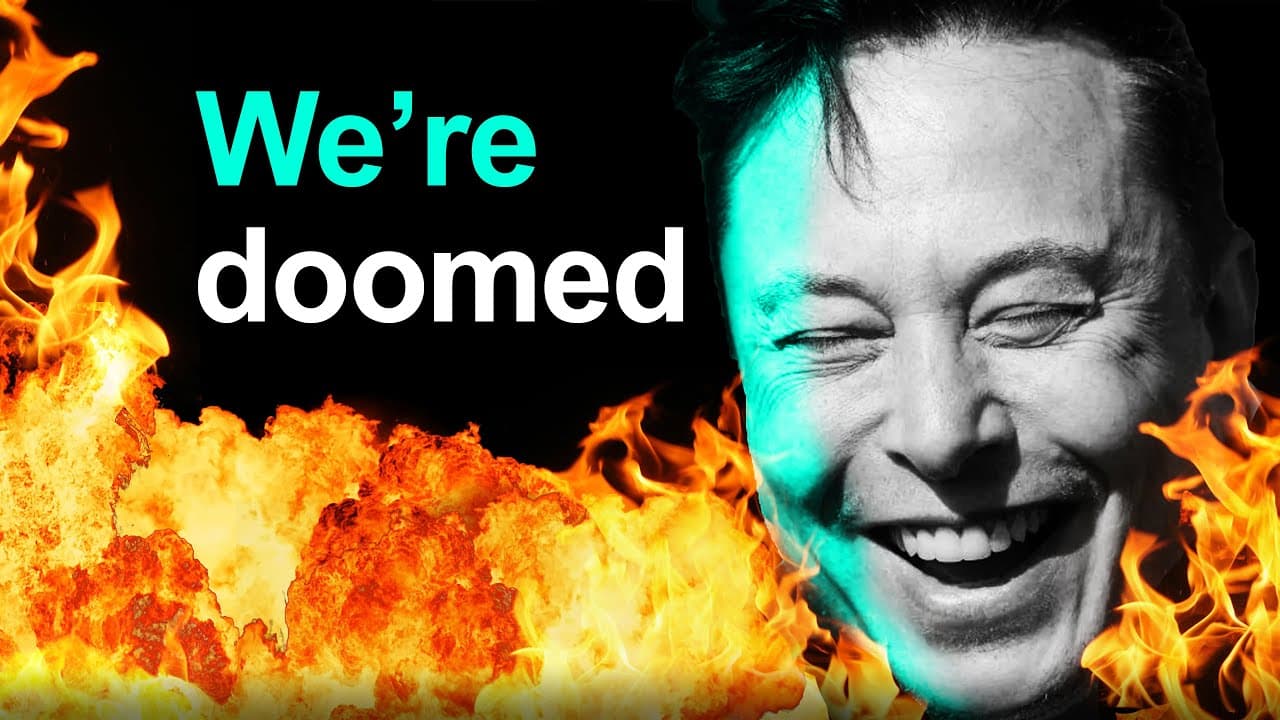
Why We NEED Elon Musk’s Secret New AI Company
TL;DR
Open AI faces mission drift and controversy as it transitions from a not-for-profit to a for-profit organization, sparking concerns about AI democratization.
Transcript
the best of the available alternatives that I can come up with and maybe somebody else can come up with a better approach a better outcome is that we achieve democratization of AI technology meaning that no one company or a small set of individuals has control over Advanced AI technology like that that's very dangerous um it could also get stolen b... Read More
Key Insights
- 🤨 The evolution of Open AI from a not-for-profit to a for-profit model raises concerns about the democratization of AI technology.
- 🤗 Microsoft's partnership with Open AI and its exclusive access to AI technology challenges the principles of open source and transparency.
- 🤗 The potential risks of concentrated AI power in the hands of a few entities highlight the need for careful consideration in AI development.
Install to Summarize YouTube Videos and Get Transcripts
Explore YouTube Video Summarizer or Get YouTube Transcript Extractor
Questions & Answers
Q: What led Open AI to transition from a not-for-profit to a for-profit organization?
The need for large amounts of capital and high compensation for talent led Open AI to shift its structure to attract investments and talent essential for AI development.
Q: How does the partnership with Microsoft impact the democratization of AI technology?
The exclusive access granted to Microsoft raises concerns about the concentration of AI power and restricted access, contradicting the original mission of democratizing AI.
Q: What are the potential risks associated with this transition in Open AI's business model?
The shift to a for-profit approach may lead to a monopolistic control of advanced AI technology, limiting access and transparency, which could have far-reaching consequences for the future of AI development.
Q: How do customers feel about Open AI's changes and the potential impact on AI technology?
Customers are expressing concerns about the shift from open source to closed AI development, signaling worries about access, transparency, and the concentration of power in a few hands.
Summary & Key Takeaways
-
Open AI, originally founded as a not-for-profit to democratize AI, has pivoted to a for-profit model due to the need for significant capital to develop advanced AI technology.
-
The partnership with Microsoft, offering exclusive access to AI technology, raises concerns about concentration of power and access to AI technology.
-
The potential risks of this shift from open source, transparent AI to closed, for-profit AI models challenge the original mission of Open AI.
Read in Other Languages (beta)
Share This Summary 📚
Summarize YouTube Videos and Get Video Transcripts with 1-Click
Try YouTube Summary with ChatGPT & Claude or YouTube Transcript Generator
Explore More Summaries from Solving The Money Problem 📚


Summarize YouTube Videos and Get Video Transcripts with 1-Click
Try YouTube Summary with ChatGPT & Claude or YouTube Transcript Generator